Hajj is happening right now in Saudi Arabia.
This is a 1972 Generalturist poster in Macedonian advertising Hajj trips for Muslims in socialist Yugoslavia.

At the time, Yugoslavia’s communist authorities officially discouraged religious practices and promoted atheism. Yet they still allowed select groups to travel to Mecca – partly as a way to build soft power, project solidarity and strengthen ties with Muslim countries in the Non-Aligned Movement.
Pilgrims were carefully monitored before and after returning. The authorities feared that Hajjis might bring back political or religious ideas that challenged the Yugoslav system.
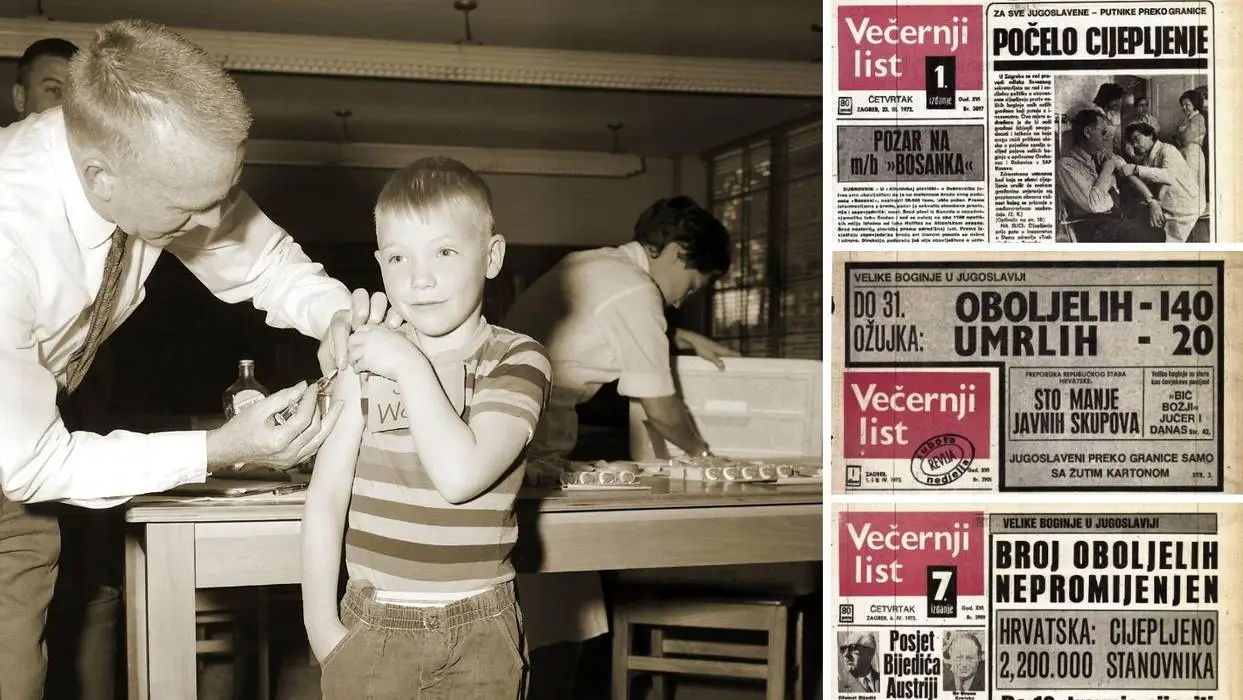
But in 1972, one pilgrim returned with something far more dangerous than ideology – smallpox.
Kosovar Albanian cleric Ibrahim Hoti came back from Hajj carrying the virus. Because he had been vaccinated shortly before travelling, he recovered quickly, but the disease had already begun to spread. Soon after, more than 140 cases were detected across Kosovo and beyond.
The Yugoslav state responded with extraordinary speed.
Within just two months, all 18 million citizens of Yugoslavia had been vaccinated against smallpox. The outbreak was contained and the country avoided catastrophe.
Decades later, during the COVID pandemic, many people across the former Yugoslavia highlighted the success of the 1972 smallpox campaign when arguing against anti-vaccine rhetoric promoted by celebrities such as tennis champion Novak Djoković and popstar Jelena Karleuša.
One comment popped up often during the Covid pandemic on ex-Yugoslav social media:
“If Tito were alive, everyone would’ve already been vaccinated.”









_(8249451687).jpg)








.jpg)












.jpg)







.jpg)














_logo.svg.webp)





_(52052470251)_(cropped).jpg)





.jpg)