On Saturday 13 June this year, the Bulgarian capital Sofia saw two processions wound through its streets within a few hundred metres of each other. One was Sofia LGBT+ Pride. The other, larger event was the “Shestvie za semeistvoto” i.e. the March for the Family, advocating “the traditional family” and “traditional values”.
This was no coincidence — this has been the case now, by design, for years.
The precedent was set by former Sofia mayor Yordanka Fandakova, who, when pressed on why she permitted this arrangement the first time round, offered something that sounded reasonable: “Bulgaria is a democracy and everyone’s voice should be heard”. What a lovely, and yet highly flawed, sentiment.
Because here is what that framing erases: LGBT people in Bulgaria get just the one day in the year… and yet, their single march gets hemmed in by a counter-demonstration specifically staged to diminish and humiliate it. “Traditional values” meanwhile are not confined to a single Saturday afternoon in June; they’re the default setting — in political rhetoric, advocated by the all-powerful Orthodox Christian and Islamic clergy, in the mainstream Bulgarian media, in the classroom, in the courtroom, at the police station, in most Bulgarian homes, workplaces and social events. It does beg to ask: why have a march when they already own the street?
And this is no unique arrangement. Over the border on Saturday 20 June, Skopje Pride in Macedonia’s capital will be “balanced” with an Orthodox Church-led parade in defence of the family in Macedonia’s second largest city (and Skopje’s bitter rival) Bitola.
Zagreb Pride this year coincided with the Antunovski hod mladih (The Saint Anthony Walk of Youth), an annual Catholic event where young Catholics walk 16 km from one St Anthony church to another in Zagreb. Mix that with a firm dose of social conservatism, flag waving and the take-over of Zagreb’s main square, then you know which event out of the two captured the most media limelight.
The government picks a side
This year in Bulgaria the situation was sharpened considerably. The recent Bulgarian elections, the eighth in five years, finally delivered what the previous seven didn’t – a workable majority to one party. That was former Bulgarian president Rumen Radev’s brand new Progressive Bulgaria (PB). Many Bulgarians have pinned their hopes that Radev (let’s face it, Radev IS the party) will break the deadlock that has characterised Bulgarian politics in the 2020s. During his time in the largely ceremonial role as president of Bulgaria, Radev, a former air force commander, didn’t shy away from unconstitutionally stating his socially conservative views, much in line with the majority in contemporary Bulgaria. But most Bulgarian politicians know they must tread a fine line catering to the specifics of the Bulgarian electorate while paying at least lip service to the people funding this all – the Eurocrats. Previous Bulgarian governments have been rather non-committal on the staging of these two parades. However, this year the new government broke ranks and made it quite clear what side it’s on.
Slavi Vassilev, deputy head of the PB parliamentary grouping, stood up in parliament and delivered the message plainly:
“The traditional family is an issue of national security, identity and future.”
Yes, they went there. That means, by logical extension, Bulgarians who are gay, lesbian, bisexual, transgender or otherwise not cisgender or straight are a threat to the country.
This is not a fringe position that some anonymous profile posted in all caps on a comment on social media; this was said in parliament, by a senior member of the governing party, in the week that Sofia Pride is taking place. Vassilev went further, pledging the government’s “complete institutional support” for the March for the Family. So the state apparatus, the same state that is nominally bound by EU anti-discrimination law, threw its weight behind one side – the one with the religious icons and not the rainbow flags.
To add more to this position, Bulgaria’s influential Orthodox Church spoke openly of its opposition to Sofia Pride and urged its congregation to participate massively in the March for the Family.
And yet, despite all of Bulgaria’s main social apparatus working openly and vigorously for the one side in this cultural war, many Bulgarians will still say that the “genderité” (lit. the “genders” but pejoratively meaning “queers”) are “ruthlessly taking over the country”. Popular Bulgarian hip-hop star Ustata, who never shies away from political matters, made that clear with this AI-generated video for his latest song Novite bratushki, comparing the Bulgaria political elite’s slavish devotion to the EU on par with that of the communists for the USSR pre-1989.
“Russian influence”?
There is a temptation, particularly in Western European commentary, to file all of this under the heading of “pro-Russian influence”. However, this is a misnomer. Anyone saying this truly doesn’t understand the situation.
Yes, Russia under Putin has gone as far as officially labelling the LGBT movement as an “extremist organisation” Yes, the Orthodox Christian Church worldwide has been consistent in its instigation and support for such moves. But the hostility towards sexual and gender minorities in Bulgaria is not an import – it is predominantly homegrown, widespread and, crucially, cuts across the political divide that otherwise is often made into an easily-digestible pro-Russia versus pro-Europe dichotomy.
Just like everything, it’s not black and white – it’s a whole sea of grey. People who will tell you they are staunchly pro-European, hate Russia, wave EU flags and invoke “Western values” will, in the same breath, tell you that gay people are a threat to civilisation. These are not contradictions they feel any need to resolve. “Pro-Europe” in Bulgaria often means “pro-economic integration” and “pro-security alliance”. Only rarely does it also mean “pro-equality for people who are different from me”.
Part of this comes from a distorted sense of what the EU actually embodies; one that contorts ideal with reality. I was reminded of the time when a gay couple I know, one French, one Portuguese, went on holiday to the Croatian seaside. After having returned from their trip, I was eager to find out how the Croats treated them (oh, there’s an article full of stuff there). They told me of one incident. One evening, they were at a table together at a restaurant in Zadar. The waitress came to their table with the menus, but she hesitates and then said in a sarcastic tone: “I don’t which one out of you two is the lady to give the menu to first.” That was it. They were both furious, and in their typical Latin temperament, launched into a diva-ish yelling match. The waitress soon disappeared and the couple left the restaurant, thinking that they caused enough commotion to get the waitress the sack for her homophobia.
I told them that nothing of the sort would’ve happened. They were shocked!
Their response: “But Croatia is in the EU and that’s the law. Or else, why was Croatia accepted into the EU in the first place?”
Just because it’s in the EU, doesn’t mean that it’s all-round gay-friendly. Hey, that’s not even the case in the Netherlands or any other western country.
The “traditional family” that never existed
There is something else worth saying about this “traditional family” that has apparently become a matter of national security: it is, to a very significant degree, a modern invention — and a selective one at that.
Prior to the Second World War, the dominant family structure in the Balkans was not the neat nuclear unit of mother, father and children that today’s “traditionalists” are so busy protecting. It was the extended family — multigenerational, communal, improvised — built to absorb the shocks of poverty, illness, early death and the instability characteristic of Balkan history. It was flexible because it had to be. People died young of disease, war and childbirth; relatives stepped in when parents couldn’t; neighbours filled gaps that relatives couldn’t. Childhood, in the modern sentimental sense, barely existed: once you could walk and follow instructions, you were out in the fields working alongside the adults. The whole fairytale-like adoration throughout the Balkans and into eastern Europe of “our happy childhood” was a Soviet invention from Stalin’s time.
I know this not from history books alone but from my own family. Both of my maternal grandparents grew up without both parents present. My grandfather’s mother was killed when he was an infant; he ended up being raised by his two older sisters and Hatidja, his Turkish neighbour, who apparently had the most wonderful singing voice. When he escaped Bulgaria, he left behind a wife and two infant children, who had to deal with the wrath of the Bulgarian authorities who by association had been marked for life as “enemies of the people”. As children, my uncle and auntie were left to fend for themselves.
My grandmother’s father left for pechalba or gurbet (labour migration) to Australia when she was four years old… and never came back. She grew up in an extended-family household of twenty-two people. So too did her mother - her father also went on gurbet, leaving the village a year after she was born. He too never came back – he died in a work-related accident working in a mobile railway maintenance team somewhere in the wild west of the USA. His widowed wife remarried soon after with a man in a neighbouring village – his first wife had died in childbirth leaving him with four children.
These were not broken families. They were the actual traditional families of the Balkans, joined up, divided and/or held together by necessity, the tradition of the zadruga (wider Slavic clans) and soy (Turkish for “family” but in Macedonia meaning ‘extended family’)… and a great deal of poverty.
None of this features in the March for the Family’s literature, presumably because it complicates the mythology considerably. The “tradition” being defended today is not a historical reality; it’s a retrospective fantasy — a post-WWII nuclear-family ideal grafted onto a Balkan past where it largely did not exist, dressed up in Orthodox iconography and presented as something ancient and sacred.
And then there is the part of the tradition that nobody wants to discuss: domestic violence. It has always been woven into the fabric of these “traditional Christian family values” generation after generation. I have had women in the region, many of them relatives, say such things as “he hits me because he loves me” and “how else will I learn if he doesn’t hit me?” There was complete disbelief from the women when they heard that domestic violence is a punishable (though not enough apprehended) crime in countries such as my birthplace Australia. These are not aberrations; they are the logical endpoint of a value system that places male authority at the centre of family life and teaches women that their suffering is a form of devotion. That tradition too is being marched for in these defence of the family parades… just that it’s not splashed on the banners.
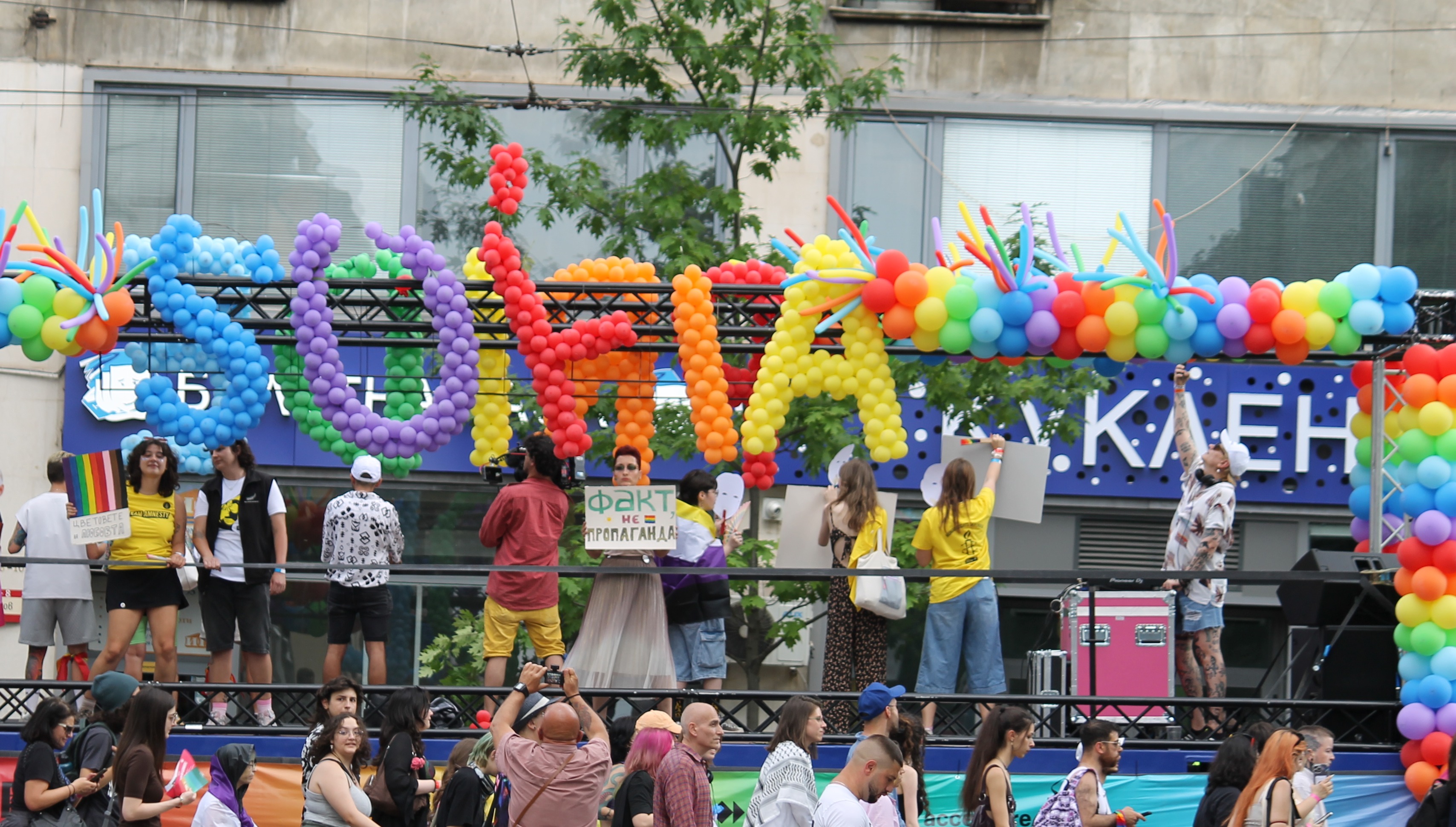
DemieK07, CC BY-SA 4.0, via Wikimedia Commons
Twenty years lost
Bulgaria joined the European Union in 2007. For the country’s minorities and marginalised communities — not just LGBT+ people, but women, Roma, other ethnic, cultural and linguistic minorities, people with disabilities, etc., EU accession carried enormous symbolic weight. The promise, explicit and implicit, was transformation: legal protection would actually be enforced, the rule of law finally applied and equally, and a change not just in the statute books but in the lived reality of being a minority in Bulgaria. The atmosphere in the country in the years leading up to EU accession saw genuine debate and discussion about the issues concerning marginalised communities. Things seemed like they were going the right way. Then accession happened, and just like that, the façade was dropped. Mission accomplished, so it was back to normal programming.
Twenty years on, it’s worth assessing what those promises have and have not delivered.
Legislation exists. Bulgaria has transposed EU anti-discrimination directives. On paper, much of the framework is there. In practice, the machinery of enforcement remains weak, the judiciary is still susceptible to political and economic (organised crime) pressure, and the cultural climate has not moved in the direction the optimists had hoped. If anything, the organised backlash — the “family values” movement, the constitutional amendments explicitly defining marriage as between a man and a woman, the banning of “LGBT propaganda” in Bulgarian schools, parliamentary rhetoric of national security — has grown more confident and institutionalised.
This all raises the question: why is Sofia Pride tolerated at all in a political and social environment this hostile?
Talk to many LGBT+ people in the Balkans and they’ll say cynically that pride parades go ahead because the West uses it as a barometer — visible, photogenic, easy to point to — for measuring how “western” (or, to be more honest, “white”) a country is. A Pride parade happens; most of the right pieces of legislation exist on paper; a box gets ticked in Brussels – everything then is, officially, fine.
The most brazen case of this happening? The first ever “Pride parade” in Prishtina, Kosovo. Happening on a Tuesday at lunchtime, Hashim Thaqi, who’s now being tried for war crimes, made sure to make an appearance for the many cameras there. Who were marching? A whole bunch of young straight women from the public service pulled out from work, given rainbow flags and paraded in front of the cameras. There were hardly any LGBT+ people in the parade. An overwhelming majority of LGBT+ people in the Balkans are not out in general, let alone at their workplaces, so asking for time-off for a Tuesday lunchtime Pride parade march would’ve outed them and probably left them unemployed. But hey, who cares! The parade looked great on camera for the western audience. Slay, Kosovo!
Parades like this are then a profoundly superficial measure of whether a minority population is genuinely protected. The parade happens, the laws might exist, but for the other 364 days of the year, enforcement is absent, the judiciary looks the other way, the rhetoric in parliament escalates and the government pledges institutional support for the march happening a few hundred metres away. None of that truly disturbs the barometer reading.
This matters because it lets everyone off the hook. It lets governments claim democratic credentials while actively undermining them; it lets the EU point to formal compliance while ignoring lived reality; and it lets western governments and commentators feel reassured that the problem is being managed, when in fact it is being performed.
A Pride parade that exists primarily to satisfy a western checklist is not progress – it’s optics. And the people marching in it today deserve better than to be someone else’s proof of concept.
Bangaranga!
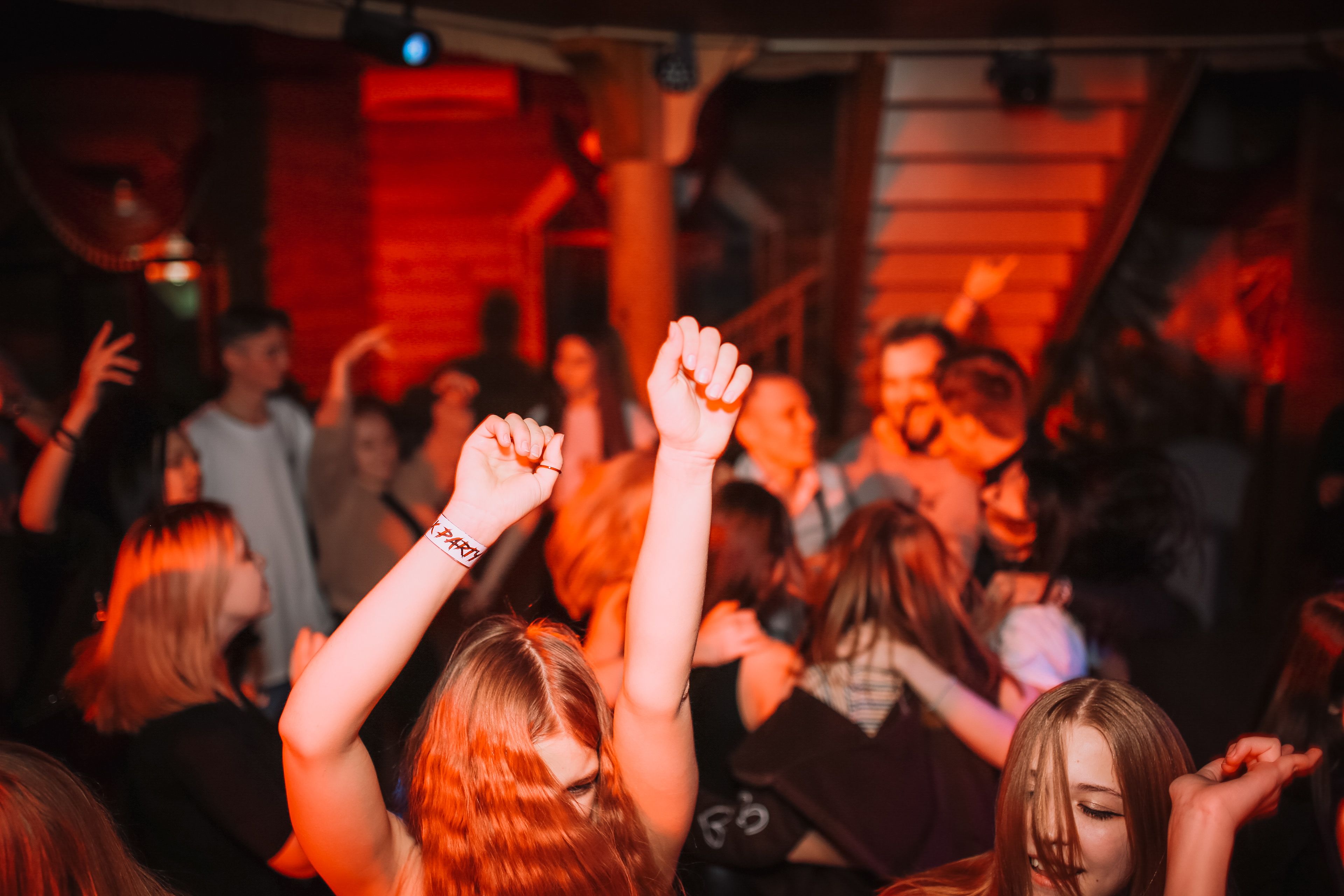
Now for some celebrity stuff. Dara, who won Eurovision representing Bulgaria last month, was the headliner for the post-parade Sofia Pride concert, putting in an energetic performance for the appreciative crowd. And just like that, all of the Bulgarian naysayers and upstanding Orthodox Christians who have been insisting that Dara is a satanist for promoting traditional (and paganistic) Kukeri rites and costumes, felt vindicated; plus the Bulgarian “patriots” who last month were lavishing praise for “our beautiful girl Dara” have done the usual and taken to social media to class Dara as “national enemy No 1”.
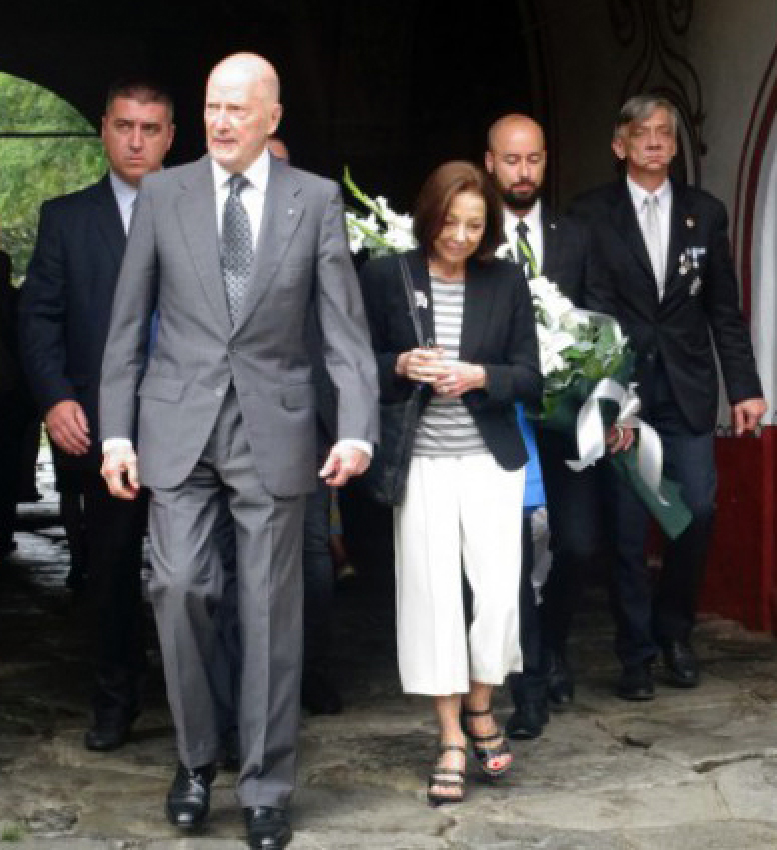
Bulgarian LGBT people and many more of their allies marched in one parade. A larger crowd, brandishing Bulgarian flags, religious icons and other paraphernalia, including the very masculine-looking Bulgarian princess Kalina shocklingly LARPing as a Bulgarian peasant (perhaps to quell the persistent rumours she’s transgender), marched nearby, with government backing, to tell “genderité” that they are a problem to be solved rather than people to be respected.
The mayor’s old formula about democracy and hearing everyone’s voice was conveniently invoked whenever there was questioning of the timing of the parades. It sounds, as always, like fairness… but it isn’t. It is the use of “balance” as a weapon — the pretence that there is some neutral ground between a person’s right to exist freely and the demand that they be marginalised.
Bulgaria is an EU member state and has been for almost twenty years (yipes!). Its government officially gave its blessing and support for a march premised on an idea that some of its citizens are a national security threat, in defence of a “tradition” that never quite existed, while the real traditions, the good and the bad – the violence, the poverty, the neighbours who raised each other’s children across ethnic lines — go unmentioned and conveniently forgotten.
This is worth saying out loud… and not just once a year.

.jpg)


.jpg)





















.jpg)







.jpg)












_logo.svg.webp)


_(52052470251)_(cropped).jpg)






.jpg)












_(8249451687).jpg)