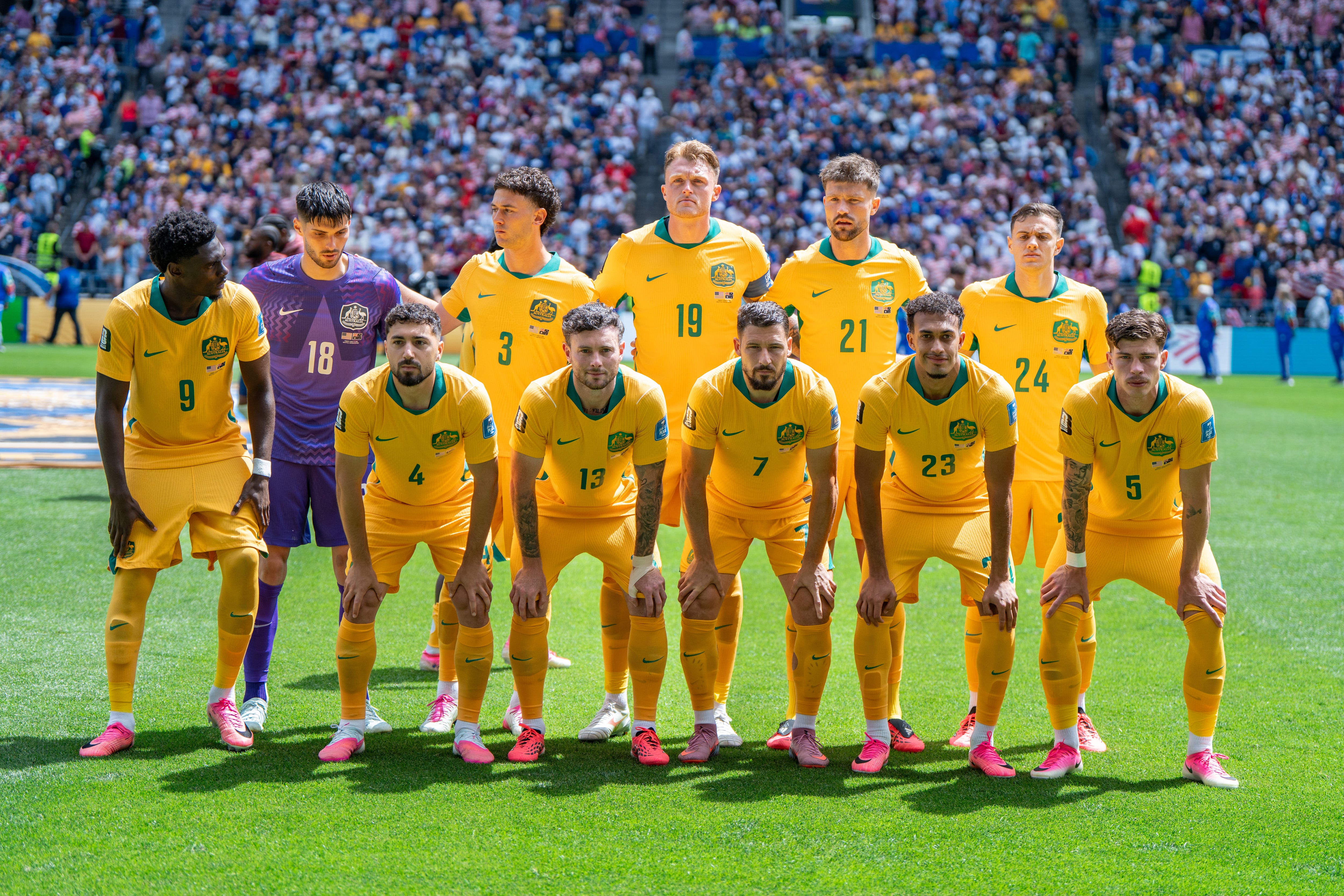
The 2026 World Cup has enthralled the world. First of all, well done to Australia's Socceroos for puting in a good show of it and having made it past the initial stages for a third time. What makes Australia’s achievement here so special is not just because the team is not your most fancied of football nations – let’s be honest, it’s no Argentina or Spain – but also because “soccer” in Australia plays second fiddle to “football”.
And if you noticed, yes, Australia’s football team is nicknamed “the Socceroos”. Geddit? It’s soccer + kangaroos.
And also yes, like in North America, Australians call the sport “soccer” and not “football”. And no, we’re not going into arguments about this.
There’s a good reason for this – because there is also “football” in Australia.
But what then is “football” in Australia?
Well... that depends on where you are in Australia as there are two very separate codes called as such.
If there is anything cultural that so clearly divides Australia, a country so large yet so surprisingly uniform in its national (and especially sports) culture, then it's “football” (or “footy” as it's more popularly called).
This is the rough run-down: for people living in most of Queensland and New South Wales, “football” is rugby, whether it be “league” or “union”.
For the rest of Australia, it’s “Australian Football”, more popularly known as “AFL”, the initialism of its national league or, increasingly less so, by its former colloquial monicker – “Australian Rules” or “Aussie Rules”. It’s a uniquely Australian sport.
Both main football codes, AFL and rugby (league) are the biggest winter sport by far in their respective territories. But unlike other sports in Australia, which usually are uniformly popular across Australia (such as cricket), most people in rugby areas have little to no interest and/or knowledge in Australian Football, and vice versa.
For the record, and especially for all you Welsh people, I’m from AFL territory, so I have absolutely no idea when it comes to the fortunes of the Australian rugby teams or even what a rugby match is all about. But ask me about what’s happening about AFL from March to September each year, if I don’t know it, then I just need to ask my parents who are season ticket-holders to the Fremantle Dockers. Actually, their life-long wish of attending an AFL Grand Final will become reality this year!
Such is the divide between the two football territories that the border separating them even has a name – the Barassi Line, in honour of legendary AFL footballer Ron Barassi.
Now, to confuse things, an attempt was started in 2004 to rebrand “soccer” as “football” in Australia when the national governing body officially changed its name from Soccer Australia to Football Federation Australia, and then to just Football Australia in 2020.
While the official name reflects international standards to align with FIFA, and the hope was that the rebrand would get Australians to fall into line with most of the rest of the world, due to dominance of the existing football codes, Australians still overwhelmingly use the term “soccer”, and the national men’s team is still nicknamed the “Socceroos”.
Since we’re talking footy in Australia, I better let you in on a very important tip…
Whatever you do, don’t ask sports-mad Aussies (and Kiwis for that matter) “what team do you root for?”
Earlier on in the World Cup, which now seems like eons ago, a Canadian friend of mine asked me if I was “rooting” for the Socceroos. Oh bless, how innocent of him, as he wasn’t expecting my immediate, undeniably Aussie, reaction to his query...
WHAT?! 😳 I beg your pardon?!
So what’s wrong with this seemingly innocuous question?
You see, Aussies (and Kiwis) don’t “root” for teams. “To root” has another meaning in Australian and New Zealand slang...
It means “to engage in sexual intercourse”.
”What team do you root for” can then have a similar meaning to the euphemism “what team do you bat for” (what’s your sexual orientation?) or asking if you’re doing the horizontal folk dance on behalf of that team (a bit of a stretch, yes, but that’s how it’s initially interpreted).
[❗Warning: it gets a bit racy now...]
When an Aussie or Kiwi wants to “have a root” (have sex), they can be bold, or vulgar, to ask someone else if they “fancy a root” (”want to have sex”) in the hopes that they are a “good root” (good in bed) and not a “dud root” (bad in bed). Someone who “roots around” or has been “rooting around” (has or has been having sex with multiple partners) because they’re an “easy root” (very willing to have sex) is a “rooter”, who might also regal you with details of their “roots” (sexual conquests).
And if something is “rooted”, it’s broken or ruined.
“Root” then is a lot like the slang terms “screw” (North America), “shag” (UK, but also Australia) or, especially so, “ride” (Ireland).
You can see you need to tread carefully when using “root”, its homophone “route” and associated words with Aussies and Kiwis. Enter the minefield...
For instance, a “route”, such as for a bus or airline has been traditionally pronounced as “root”, but to avoid any untoward connotations some Aussies and Kiwis say “rowt” instead, provided by context it’s not confused for “rout” (a decisive defeat – often used in sports commentaries). The computer-related term “route” though is always said as “rowt”, so a “router” is then pronounced as “rowter” as it’s not the promiscuous type (see above ).
So did you know before that something as innocent as “root” has naughty connotations in Australia and New Zealand?
If not, that goes to show how important it is to have a localisation expert (like me) properly check and tailor your copy or text and root out any unwitting gaffes before unleashing it to the Aussie and Kiwi masses.

When I’ve brought up this subject about “root” on the socials before, I’ve had some interesting responses.
One person asked: “do you think this Australian usage has anything to do with ‘rut’? Webster defines that as ‘a periodic and often annually recurring state of certain male animals ... during which behavior associated with the urge to breed is displayed’”
I haven’t seen any connection to it before but it certain does sound logical.
What can be said for certain is that Aussie use of “root” can definitely be traced to 1970s Sydney surfer slang and particularly gained national awareness through the classic coming-of-age Aussie book and film Puberty Blues, which have proven to be a treasure chest for Aussie slang. However, it’s also claimed that “root” first appeared in Aussie urban (particularly Sydney) slang in the 1930s and soon after made its way across the Tasman to New Zealand.
Another person commented: “I’ve just started the Aussie comedy series Colin from Accounts where they used the word ‘root’! I was happily able to explain what it meant to hubby.”
And an Irish colleague had this one: “Your story reminds me of the time an American once asked me if I wanted a ‘ride’ when I was walking back from somewhere. They were in a car and were merely offering me what we call a ‘lift’ in Ireland (can I give you a lift somewhere?). ‘Ride’ in Ireland has exactly the same connotation as ‘root’ in Australia and New Zealand :-) I declined their offer of a ride and continued walking”

So if Aussies don’t “root” for a team, then what’s the way to say you “support” a team in Aussie?
That’s where the uniquely Australian “barrack” comes into play.
Example:
I barrack for the Socceroos!
So where did the Aussies get this one from?
Well, like most terms, no-one is for certain; however, the most likely theory is that it comes from Northern Irish English slang. In parts of Ireland, “barrack” meant “to brag or be boastful about one's fighting powers”. And considering the number of Irish immigrants to Australia (they made up a large number of the convicts in the First Fleet), this adds up.
Note though that in various forms of British English, “to barrack” actually means the exact opposite – it means to shout criticism or boo at someone!
So who are you barracking for in the World Cup final? Or perhaps you’d prefer rooting them? Cheeky!
Right – Boxing kangaroo. Photo by Daniel Pelaez Duque on Unsplash

.jpg)


.jpg)
































.jpg)







.jpg)












_logo.svg.webp)






_(52052470251)_(cropped).jpg)













.jpg)

















_(8249451687).jpg)