Bulgaria, and the Balkans as a whole, have survived yet another gruelling graduation season. Chestito! That was yet another hard slog.
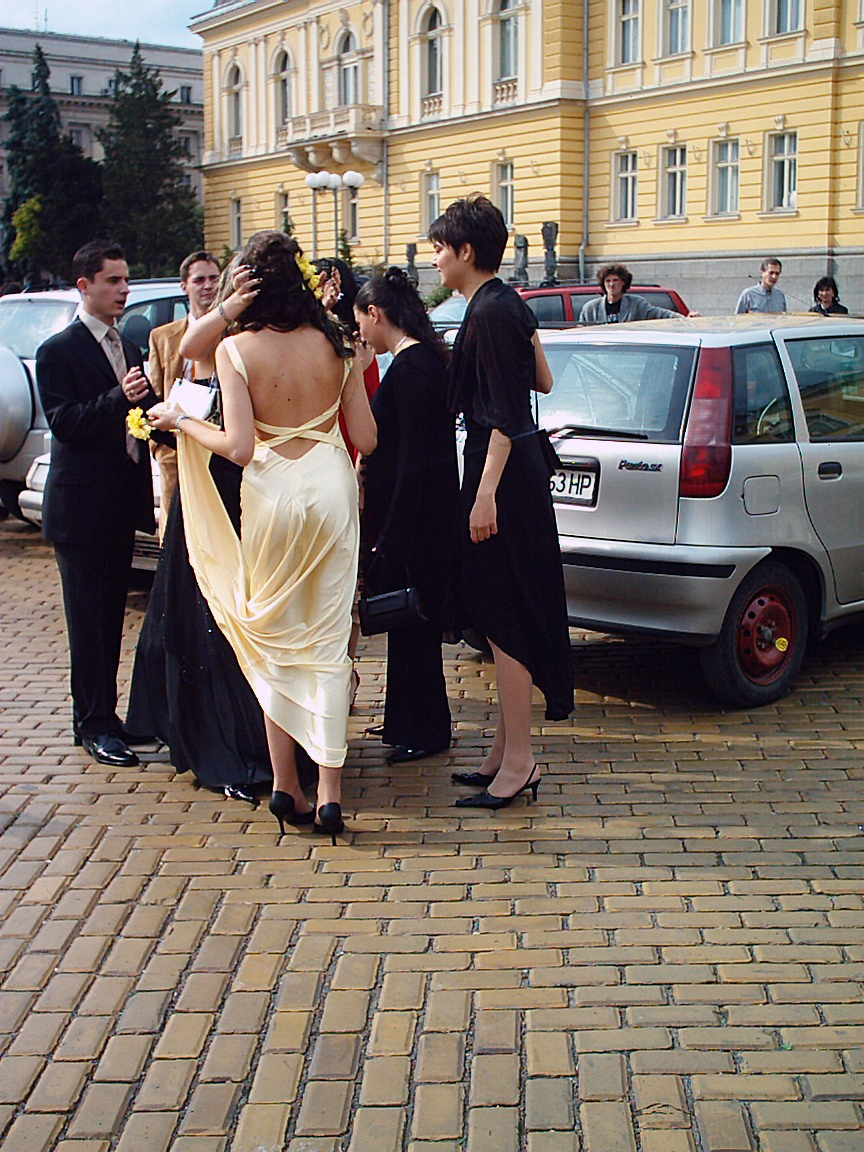
Every year at the end of the academic year in the Balkans, which is around the end of May, the whole region becomes focused on one thing – high school graduations. Convoys of rented luxury cars clog city thoroughfares, teenagers in fancy suits and sequined gowns emulating celebrities parade through city and town centres, restaurants and reception centres host all-night celebrations, professional photographers and (Roma) musicians work overtime… and lots of money (that everyone claims not to have) is spent.
Plus, as it’s 2026, there’s also plenty of social media and tabloid footage and commentary, ranging from pride to snickering, often to do with the excess it has become. Let’s have a look of it here and you can judge for yourself. All of these are images and clips from graduation celebrations in Bulgaria this year… (care of the X profile Една българка)
The red carpet awaits! The usual parade of the graduates through the town centre on their way to the prom ball. But before they get to this, you need to make a splash of sorts. Cue the car parade to rival Dubai!
Note this clip is not in a big city such as Sofia or Plovdiv but in the provincial town of Kardzhali in Bulgaria’s south.
But turning up in a flashy car has soooo been done. So every year, the transport options to the parade become… erm… more inventive…
And how about this?
Social media influencers use this opportunity to the max, with this one gaining particular attention this year for his entrance…
and for his, well, dancing…
While such celebrations can be found all over the Balkans, it’s in Bulgaria where there has been the greatest fundamental shift affecting, or effected by, economics and the changing social environment in the country.
Traditionally, June heralds the transition into another season: weddings. But increasingly, the wedding season pales in comparison.
For much of the past decade, Bulgarian graduation celebrations have become bigger, louder and more emotionally significant, while weddings have quietly shrunk… or disappeared altogether. The “big fat Bulgarian wedding” still exists, but it’s no longer the social default. Many young couples now opt for small civil ceremonies, minimalist receptions or (clutch pearls!) simply never marry at all.
And nowhere is this transformation clearer than within my own Bulgarian family.
The era of the big Bulgarian wedding
The first out of my Bulgarian cousins to marry was in 1989 in the final summer of Communist Party rule (no-one could predict that daddy Zhivkov would be gone by the end of that year). OK, it was a shotgun wedding – everyone in the village knew that – but that was the socially conservative code at the time, for it was otherwise shameful on the family to have a daughter who was pregnant and not have the father marry her. Photos arrived in Australia showing the entire extended family gathered outside the “Ritual Palace” as they were known in communist Bulgaria at the closest town near their village, for the obligatory civil marriage ceremony, where both comrades pledged their matrimony in loyalty to the party and state. Everyone was there: grandparents… well, minus our grandfather, who had been in exile in Australia for forty years and would’ve faced imminent arrest and time and certain death in a prison camp had he attempted to return; all the cousins, neighbours, family friends… and the whole village. The clothing they all wore smacked of poor quality, indicative of the dire state of Bulgaria’s planned economy, but the event itself was a big social event and a brief respite of joy in what otherwise was borrowed time.
The second out of my Bulgarian cousins to marry did so in 1992. Her husband was 33 — considered unusually, even scandalously, late for marriage at the time. Bulgaria was deep into its chaotic post-communist “transition” by then, and weddings had become fascinating hybrids of old traditions and newly recovered freedoms. There was now a church ceremony after the civil one, something discouraged and subject to repercussions (particularly on career advancement) under atheistic communism. The wedding was professionally videotaped, another novelty of the era. Again, the entire extended family was in attendance.
Then came the wedding of another cousin in 1994.
This one was truly big!
Again, we received a VHS tape of the entire event. There was the traditional procession from the groom’s house to the bride’s, accompanied by Roma brass musicians. But the reception itself was pure 1990s Bulgaria: the band played almost entirely chalga, the newly dominant Balkan pop-folk genre that exploded during the post-communist years, and the fashions were… of its time.
In honour of our absent grandfather in Australia, the musicians also performed several patriotic songs associated with the Macedonian independence movement a few years earlier in the dying days of Yugoslavia. These songs advocated a separate Macedonian identity, a major sticking point to this day in Bulgaria. One relative, who had lived during the time when the local Bulgarian authorities had taken violent measures to combat such sentiment, felt compelled to go on stage, grab the microphone and publicly reassure everyone that Macedonia “was, is and always will be Bulgarian”.
Again, the whole extended family was there.
As it turned out, that was the last time.
Above: clip of a Bulgarian wedding in 2010. Note how much smaller an event it is compared to the 1990 clip before.
The weddings that never happened
Fast forward to the 2010s.
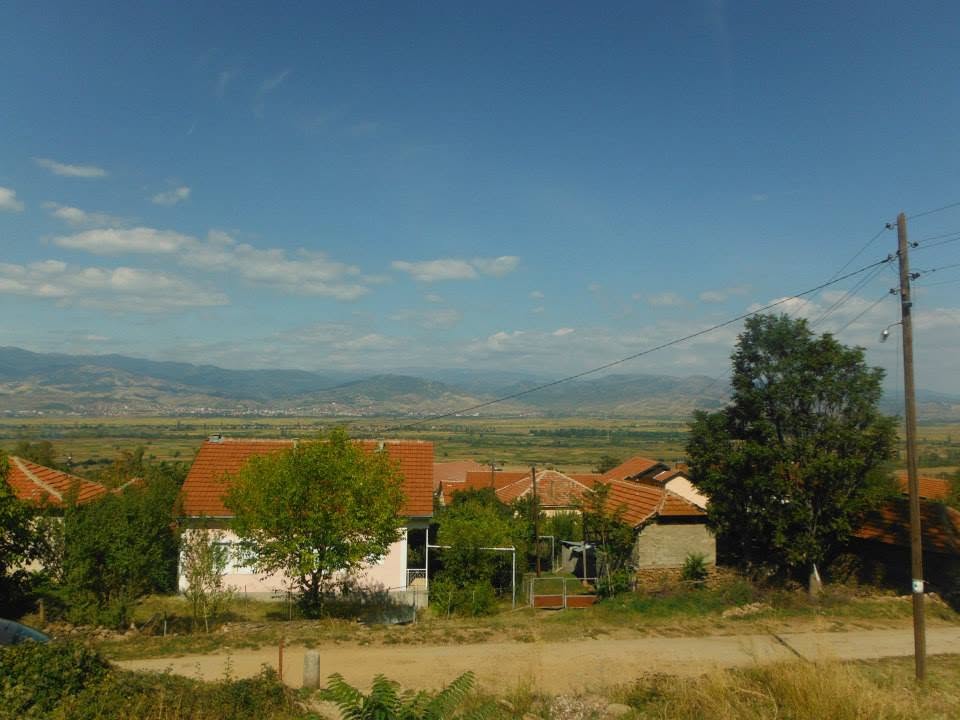
Those same cousins who married in the 1990s now have adult children of their own, and without thinking, we expected this generation to continue the tradition for big weddings. Importantly, my relatives don’t live in big cities such as cosmopolitan Sofia or Plovdiv, but are clustered around two provincial towns – one being best described as a depressed post-industrial apocalypse located in one of the most polluted areas in the entire EU, and the other quite quaintly isolated in one of Bulgaria’s most socially conservative and yet ethnically diverse regions, where the population is roughly split evenly between Orthodox Christians and Muslims.
Yet something fundamental had changed.
The first sign came when I saw a Facebook photo of the eldest daughter of the cousin who married first. The daughter (who happens to be a redhead – yes, they exist in the Balkans) standing in a brilliant blue dress beside a man in a suit, while two Roma zurna musicians serenaded them.
I contacted her mother to ask what had happened.
It turned out the couple had already been living together for some time. Now that she was pregnant, the families had hurriedly organised a small engagement party involving only immediate relatives. Like mother, like daughter then.
Several things about this were once unthinkable.
First, engagement parties were not traditionally a thing. Historically, engagements were often followed by big weddings within weeks.
Second: she had been openly cohabiting with her boyfriend before marriage.
“How was that allowed?” I asked.
My cousin rolled her eyes. “That’s what young people do these days.”
Only a few years earlier, this would have been treated as scandalous. Now it was accepted with weary resignation.
Naturally, my family in Australia had been waiting eagerly for news of a big wedding so we could finally attend one of those enormous Bulgarian celebrations we had seen on the VHS tapes they sent to us in the 1990s.
But that big fat Bulgarian wedding never came.
The couple eventually formalised the relationship with a simple civil ceremony and nothing more. To add further shock, my second cousin did not even take her husband’s surname.
This is happening in provincial Bulgaria!
Has this world gone mad?
At first, my whole family assumed this was an exception… but by 2026, it had become clear that it was the new normal.
The daughter of another cousin met a guy while studying in Sofia. He, like her, also came from a provincial Bulgarian town. The young lovers soon moved in together, finished their studies, found work in the same government department, had twins… and more than a decade later still remain unmarried.
Another cousin’s daughter also moved in with her boyfriend shortly after meeting him. They later had a child together, followed eventually by a small civil ceremony attended only by immediate family and close friends.
Another cousin’s son, now 33 – exactly the same age his father was when he married, has been with his girlfriend for seven years. When I asked earlier this month whether there might finally be a wedding, the answer was simple:
“No.”
Why Bulgaria stopped having big weddings
The reasons are predominantly economic.
For decades, Bulgarian families saved for years to finance enormous weddings. In provincial communities especially, weddings were public performances of family respectability. Everyone judged everyone else. A large wedding demonstrated status, stability and social belonging.
But younger Bulgarians increasingly see things differently.
Today, many couples know they themselves, and not their parents, will ultimately pay the bill. After decades of economic insecurity since 1989, many simply choose not to spend tens of thousands on a single day.
At the same time, Bulgarian society has become more accepting of cohabitation. Couples living together outside marriage, once deeply frowned upon, are now commonplace even in conservative regions.
Smaller weddings also better fit the urbanised lifestyle most Bulgarians now lead. What once was solely a Sofia, Plovdiv or Varna thing has spread nationwide. If weddings happen at all, they are often intimate affairs of 50–100 guests, focused on close friends rather than sprawling extended kin networks.
Large banquet halls are increasingly replaced by restaurants, boutique venues or, for those with the means, destination ceremonies.
The stereotype of the gigantic Balkan wedding survives partly because older generations still remember a different social reality.
Historically, rural extended families lived close together. Under communism, rapid industrialisation scattered relatives across the country, turning weddings into rare opportunities for family reunions. But now, with roughly a third of Bulgarians living abroad, gathering everyone together has become vastly more difficult.
Older Bulgarians often lament this shift bitterly. “We knew who were our second cousins, but now people don’t even speak to their siblings.”
I have to emphasise again that’s it’s wrong to say that there are no more “big” weddings in Bulgaria – they certainly still exist, but they’re not the standard anymore.
Edal, CC BY-SA 3.0, via Wikimedia Commons
The bureaucracy doesn’t help
Like so much of Bulgarian life, marriage too is somewhat unnecessarily over-bureaucratic.
At a minimum, couples are required to provide the local municipality identity documents, civil marriage declarations, premarital medical certificates (Bulgarian bureaucracy loves these!), proof of payment for municipal fees…
If previously married, additional divorce or death certificates are required.
And because this is Bulgaria, municipal officials often request further paperwork of wildly varying relevance depending on mood, office or municipality.
The costs for all these documents do add up, not to mention the “joy” of dealing with Bulgarian public officials through the little openings of their counters and their arbitrary and countless coffee and smoke breaks. So why bother with this hassle!
So when are you having babies?
The other big pressure that Bulgarian couples face is to have babies. There is a saying said at Balkan weddings that there’ll be a christening in a year’s time, so when you get married, you’re expected to provide your parents with grandchildren post-haste. With many young couples either unable to afford a new child or having other priorities in life, a loophole has been found. In a situation also found in other socially conservative and traditionally family-oriented societies, engagement periods now last for years – just like that of my cousin’s son and his seven-year relationship. Italians and Greeks know about this, and now with the taboo of pre-marriage cohabitation gone, it has also come to the Balkans. But there’s only so much time the wider family, or even one of the people making the couple can put up with this limbo period. A confrontation is almost inevitable, and the light-hearted backhands turn into outright shade. The most extreme example of this was when couples like this used to appear trash TV shows such as on Greece’s Erotodikeio in the 1990s, where parents would confront long-term engaged children embarrassing them nationally by telling them that the clock is ticking – what are they waiting for?
But having children is essentially a vote of optimism for the future… and for many in Bulgaria who have only known of economic turmoil, there’s very little incentive to bring a new mouth to feed into their chaotic world. Bulgaria’s population has been rapidly declining, going from 9 million in 1990 to now barely over 6 million. And with fertility rates so low, plus with an ageing population and still mass migration, the predictions are catastrophic.
The new great Bulgarian celebration
But economics and bureaucracy alone do not explain the decline of weddings.
The deeper reason is that weddings are no longer the most emotionally significant rite of passage in Bulgarian life. Given that many Bulgarians are not under obligation, as dictated by the judging eyes of the neighbours, to live with their parents until marriage and then become fully fledged, independent-ish adults, there’s been another ceremony that has taken that role…
High school graduation.
This transformation has deep historical roots.
When the communist regime took power in 1944, Bulgaria was overwhelmingly rural and poorly educated. According to the 1934 census, fewer than 3 per cent of Bulgarians had completed secondary education. However, under communism, mass literacy campaigns and universal schooling transformed society within a generation.
For most Bulgarian (and Balkan) families, having a child graduate from high school, let alone attend university, represented unprecedented social advancement. Graduation therefore had enormous symbolic importance.
Today, that symbolism has only intensified.
For many young Bulgarians, graduation now also marks the moment they leave home: usually moving to the big cities such as Sofia, Plovdiv or Varna, or even abroad, for university or work. Emotionally, it now carries much of the weight weddings once did.
And so, Bulgarian graduations are the new weddings, with just as an elaborate, and highly expensive, celebration culture to go with it.
The Abiturientski Bal
The centrepiece is the abiturientski bal — the graduation ball aka prom.
Held after final exams in May, it marks the completion of 12th grade and has evolved into one of the biggest social events in the Bulgarian calendar.
Students wear fancy suits and extravagant gowns, often emulating the chalga stars or celebrities they admire. We are rivalling the Met Gala here! Hair and makeup are professionally done. As seen in the videos above, luxury cars, limousines, retro vehicles, sports cars and, as has been a trend showing on the socials, semi-trailers complete with Roma musicians, are rented for ever dramatic arrivals. The whole town will gather outside of schools and squares to greet the graduates as they parade through before they’re greeted by the obligatory red carpet leading them into the restaurant, hotel or hall where all-night celebrations await. Oh, and the graduate chant is counting up to 12 to signify completing 12 years of schooling, with chalga songs to go with it.
There are speeches, dancing, DJs, live music, drinking, endless photography, and traditions such as everyone staying up and gathering to see the post-party sunrise.
Unlike the relatively modest prom traditions of many countries, Bulgarian graduation season can stretch across multiple days. There are separate celebrations with classmates, friends and family; elaborate professional photo sessions for the school album, often featuring multiple costume changes; farewell ceremonies for teachers (bring out the bouquets and guitar!); school rituals and processions, originating from communist-era ceremonies though now stripped of their ideology; and post-prom holidays abroad or on the Black Sea coast.
The season also overlaps with 24 May celebrations honouring Saints Cyril and Methodius, linking graduation directly to Bulgarian national identity, literacy and culture, so there’s a nationalist element to it.
In effect, the graduation ball has become something larger than a school event. It also transcends any ethnic or religious differences, becoming a ceremony and experience shared by everyone in Bulgaria.
It is now the great public performance of entering adulthood.
Graduation as status performance
The irony is striking.
Communism unintentionally created the cultural conditions for this shift. By massively expanding education, the socialist state transformed high school graduation into a profound marker of upward mobility.
Post-communist consumer culture then amplified it.
Today, families who would never spend lavishly on a wedding may spend extraordinary amounts on a child’s graduation. Professional photographers, designer dresses, imported suits, luxury vehicles, drone videography, post-prom trips to the Black Sea coast and even abroad (Greece and Turkey being the most popular destinations) are not options but all mandatory… and this all adds up. One statistic going around the net at the moment is that the average monthly Bulgarian wage is 720 euros, and yet the average spend on graduation celebrations per graduate is 1680 euros… which I personally, and many others, think is a gross underestimate.
In many ways, graduation celebrations now perform the social function weddings once did: they gather extended families, publicly display status, create community spectacle, provide one final collective ritual before dispersal and, above all, mark the start of true adulthood.
The difference is that weddings once celebrated the creation of a new family unit. Graduation balls celebrate the collective departure of the community’s 18-year-olds into an uncertain modern world. Perhaps, that says everything about contemporary Bulgaria – this is now the prime rite of passage for Bulgarians.
But then again, you have this couple who combined their graduation ceremony with a wedding proposal….
Wishing all of our graduates all the success in the world!





.jpg)
.jpg)


















.jpg)







.jpg)










_logo.svg.webp)


_(52052470251)_(cropped).jpg)








.jpg)













_(8249451687).jpg)