Eurovision is all about high energy, disposable, insipid pop songs all based around the visuals. Pretty much the same as what most of the top selling turbo folk and chalga stars push. So it’d be a no-brainer that the countries of the Balkans would send this stuff to Eurovision… and yet they not only haven’t, they actively discourage it. For not want of trying for there have been many attempts over the decades to get turbo folk and chalga on the grand Eurovision stage, and all times they’ve failed.
But first, let’s just define what is turbo folk or chalga? I use here the colloquial definitions of what actually is a bundle of folk-based Balkan pop genres. “Turbo folk” itself was the name of a particularly type of electro-based pop-folk from Serbia, with a very distinct sound, that had its heyday in the mid-1990s. Chalga was the late 1990s Bulgarian off-shoot of this, mostly characterised by songs with humerous and/or overtly sexual lyrics (continuing the Balkan folk song tradition for this) and with a heavier Roma and Greek influence. These two genres were superseded in the early 2000s with what is pretty much the pop-folk of now, where the music, production levels and presentation often make it indistinguishable from western-style pop music. Gone are almost all live instruments; the only element surviving has been the singing style still based on local traditional folk techniques – it’s that ever slight trill. No turbo folk or chalga artist claims to be a purveyor of either music form; the genre in ex-Yugoslavia and Bulgaria is positively referred to as “pop-folk” or just “folk” (not to confused with the English definition of “folk music”, which in the Balkans is otherwise known as etno, i.e. “ethno” or folklorna i.e. “folkloric” music) or disparagingly as “turbo folk” (ex-Yugoslavia) or “chalga” (Bulgaria).
Nurken, CC BY-SA 4.0, via Wikimedia Commons
So why hasn’t this music been sent to Eurovision?
Well, in western European countries, especially in the UK, Eurovision is considered a bit of a joke at most and even since the 1960s something to be ashamed of. But that fits when, to take the UK, its position in the world is fixed and prominent. For the countries of the Balkans, Eurovision has been serious business as this is one of the few opportunities where they can get to compete on a seemingly level playing field with the big western European countries. It’s also for some of the smaller the countries the only time in the year that most of Europe will even hear of them. So they have to put their best face forward so as to represent the national interest in the best possible light… and on terms they consider will garner them the most respect, or at least acknowledgement, from (civilised western) Europe.
Let’s face it: the Balkans are white but not white enough as they’ve deemed to be – how should I put it – “infected” by non-European, i.e. non-white, culture. Those aspects come from the cultural legacy of five centuries of Islamic rule, or even being Orthodox Christian with a non-Roman alphabet. Balkan countries too feel, or rather have been made to feel, that these elements are what have made them “lag behind” and therefore don’t meet the “high” cultural standards to be accepted on equal terms with central and western Europe. Turbo folk and chalga highly represent these “non-white” elements, therefore the public broadcasters have made it a priority to send entries that present their countries as the “European” societies they wish to be. The flip-side is that this attitude actually highlights the great insecurity in national identity these countries have – had they just accepted their true selves, ditched their shame and actually be proud of what they’re truly are, then we’d be seeing turbo folk and chalga at Eurovision.
And there is a precedence here. Greece and Turkey started sending entries to Eurovision in the 1970s. While there were times when they’d send songs that would be more in the style pertaining to widespread popular music tastes in their countries, an example being Turkish pop diva Ajda Pekkan’s 1980 entry Petr’oil (albeit with a more westernised arrangement), right into the 1990s both countries would regularly send entries that would fit the presupposed western sensibilities of the Eurovision. In a way, this was them showing the western European viewing public that “yes, we’re worthy of being here” and to contradict any oriental stereotypes this public would have of Greeks and Turks. But if we look at track record, sending these staid entries didn’t do well for either country, with mid-ing results at best. It wasn’t until well into the 1990s when Greece first and then Turkey later realised that sending their real music actually works. For instance, in the midst of government-propagated nationalist hysteria regarding the name of Macedonia in 1992, Greece sent Cleopatra (the singer, not the Egyptian queen) with this entry in the elafrolaika style featuring mainland Greek folk music motifs, including a Macedonian clarinet solo. The song came 5th, a unthinkably high placing for Greece at the time. Turkey managed to get its highest up-to-then position of 3rd when in 1997 it sent their previous year’s entrant Şebnem Paker (now with new nose) and the group Etnic with this very Turkish pop-folk number, and since fan-favourite classic, Dinle. The success of these two songs would prompt both countries to go for entries showcasing their local music, the culmination of which was wins for Turkey in 2003 and Greece in 2005. Self-confidence pays off!
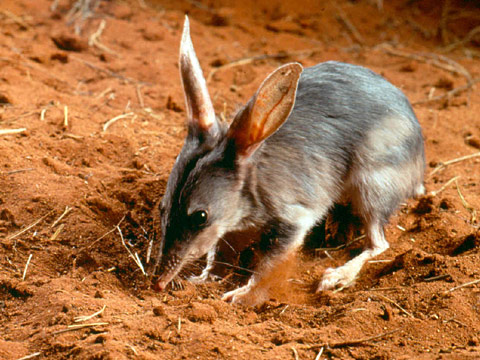
But wait! Haven’t ex-Yugoslav countries and Bulgaria also sent entries that were based on local music and have done very well with them too? Well, yes. Serbia and Montenegro’s highly anticipated return to Eurovision in 2004 after 12 years of sanctions came with moody ethnic ballad Lane moje by Željko Joksimović. What was noteworthy in the lead-up to Eurovision was how vicious the Serbian media was in its hate for the song. There were constant implications that Joksimović plagiarised an Azerbaijani folk tune by Alihan Samedov – emphasising its “oriental” nature, belittling the title of the song by referring to it in English as “My Bamby” (lane in Serbian, while also a name of affection, literally is a “fawn”), and that his other, very western, hit at the time, Leđa o leđa (“Back to Back”) would be a far more worthy entry for Eurovision. All that, however, was conveniently forgotten when Lane moje almost won the competition by coming second. The song even heralded the thaw in post-war inter-Yugoslav public relations when, unexpectedly, the Croatian televote gave the song its top 12 points. The success of the song, which went on to become a regional hit and spawned versions in many other languages (even a Dagestani version that I can’t find anymore), set the trend for the “bombastic Balkan ballad” to become the go-to template for many consequent Serbian and other ex-Yugslav Eurovision entries, many penned by Joksimović, whether it be Bosnia 2006, Serbia 2008, Montenegro 2015 and even recently with Serbia’s 2025 entry.
Croatia even tried their hand at it in 2005 with rock star Boris Novkovic’s Vukovi umiru sami, and then with regional megastar Severina the following year with her controversial number Moja štikla, penned by Goran Bregović (his father was Croat, and he was the frontman of Yugoslavia’s most popular and biggest rock band, so that makes him “acceptable”). Severina was accused with this entry of “promoting Serbian turbo folk”, something that she did flirt with in her later albums, especially her highly successful 2012 release Dobrodošao u klub. Severina’s song was much criticised in her country as its Dinaric folk elements (shared with ethnic Serbs) were considered too “oriental” to represent “central European” and “civilised” Croatia. Baby Lasagna scored independent Croatia’s highest ever Eurovision ranking of 2nd in 2024 with this number that drew from the folk traditions of his native region of Istria, located in Croatia’s far west and never under Ottoman rule, therefore “permissable”. Croatia’s 2026 entry though has sparked controversy due to its “celebration of women defending their Christian identity”, harking to local Balkan folklore emphasising the commonly held belief in the region that five centuries of Ottoman rule was “slavery”.
After Bulgaria had sent two rather weak pop numbers in its first two years at Eurovision (the 2006 entry even had Azis in backing vocals), both failing to qualify for the Saturday night grand final, the Bulgarian public went for a different tact and sent Stoyan Yankulov and Elitza Todorova with the song Voda (Water). The performance is heavy with both performers on highly visual and energetic percussion, and Todorova singing in the Bulgarian “throat” music style (rather poorly, in my opinion). The song was Bulgaria’s first ever qualification for the Eurovision grand final and finished an impressive fifth place. That same success, however, was not repeated when they were eventually selected in 2013, where their song Samo shampioni failed to qualify for the final.
Macedonia’s entries have often featured the aksak (Turkish for “stumbling”), the 7/8 time signature most characteristic of Macedonian folk music but very foreign to western ears. Examples include the late Toshe Proeski in 2004 and Karolina Gocheva in 2007, who had gone from popstar dating one of Serb warlord Arkan’s sons to the respected etno artist she is now. Toshe Proeski’s 2004 song started off as Angel si ti, which when first presented to the Macedonian public as an option for the country’s Eurovision entry that year featured a solo with a kaval (a traditional shepherd’s flute found throughout the former Ottoman Empire), drumming with a tapan and a musical arrangement more reminiscent of turbo folk styles of the time. By the time the tune had arrived to the Eurovision stage with English lyrics, the “oriental” arrangement of the song had been toned down and the kaval replaced with a more “European” violin.
Serbia and Montenegro’s 2005 entry, featuring a quickly assembled boy band from Montenegro called No Name made up of sons of people close to then highly corrupt Montenegrin prime minister Milo Djukanović, also was in an aksak time signature. The performance itself featured archetypal Montenegrin folk dancing in an overt display of Montenegrin identity fitting with the growing calls for independence at the time, a topic that would be the defining point come the following year when tensions between Serbia and Montenegro came to the fore when picking its (ill-fated) 2006 entry.
Doubling down on what are society’s norms regarding turbo folk are the lyrics to Macedonia’s 2006 entry Ninanajna, where singer Elena Risteska laments how her boyfriend, who supposedly introduced her to “good” music (the song states “R&B and hip-hop” fall under this category) is now fully into turbo folk, so he’s “no longer the guy for her”. The lyrics also spell out that this “good turn bad” boyfriend has replaced Eminem with Planeta (a Bulgarian chalga TV station very popular in Macedonia at the time) and banned her from listening to Shakira (what, this song?) and Madonna. Make of that what you will. The irony of the song, and that doesn’t seem to dawn even on its composers or the song’s fans, is that the music to it, and using the well-used ditty “ninanajna” or variants of it, which can be found in songs from the Balkans across the former Ottoman Empire and even into Russia, are precisely these “bad” turbo folk elements that actually give the song any colour or saving graces. You can file this song under the title of “I don’t like turbo folk because that’s what the peasants listen to but this is fine because even though it sounds like turbo folk, it criticises it so that makes it not turbo folk, and so I can enjoy it”. That’s the logic gymnastics involved. Interestingly, the song ended up being extremely popular in Armenia… because of the turbo folk elements. Oh the irony!
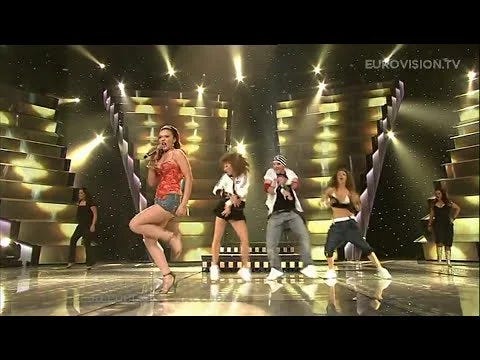
OK, so there has been one time when a “turbo folk” singer has been at Eurovision. That was with Serbia’s 2010 entry Ovo je Balkan. OK, the scare marks are here because the performer of this song, Milan Stanković, who going by singing, music and especially his K-pop-ish image, is firmly pop, but only gets placed in the turbo folk bracket as he first gained his fame by appearing and coming fourth on ex-Yugoslavia’s biggest singing audition show Zvezde Granda, a platform mainly for discovering new turbo folk singers. Stanković subsequently had his first album released by Belgrade-based Grand Production, the biggest turbo folk label in ex-Yugoslavia. Like with Severina’s Moja štikla, Goran Bregović was the composer of Ovo je Balkan, and given that Bregović was a rock star, none of his music is allowed to be labelled as “turbo folk” even though you’d be none the wiser.
So it’s taken all this way to flesh out how Balkan musical elements have made it to the grand Eurovision stage. However, it might not seem it from afar but Balkan pop-folk performers with overtly pop-folk songs have attempted to get that ticket to Eurovision… just that often they’ve had officialdom thwart their chances. So here are some cases over the years where this has happened…
Yugoslavia 1983: Lepa Brena with Sitnije Cile Sitnije
Lepa Brena and her band Slatki Greh were an overnight sensation in Yugoslavia in 1982 when they first were featured, initially as a joke, on the popular Minimax Show. Their intoxicating mix of pop, disco and rock elements to Yugoslav neo-folk music, spiced with humerous lyrics and Lepa Brena’s provocative attire, were just what the Yugoslav public wanted and needed, but many in the establishment were horrified by this “low-grade” music. When RTV Belgrade unexpectedly selected Lepa Brena and her band to be one of its two representatives at the Jugovizija competition to select Yugoslavia’s Eurovision entry in 1983, many believed she and the band had it in the bag with this signature tune, even if their pop-folk music was the antithesis of Jugovizija. However, seemingly from nowhere, Montenegrin representative Daniel Popović won a landslide of the juries’ votes with the song Džuli (Julie), which many (rightfully) dismissed as a Shakin’ Stevens rip-off. Lepa Brena came a lowly 7th. To this day, many in ex-Yugoslavia firmly believe that the results were rigged against Lepa Brena to ensure that Yugoslavia not be represented to a European audience by someone of “such low class”. Džuli went on to come fourth at that year’s Eurovision, at the time equalling Yugoslavia’s best ever previous result at the contest, and the English version of song was hugely successful throughout Europe. Daniel Popović ended up being a one-hit wonder, while Lepa Brena went on to become the biggest and most iconic star in Yugoslavia and throughout the Balkans; Sitnije Cile Sitnije has become a classic hit and one of her signature tunes. However, even her megastar status couldn’t guarantee a later spot to represent her beloved Yugoslavia at Eurovision – in 1986 she tried again at Jugovizija with Miki Mićo but came a scandalous 10th out of a field of 16.
Serbia and Montenegro 2004: Jelena Karleuša with Moli Me
After 12 years of sanctions wilderness, Serbia and Montenegro (as what rump Yugoslavia had been renamed to) was back at Eurovision. The year before, a brand new pop song contest was started to become the vehicle to select the federation’s entry – Beovizija. When the list of entrants was revealed, many were shocked (just like with Lepa Brena in 1983) that turbo folk blonde bombshell Jelena Karleuša was in the field of prominent Serbian and Montengrin pop and rock stars. Karleuša was, and firmly remains, a hugely controversial and outspoken figure not just in her native Serbia but all throughout ex-Yugoslavia. Her appearance at Beovizija was to signify her pivot away from turbo folk towards pop. No one except her anticipated that she would win Beovizija (she came 8th out of 25 in the end) but because of her undeniably spectacular stage shows and bold presentation, she has been touted, often self-promotingly, almost annually as a frontrunner to be Serbia’s next Eurovision entrant. It’s to the point that she openly taunts the Serbian public by saying she’s the only chance the country has of ever winning Eurovision again, given her fame and notoriety outside of the Balkans – a point solidified when she became the first and only Balkan star to be imitated on RuPaul’s Drag Race.
Bulgaria 2005: Sofi Marinova and Slavi Trifonov with Edinstveni
Bulgarians treated their country’s first apperance at Eurovision as a sign of acceptance into the civilised family of Europe. Many of Bulgaria’s top performers at the time relished the opportunity of performing at Eurovision and present themselves to a wider European and world audience. So when Bulgaria’s biggest celebrity, Slavi Trifonov, a comedian, late-night show presenter and chalga/rock singer, most famous for his song Red Ferrari and the only Bulgarian to have filled the O2 Arena in London, teamed up with chalga superstar Sofi Marinova for a power ballad duet called Edinstveni, then it was practically settled in the mind of the Bulgarian public that they’ll be off to Eurovision. However, would Bulgaria “risk” having two chalga singers, one of whom is Roma, represent the country like this at an event as “prestigious” as Eurovision? Well… when it came to voting out of the three final songs in Bulgaria’s national final, Edinstveni gained 28,000 votes, but virtually unknown band Kaffe with the song Lorraine captured an unprecedented 76,000 votes (53% of the total vote) to become Bulgaria’s first ever Eurovision entry. Booing was heard from the audience when Kaffe was announced as the winner. Slavi Trifonov later claimed Lorraine received only 3,000 votes before the final, however, the number increased drastically by 60,000 at the last moment thanks to vote rigging spurred more out of racism towards Sofi Marinova. Bulgaria’s first Eurovision entry eventually failed to qualify for the Eurovision grand final that year.
Sofi Marinova was later picked to represent Bulgaria at Eurovision 2012 with Love Unlimited, a dance number in the style most associated with Romanian pop divas Inna and Alexandra Stan and at the tail-end of that style’s popularity. However, Sofi alone on the huge stage lacked the visual impact Eurovision dance numbers need to succeed, and coming joint 10th place in her semi-final saw her edged out from going to the grand final on a technicality.
Macedonia 2006: Adrian Gaxha and Esma Redžepova with Ljubov e…
and Macedonia 2013: Lozano and Esma Redžepova with Imperija
Esma was hands-down the queen of Roma song, universally adored and a national treasure of Macedonia and Yugoslavia. However, when it came to Esma’s attempts at Eurovision, there’s always been controversy, and both times it had partly to do with treating her as an equal. When she first tried to represent Macedonia in 2006, she paired with Adrian Gaxha, the hottest Albanian pop star in Macedonia at the time (he’d release all his songs in both Albanian and Macedonian). Their song Ljubav e (“Love is…”) is very representative of the sound of mid-2000s Albanian-language pop (though composed by ethnic Macedonian pop producers). However, there was much unease with the ethnic Macedonian public of having people who are not ethnic Macedonians represent Macedonia at Eurovision, let alone having Esma on an equal footing with a pop singer. That the duet, the favourites by far leading into the competition, was pipped out by Elena Risteska’s anti-turbo folk turbo folk song (mentioned above) by a matter of a few televotes, led to suspicions that the vote had been fixed. Following the incident, Gaxha stopped releasing songs in Macedonian and solely focused on the Albanian-language market.
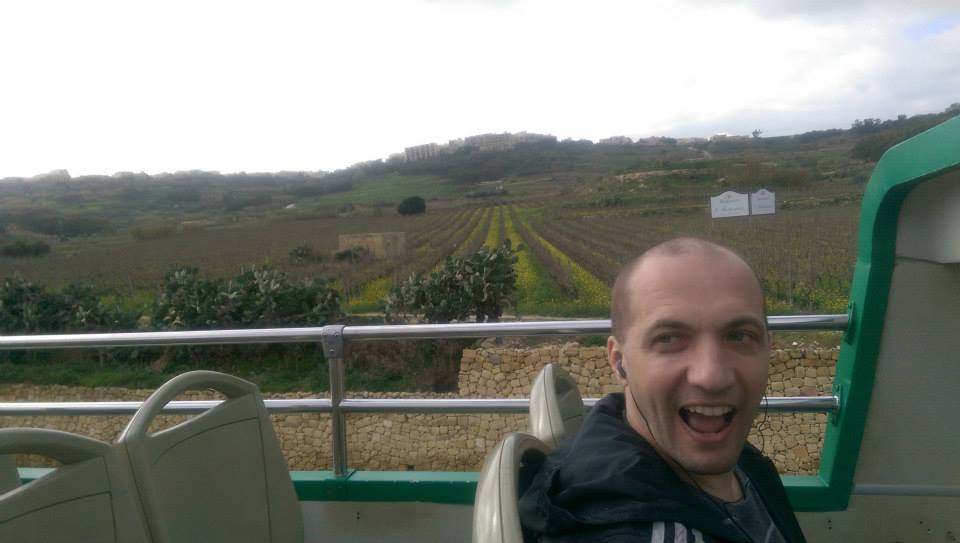
The controversy continued in 2013 when after it was revealed Esma will be teaming with Lozano, one of Macedonia’s most popular pop vocalists, as that year’s Macedonian Eurovision entrants, Macedonia social media went into a tailspin on hearing that Roma musician Simeon Atanasov, one of Esma’s 47 adopted sons and the person behind all of Esma’s modern pop-folk numbers, will be composing the song. When the song did come out, the turbo folk-esque Imperija (Empire) had Esma on an equal footing with Lozano, and the video clip heavily showcased the controversial Skopje 2014 renovation project that took Ancient Macedonia as its main aesthetic cue. Despite the overwhelmingly positive response from international Eurovision fans, the response to the song amongst many Macedonians was extremely negative, though this was more driven from the chattering classes using criticism of the song to vent rage at the then Gruevski government (which Esma vocally supported). Still, the level of blatant anti-Roma sentiment expressed from people who otherwise see themselves as “European-oriented urban sophisticates” was particularly high – in a case of all’s fair in love and war. A new, more “appropriate” replacement song, Pred da se razdeni, this time composed by pop producers, was quickly commissioned – a pale copy of Esma’s 2002 duet Magija with Toshe Proeski (mentioned above). Like in Magija, the new song saw Esma relegated to a supporting role providing what’s best described as “orientalist colour”. As predicted, not even getting Lozano in contact lenses could save this song from being relegated, so yet again no Macedonia at the Eurovision grand final. By the way, if you go to the 3:15 mark in the clip below and see the guy with glasses frantically waving a Macedonian flag – that’s me!
Bulgaria 2009: Gergana Dimova with Yasno Sluntse
There was huge interest from the Bulgarian public when this song first appeared in the semi-finals to choose Bulgaria’s 2009 Eurovision entry. Done in the 9/8 karshilama beat, and very reminiscent of Slavka Kalcheva’s 2000 neo-folk hit, the now standard Byala roza (“White Rose”), this song however stood very little chance of making it to Eurovision. And that was the case – even though the song clearly won its quarter final, it failed to make it past the semis. It still went on to become a huge hit for Gergana Dimova. The same can’t be said of Bulgaria’s eventual 2009 Eurovision entrant, Krassimir Avramov, who failed to make it to Eurovision Grand Final with his falsetto and has since disappeared from the public spotlight. And in what has become the usual, following the Bulgarian national final several Bulgarian musicians openly issued letters demanding Avramov withdraw from the Eurovision Song Contest, criticising his performing abilities and and questioning the legitimacy of the voting.
Serbia 2022: Sara Jo with Muškarčina
Sara Jo is a Serbian R’n’B and pop singer who first came to prominence in 2012 by coming third in the second and final season of singing audition show Prvi Glas Srbije (The Number One Voice of Serbia). She along with the other two finalists from that season represented Serbia at Eurovision 2013. After a string of successful hits, Sara Jo then faded into the background, but her 2022 appearance at Pesma za Evroviziju (Song for Eurovision – PZE), the contest that picks Serbia’s Eurovision entry, was to herald her comeback. So what does this have to do with turbo folk? Well, the composer of this song is Slobodan Veljković, otherwise known as Coby – one of the leading figures of the 2010s Balkan Reggaeton genre, otherwise known as Balkanton or Turboton, which combined Reggaeton with Balkan pop-folk and turbo folk. What was curious with Sara Jo’s number was the use of the karshilama beat (just like in Gergana Dimova’s song above), a time signature associated exclusively with pop-folk music and one that had somewhat fallen out of fashion in Serbia. Even though Sara Jo was tipped to win the ticket for Eurovision easily, she came second to Konstrakta, a conceptual art-pop act, with their lead appearing on stage washing her hands. Konstrakta’s win even took the act by surprise having entered the competition as a joke, though the large televote for the song has been largely attributed as a form of protest against the government-run Serbian national broadcaster RTS and, ultimately, the government of Serbian president Aleksandar Vučić.
Serbia 2024: Breskvica with Gnezdo orlovo
Listening and watching this brazen Kosovo-tinged pop-folk number much to the liking of Serbian nationalists and traditionalists, it’s shocking to think that a mere five years before Breskvica was Serbia’s foremost bedroom musician and the leading vocalist in Belgrade’s ultra-cool “Balkan trep” scene. This song formalised Breskvica’s transition to pop-folk, following which she’s since progressed further into pure neo-Folk. Gone was the cool urban girl and in came Serbian nationalist soundbites no different from what Serbia’s president Aleksandar Vučić would say. Given the song’s propaganda value aligning it firmly with the Serbian government’s line on Kosovo, and the massive public support Breskvica and her song had (it won the televote by far), it was a complete shock when the PZE jury members, including 2007 Eurovision winner and long-time Vučić loyalist Marija Šerifović, tanked this song into second place by voting more in favour for the eventual winner Ramonda by Teya Dora.
Montenegro 2025: Boban Rajović with Suze
Danish-born, Belgrade-based pop-folk star Boban Rajović announced that he was on the ticket to represent his ancestral country Montenegro at its national final for Eurovision 2025. However, quickly after Rajović withdrew from the competition on “personal grounds”, prompting showbiz gossip to spread that it was made clear to Rajović he had no hope of coming close to winning the spot.
Serbia 2025: Maja Nikolić with Žali srce moje
The Serbian personification of delulu, skandalmajstor Maja Nikolić is always guaranteed to bring an unimaginable new level of crazy to any proceedings. This does take away from the fact that Nikolić has had a great career with some fabulous “pop” hits. OK, there are those scare marks again. That’s because Maja Nikolić makes it quite clear how much she HATES turbo folk, but listen to many of her songs and you’ll be scratching your head as to what world is she living on as most of her material can be classed as such. Case in point, her attempt for Serbia’s 2025 Eurovision entry. Musically similar to Breskvica’s song the year before, the whole of Serbia was expecting Nikolić to ignite a one-person civil war when this number failed to even make it into the PZE final.
Croatia 2026: Zevin with My Mind
This was very much a fan favourite in the lead-up to Dora, the song contest that selects Croatia’s Eurovision entry, and showed much promise. However, the ropey vocals in its live performance certainly sealed the already doomed fate for this number — the pure 1990s turbo folk nature of the (Serbian) brass band interlude at the 1:50 mark was more than enough for the prim and proper Croatian public to rule out any chances for this number.
So what counts as “intelligent music” in the Balkans? Well, check out Bulgaria’s 2022 Eurovision entry…
This one also failed to make it to the final, coming second-to-last in its semi-final. Bulgaria was so annoyed by this that it opted out of Eurovision until it was lured back this year. Perhaps Europe was just not “intelligent” enough.
All I can say is the societies of these countries need to grow up and take pride in what music they produce. We have to let go of classist prejudices and outdated views of what’s considered “appropriate”. We should be honest with ourselves and take ownership of it. There’s no point in waiting for western societies, which have their own faults to deal with, to say that the Balkans are OK – that has yet to happen using the Balkans’ existing try-hard approach, so why should we expect that to change. If we of the Balkans want the world to accept us, we have to learn to accept ourselves first.
Should you decide to watch Eurovision this year (there are plenty of reasons not to), then I hope you have an enjoyable evening.


.jpg)

.jpg)


















.jpg)





.jpg)










_logo.svg.webp)


_(52052470251)_(cropped).jpg)






.jpg)











_(8249451687).jpg)