Bulgaria goes to the polls on Sunday (19 April) for the eighth (!) time in five years. Yes, they’re over it and, woo hoo, now beating Israel! And as with the previous seven elections, the results are probably going to produce a fractured parliament followed by prolonged talks for forming a coalition government that will soon after fall apart leading to election number nine later in the year. Or at least that’s what many Bulgarians will say… because that’s what they said the previous seven times and each time they were correct.
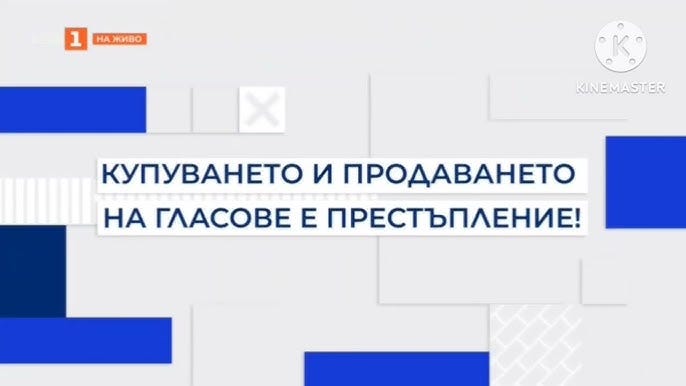
One constant about Bulgarian election campaigns is that there’s a statement that appears on all election-related materials, billboards, posters, leaflets and media broadcasts…
Купуването и продаването на гласове е престъпление
“The buying and selling of votes is a crime”
Despite Bulgaria supposedly meeting the strict criteria on fully functioning, transparent and robust election processes and democracy to join the EU in 2007, 19 years later and still Bulgarian election campaigns are marred by mass vote-buying. Estimates claim that up to 250,000 votes are bought and sold each Bulgarian election, which when looking at the average number of total votes is 2–3 million, that’s a sizeable chunk. However, talk to many Bulgarians and they’ll claim that that share of the bought vote is vastly underestimated.
Vote buying and selling remains a major problem in Bulgarian elections. While some foreign reports have painted this being proof of Russian meddling, ask any Bulgarian and they’ll tell you that campaigners from most of the major parties in Bulgaria have been caught participating in this illegal yet widespread practice. Main targets tend to be deprived areas, especially Roma neighbourhoods, as well as diaspora communities, such as the Bessarabian Bulgarians in Moldova.
One of the most common vote-buying methods is the индианска нишка i.e. ‘the Indian string’, which is so associated with Bulgaria in the region, much to the offence of Bulgarians, that in ex-Yugoslavia the practice is called ‘bugarski voz/vlak’ i.e. ‘Bulgarian Train’.
This voting process goes like this: political ‘handlers’ have pre-filled ballots ready with the vote going for their candidate. These handlers will be waiting in front of polling stations to negotiate a price with voters. Those who are willing to sell their ballots will take one of the pre-filled ballots into the polling station, where they will obtain an empty one but cast the pre-filled one. They then leave the polling station and hand the empty ballot to the handler, who will then complete that one to be used for the next paid voter. Now that makes sure that the paid voter actually votes for the ‘right’ party. Ingenious!
There has been a lot of complaints about индианска нишка, but you can be rest assured that the Ezikovi belezhki (‘Language Notes’) website has addressed this pressing issue and stated that according to the rules of the Bulgarian language, the term should properly and orthographically be индийска нишка. There – I’m glad that’s solved!
Of course Bulgarian singers, particularly of the chalga/pop-folk variety, are recruited to be part of the entertainment to drag in the unwashed masses to the many pre-election campaign meetings throughout the country. However, unlike in neighbouring countries such as Serbia or Macedonia where the fortunes of the party you campaign for then will determine the immediate outcome of your pop career, the appearance of these singers at campaign meetings in Bulgaria tends to be more transactional. Thought this is not always the case – when dance music group Deep Zone was chosen to represent Bulgaria at Eurovision in 2008, their lead singer Joanna Dragneva was then unknown to the Bulgarian public but she has gone on from then to have a very successful pop career. Word had it then that Dragneva’s membership in the newly ruling GERB party helped Deep Zone get the Eurovision ticket.
Chalga has caught itself up in Bulgarian politics in its own crazy style. 1990s chalga star Luna was on the ballot to become Bulgarian president in 2021, ending up in an unpredecented 6th place after gaining 0.9% of the vote (0.9% more than expected!) – her quest for the Bulgarian presidency being pre-empted by her 2016 song Prezident. I won’t go into Slavi Trifonov’s major foray into politics. And Azis was once touted as a candidate for the Euroroma party. However, chalga/pop-folk singers tend to avoid the nitty-gritty of Bulgarian party politics, and do you blame them?
That’s not to say that chalga stars avoid social issues. The brilliant Esil Duran has tackled the poor treatment of women, conceptual artist Antonina became a spokesperson for raising awareness of eating disorders with this humorous chalga-style song, while Diona has lately caused a stir with her socially charged songs mixing chalga with pop and hip-hop. And we musn’t forget that in July 2020 the poor and distressed chalga stars of Bulgaria united and took to the streets of Sofia in protest against the closure of Bulgaria’s discotheques during the Covid-19 pandemic.
But chalga did have its part in getting Bulgaria to where it’s now in its party-politics culture. Take for instance… part of the 2005 New Year’s Eve line-up on commercial Bulgarian national TV station bTV was a show where the chalga babes, headed by Ivana – otherwise known as the “singer of the people” and the queen bee of chalga at the time, were put around a table akin to Jesus’s final supper and tasked with the hugely important role of picking Bulgaria’s man of the year. Talk about lots of hair, filler and make-up! Ivana heavily pushed the girls to pick ‘the’ man of the moment – long-time supreme Bulgarian leader Todor Zhivkov’s former bodyguard Boyko Borisov, who at the time was the head of the Ministry of the Interior (i.e. the Police) and had earned himself the nickname ‘Superman’ on account of his highly publicised arrests of known mafia dons, which in turn singled him out as a gangland murder target… though later on in his nine-year reign as prime minister showed, that ‘anti-corruption’ badge was just a ruse. Despite the valiant attempt by Raina to push for her then boyfriend and fellow chalga star Konstantin to get the gong, she was heavily outvoted (out of fear of Ivana) and Boyko the Superman won, to no-one’s surprise. Still, that Borisov was seen as the ultimate symbol of Bulgarian masculinity was put to music with this classic of a chalga hit with Extra Nina, Nikol and Nagona called… erm… ‘Tripartite Coalition’. Yes, you can work out the double entendre here yourself.
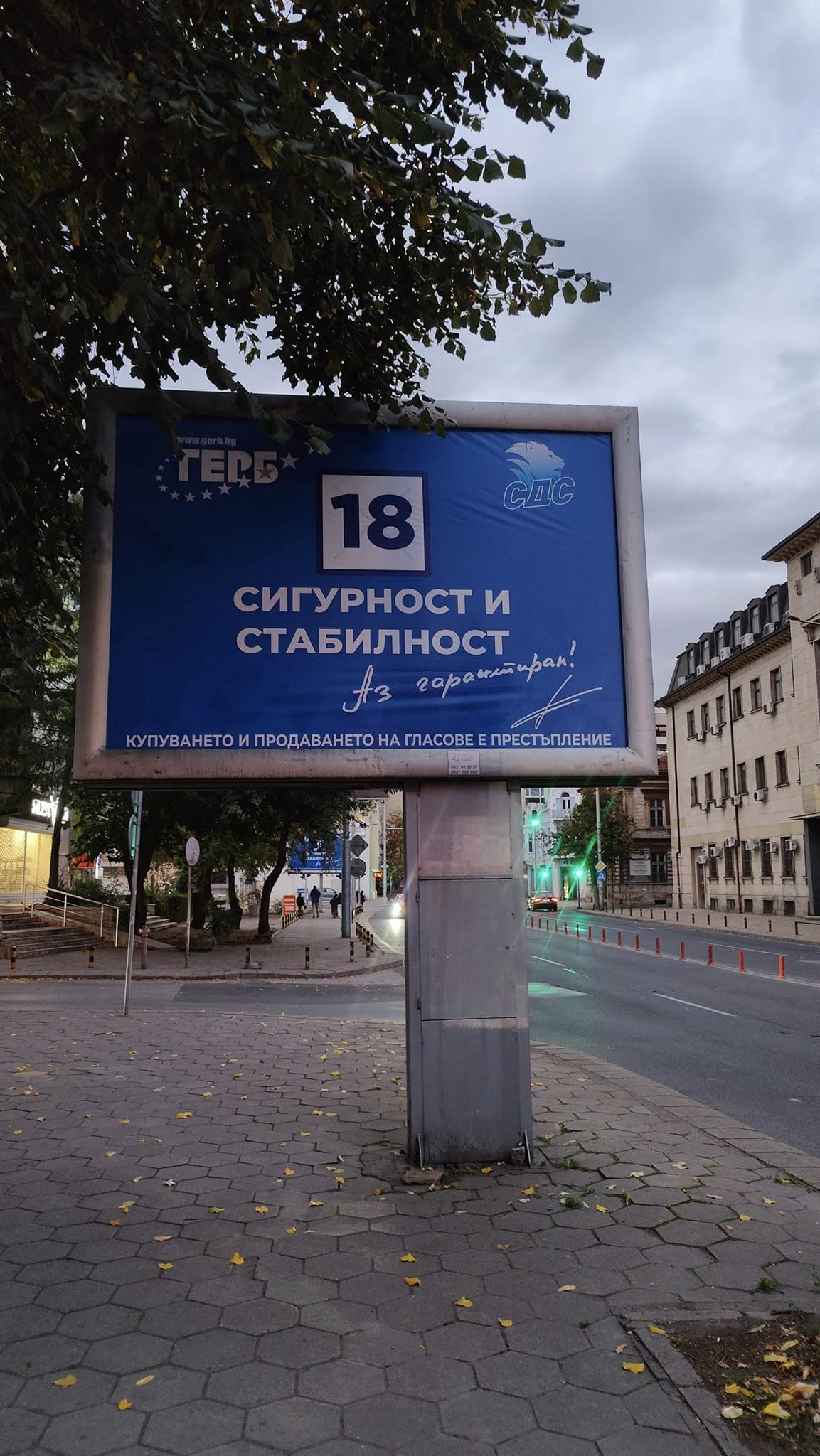
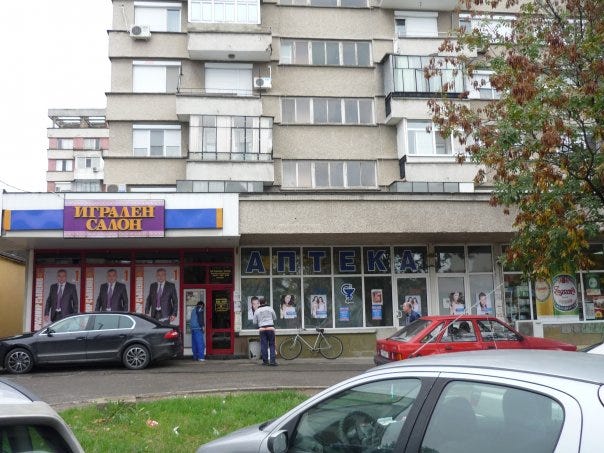
Talking about Borisov, who bills himself and his centre-right party GERB, i.e. Citizens for the European Development of Bulgaria, as the pillars of ‘security and stability’ – as stated in the pic of the billboard above and something Bulgaria has been lacking for years, there’s something about his look that might be the true deciding factor as to his (former) appeal. Quite often during Borisov’s rule in the 2010s, this sequence pic would go viral on Bulgarian social media…
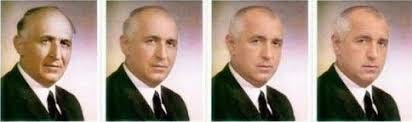
And then, let’s look at the new front runner in the Bulgarian elections – former air force officer and Bulgarian president Rumen Radev, who also projects ‘security and stability’. For your info, Radev is the one on the right.
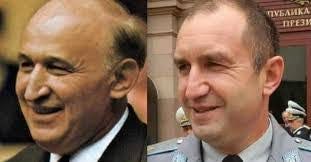
Are Bulgarians then consciously or subconciously into a particular look when it comes to their leaders? OK, I’ll just say it – the legacy and shadow of long-time Bulgarian communist supreme leader Todor Zhivkov lives on. For many, especially older, Bulgarians, Zhivkov’s rule (1954–1989) was a time of ‘security and stability’ and/or their idyllic and carefree childhood. This is apparent with the way many Bulgarians react in the comments sections of social media groups and profiles focused on nostalgia for pre-1989 communist Bulgaria or even for the country’s main tabloid news portals. With Borisov massively discredited with large swathes of the Bulgarian electorate craving that perceived ‘security and stability’, it’s former military guy Radev, who could pass off as Zhivkov’s son, to take over that mantle. And with opinion polls showing Radev’s Progressive Bulgaria having a massive lead over the other parties, he’s very much in line to become Bulgaria’s next Zhivkov… sorry… Prime Minister.
While for many younger Bulgarians now, the times of Zhivkov, five-year plans, red stars on the Party House and defiicit are stuff from some mythical past that baba i dyado talk about, it wasn’t that long ago (well, that’s how it feels for me) that this banger of a chalga hit would get the teenage crowd in a village disco into complete delirium (as I’ve witnessed). This tongue-in-cheek homage to Zhivkov is by far the best work the late chalga singer Panko every did, and this video, complete with archival footage with Panko slotting himself next to ‘Bay Tosho’ is complete genius!
What I do have to say about all this is that Bulgaria and Bulgarians deserve better! Let’s hope that the average Bulgarian does the right thing and prove their ingrained pessimism wrong… at least for once. Моля Ви!








_(8249451687).jpg)


.jpg)













.jpg)







.jpg)










_logo.svg.webp)


_(52052470251)_(cropped).jpg)






.jpg)