Last time I left you, in part 1, I had given an insight into the crazy nature of ethnic radio in Adelaide, Australia in the 1980s and especially the early 1990s, where the Balkan wars were very much being fought on the airwaves. If you haven't checked out part 1, then here’s the link.
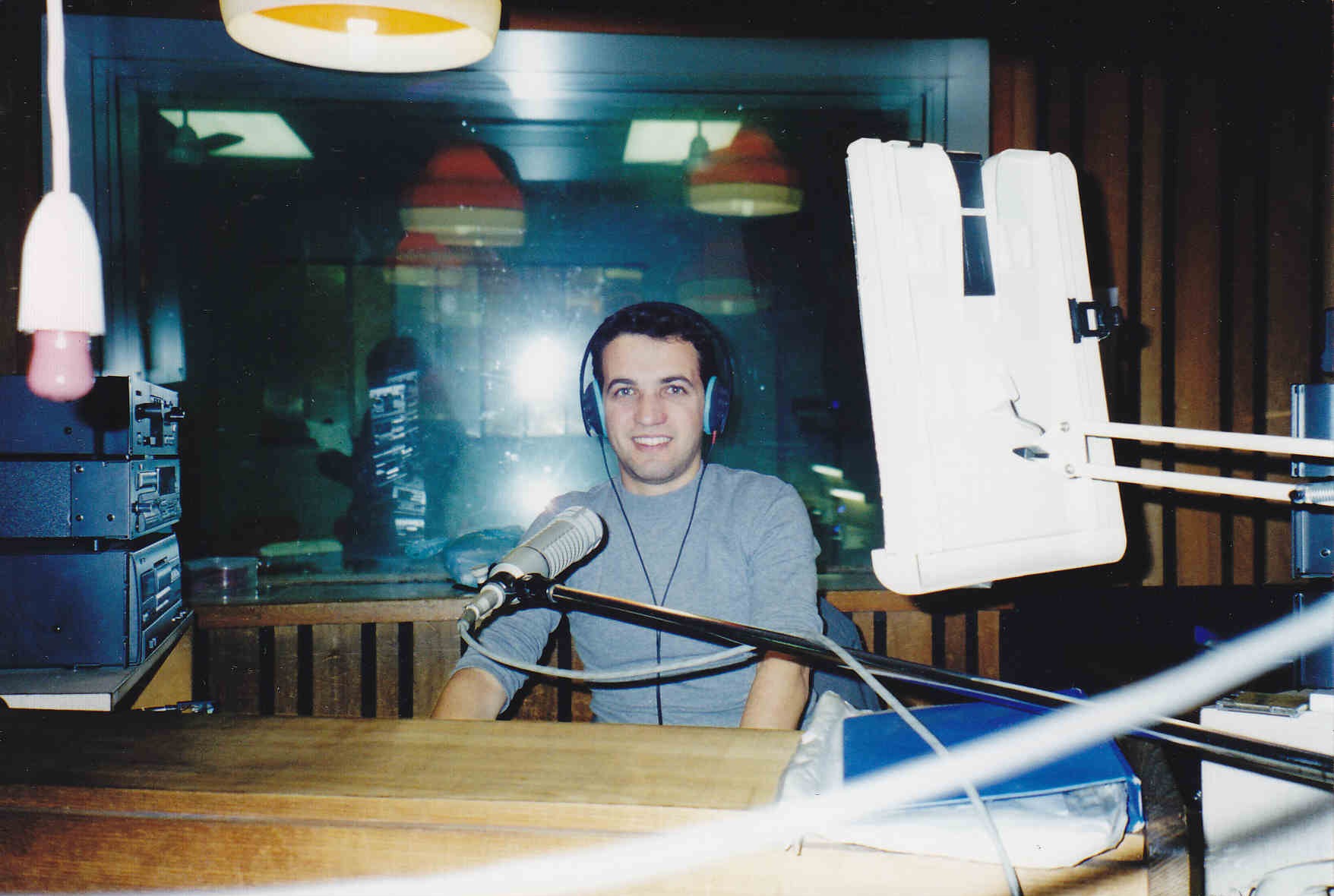
After having passively listened for a few years, and seriously thinking that things needed a bit of a shake-up, when I was 19 I decided that rather than hope for change, let’s go make the change. So I befriended Bosko and Cveta, the couple who had been doing the Macedonian program for years, and asked them if they’d like it if I could come and join them. They immediately said yes – they had been wanting to go for a holiday for ages, but needed someone to look after the radio program while they were away. So they ushered me into the studio. Bosko showed me the ropes and my radio career was officially started!
It was all very analogue back then. A small studio had been set up in our Macedonian community centre to record the programs and store the equipment, including the hundreds of records (33s and 45s) and audio cassettes. Everything was taped onto broadcast reels using what even then was an ancient TEAC reel-to-reel recorder (see photo above), which had a bit of a bite to it (ouch!). We had two hours of programming to fill – broadcasts were on for an hour on Friday nights, and a half-an-hour on Saturday afternoon and Sunday morning – the Macedonians of Adelaide had had that 11:30 am slot for decades and still do today! We’d do the taping on Thursday nights after work (or uni for me to start off) and when counting in all the smoke breaks we had, it would be way past midnight before we had it all finished. Either Bosko and I would then drop off the reels at the 5EBI-FM studio in the Adelaide city centre in time for the first broadcast on Friday evening.
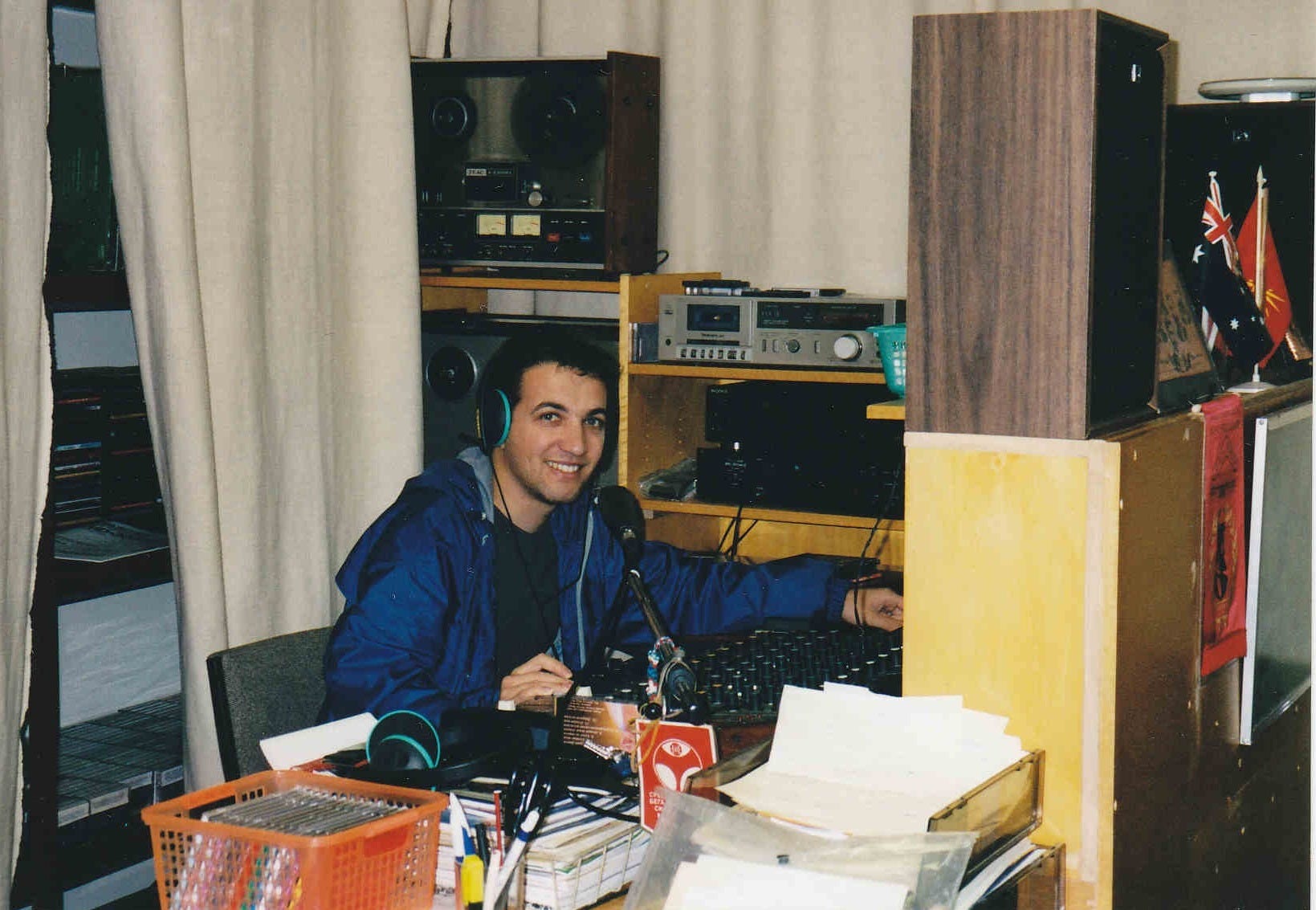
We’d often have visitors pop in so as to request dedications, often for our prime-time Sunday show. It would cost AU$10 per dedication, which when there were weddings with loads of dedications (often covering all three programs), this would earn our program good money for our broadcast dues – we were all volunteers and never received payment for our work.
Our listeners eagerly listened to the dedications for good, and not-so-good, reasons. Picking the right song for the occasion was very important as many listeners often read into the songs a bit too much. For instance, in the 1990s there was a disproportionately large number of Macedonian neo-folk songs about Lena, a popular Macedonian female name. One of these songs was Lena, Lena Ubava Zhena (Lena, Lena, Beautiful Woman) by Petar Nechovski – however, we’d veer people away from requesting such a song for any Lena (and we had quite a few Lenas in our community) as one of the lines in the chorus sounds like as if Nechovski is describing her as being fat. Our listeners were also paying full attention to who had put on a dedication… and who hadn’t. Leaving out a person from a list of relatives in a dedication would immediately be noticed as a sign there’s been a major falling out in the family. Any of these digressions would become the topic of hot gossip in the community (Why didn’t Dimche put a song on for his nephew’s birthday but his sister Fana did?)
Putting dedications on our program was very much a case of ‘keeping up appearances’. Showing off by having a ridiculous amount of dedications (like what my godmother did when my godsister was married… for the first time) was rife. And sometimes the dedications would reflect the delusions of the people making them. As I would joke regularly, we’d have Macedonian grandparents request a dedication for their grandchild for a birthday. OK, nothing special there. But when the grandparents insist that we play the song “I’m a ‘clean’ (i.e. full-blooded) Macedonian” but the grandchild is called Gavin or Bruce, can’t even say a word in Macedonian except perhaps ‘baba’ (‘grandmother’) and ‘dedo’ (grandfather), and will be playing cricket with his mates when the show is on air, then all you could do was laugh (in private).
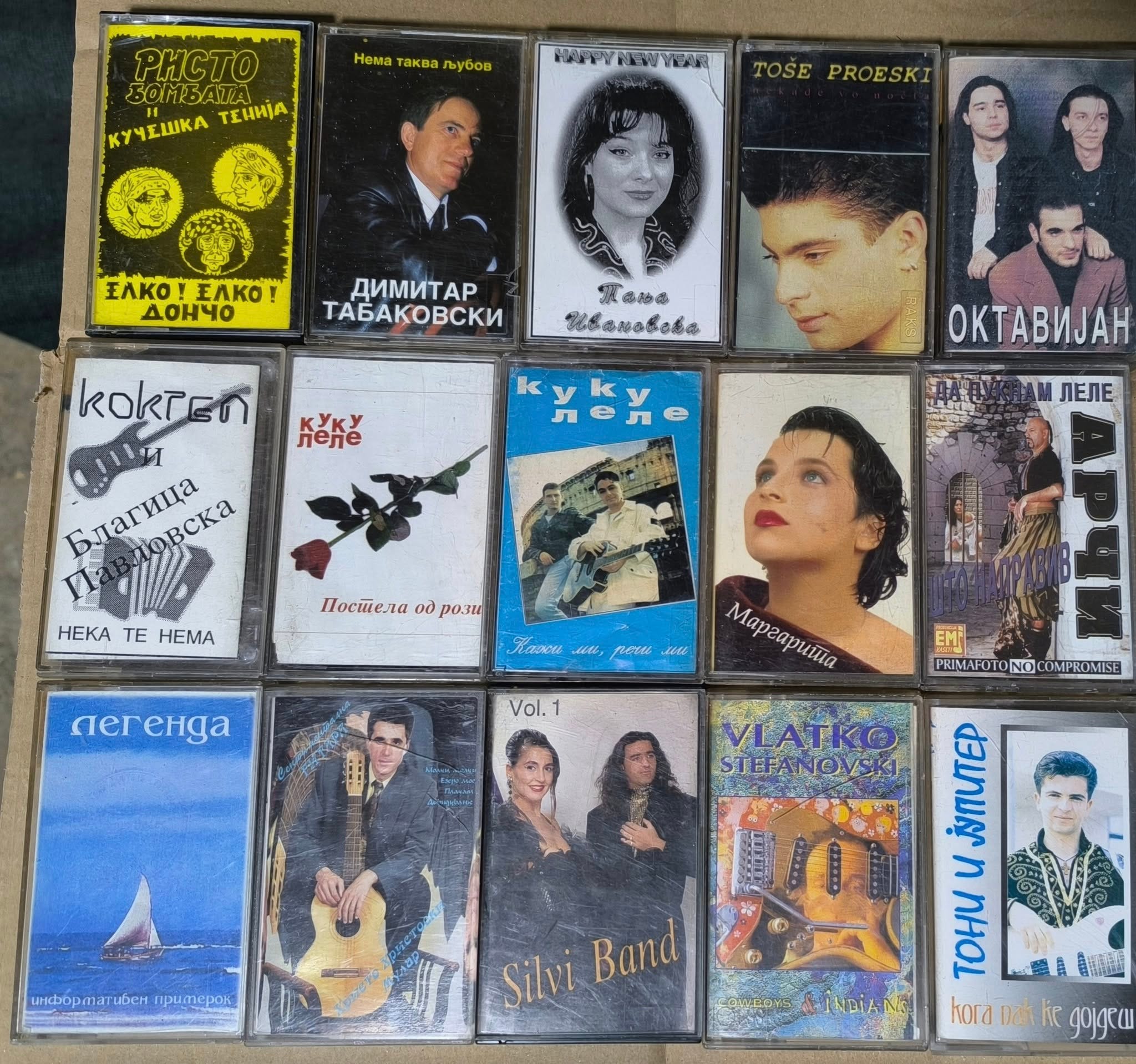
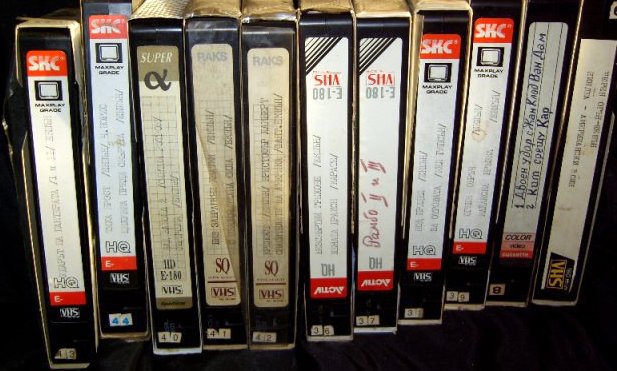
If I wasn’t being paid for doing the radio program, then I certainly made it back in the amount of new Macedonian music I was able to source. It was mainly audio cassettes back then – CDs only came into play for us after 1999. I had full access to them, and since it was the community that owned the cassettes I purchased, I’d be reimbursed for them – and at AU$10 a pop, they weren’t cheap.
My main source was Zorro Records, run by the cheerful Zoran, with his nickname giving the name for his popular Macedonian casette shop at Preston Market in Melbourne. Every month I’d give Zorro a call, he’d enthusiatically give me a complete run-down of which cassettes he’s going to send me (even if I didn’t like the singer, he’d wouldn’t take no for an answer) and then about a week later I’d receive the card in the post that I could pick them up from the local post office cash-on-delivery (COD). Do you remember COD, folks?! If Zorro didn’t have it, then it was over to Gamon Video on Charles Street, Seddon, Melbourne – just around the corner from the St Elijah Macedonian Orthodox Church. Gamon Video was one of the many outlets opened following the VHS boom of the early 1980s, catering primarily for the local Macedonian and wider ‘Yugoslav’ community. Seddon in inner-west Melbourne was heavily Macedonian in the 1970s and 1980s, but in the 1990s the yuppies started coming in and gentrified the area. Nowadays, the Macedonians and other people, mainly from Mediterranean countries, have moved on to the outer suburbs, the current residents pay monthly rents for their abodes more than what their previous Macedonian owners had paid to purchase them outright, and the area is now full of fancy vegan restaurants and, of course for Melbourne, cafés.
I did say that I joined the team so as to shake things up… and I certainly did when it came to music. Gone was the safe stuff – old Macedonian folk songs, usually by the likes of Vaska Ilieva, or newer ‘folk melodies’ in the stale ‘Valandovo’ style, and in came in the latest Macedonian pop music, particularly the newest and most controversial genre of the time – Turbofolk. While some Turbofolk numbers had been played on the program before my time, particularly by the hottest Macedonian Turbofolk band at the time – Elita led by Cane Nikolovski (who, by the way, had a brilliant concert in Adelaide in 1993), I made it my mission to push the envelope by playing the music I liked, which included some very oriental music by Macedonian Roma stars. Now that ruffled the feathers of some listeners! Hey, if the Serbs, Bosnians, Greeks, Turks and even the (up-to-then straight-laced) Bulgarians were putting on this style of music too, why not us? Besides, I was a kid then and I knew what want the other kids wanted. And from the feedback I was receiving, especially for songs like this, I was certainly hitting the spot. The elders had always wondered how they could keep their ‘clean Macedonian’ Gavins and Bruces interested in their Macedonian heritage… well, putting on this music was achieving that.
My biggest critic was the local Macedonian Orthodox priest’s wife, who in true pretentious and patronising Hyacinth Bucket style, once gave me some ‘kindly advice’ on what sort of ‘respectable’ music should be played on the program. “You should take your cue from what they play on Radio Skopje” she smuggly advised. “You see my dear child, Radio Skopje plays ‘respectable’ music – none of this Turbofolk noise as it’s too ‘gypsy’, ‘oriental’ and ‘Islamic’. We’re none of those. Now you be a good boy now.” I politely nodded and told her that I’ll keep her sound advice in mind.
So the following week I played this Džemo Redžepovski song, and this Alpina song, oh and a Faredin Kerimov song (I can’t find it on the net, sorry, but this was the lead track from his 1997 cassette) that mixed Turkish Arabesque-inspired Macedonian Roma Turbofolk with techno dance beats. The result? Never before had I heard such praise for the song choices from so many Aussie-Macedonian children and teenagers. Many of them, who would otherwise never listen to the Macedonian program (like my sister and I in Part 1), were coming up to me saying how much they loved that Faredin Kerimov song in particular. They never knew that traditional Macedonian folk music can sound cool.
As for the priest’s wife?
Oh, she was furious!!! (or so was I told, hehe)
The following week, the priest’s wife confronted me, but she tried a new tactic. Knowing very well that I wasn’t following her ‘kindly advice’, she then claimed that she ‘loved the songs’ I was playing, particularly the Faredin Kerimov song or, in her words, ‘that gypsy number’, barely concealling the comtempt in her otherwise ‘nice’ demeanour. She had become such an instant fan of Macedonian Roma Turbofolk that she even asked me if she could have that tape – she was implying she wanted to make a copy of it. Yeah, right! I hadn’t come down in the last shower. I knew her trick – in an effort to stop me playing such music of ill repute, she thought she could pull the wool over my eyes and try and confiscate the offending material. Now, as the wife of a priest, you’d think that the scriptures would have guided her better in her behaviour. Wasn’t there something about ‘thou shall not steal’? I’m sure it was in the obscure fine print at the end of the Bible. Knowing very well what her scheming plan was, I answered the best way – honestly. “That cassette is the property of the community and has to remain in the studio. You can buy the cassette yourself, since you’re such a fan. I can give you the details of where to get it.” Quelle surprise, she didn’t want those details. I succeeded! The priest’s wife didn’t bother me after that, but she certainly had some choice words to say about me behind my back (like as if I’d never find out… haha!).
There were a few other songs I played just the once that became hits among the Macedonians of Adelaide. For instance, to this day the local Macedonian band in Adelaide will play this song by the late Kenan Tairovski Keni at most functions.
On the radio program, we’d play Macedonian (western-style) pop music very rarely, and rock even less so. It wasn’t out of a lack of material – we most certainly had some cassettes and CDs. It was just that our audience tended to be older and liked to hear folk music. Plus, our broadcast time was limited and for many there was no other source for them to listen to ‘indigenous’ Macedonian music styles and genres, so precedence was given to them. Cveta absolutely adored ‘Chukni vo drvo’ (Knock On Wood), one of the few pop-rock songs sung in Macedonian by legendary Yugoslav-era Skopje rock band Leb i Sol (Vlatko Stefanovski was their guitarist), and she’d constantly appeal to me to put it on the air. And occasionally, given that the Croatians were on immediately after us on Sundays, I’d occasionally end off our program with a Macedonian pop song done in the Dalmatian pop style popular all throughout Yugoslavia in the late 1980s and early 1990s. Some of these Macedonian songs had even been sung by Croat singers, whether it be Krunoslav Slabinac Kićo or even 1990 Eurovision entrant for Yugoslavia, Tatjana Matejas Tajči, who before she briefly became a huge Yugoslav star and then moved to the USA and be in the Catholic music scene, had sung this song in Macedonian.
When the Macedonian pop scene really started taking off in the late 1990s, I started playing more of its slick product. There was, at the time, an up-and-coming star everyone in Macedonia was raving about – Toshe Proeski. Such was his sudden popularity that his initial hits were given regular airplay on our programs. But not everyone seemed to like this. One time, after doing a live broadcast from the 5EBI-FM studios and finishing the program with Proeski’s 2000 hit ‘Morska dzveda’ (Starfish), the station received a rare phone call. I didn’t have a mobile at the time, so I thought it was either my colleague Bosko or someone from my family calling. It was, instead, a ‘loyal, long-time listener’ who, curiously and furiously, was speaking in English in a German accent. She was NOT happy – “This is supposed to be a family show. Why did you put on all that ‘jungle music’?” She wasn’t meaning the 1990s genre but the derogatory racist term for music associated with African-Americans. Taken aback by her unhinged ramblings, I hit back at her saying this Proeski song is currently the biggest hit in Macedonia. No, she wasn’t having anything of it! I let her rant on, mainly out that German concept of schadenfraude – hey, she was ‘entertaining’ – until I just had enough. I told her in the the end that the song is from Macedonia, sung in Macedonian and is being played for our Macedonian audience. That’s Macedonia today for you so get with the program… and I hung up on her.
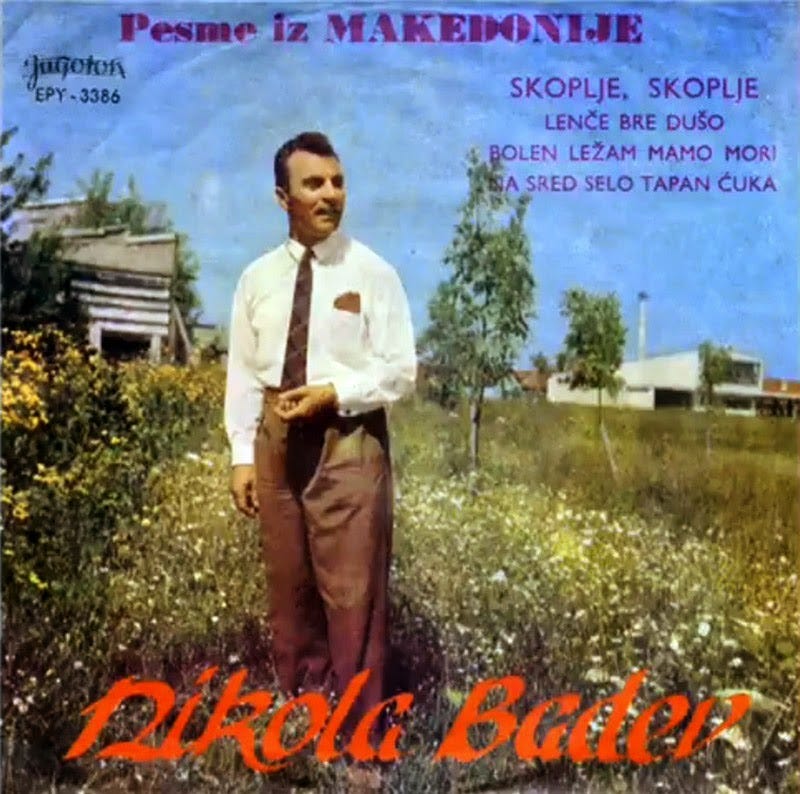
But it wasn’t just the latest Macedonian hits that caused a stir. The radio program had amassed an impressively large collection of Macedonian vinyl over the years, many of which were still in mint condition and, if they’ve survived (most likely they have), would be collector’s items in Macedonia. I thought I had listened to pretty much all of the songs from these records over the years, but while flipping through the records, I happened upon I had never heard of before – one by legendary Macedonian singer Nikola Badev and titled Skopje, Skopje. I asked Bosko how come I’d never heard of this song before? He simply instructed me to play it and hear for myself – “you’ll know” he said to me. OK, we played the song on our rickety Sony turntable. Skopje, Skopje is a emotional and sad song about the 1963 earthquake that devastated Skopje. I said to Bosko: “what’s wrong with this?” There was nothing usual or controversial about the song. “Just wait” he said with his trademark cheeky grin on his face. We reached the last verse and so far I’ve heard nothing incriminating or controversial…
oh wait…
oh no…
he did not…
oh he did…
Nikola Badev sings the lyric “Југославија нема да заборави” – “Yugoslavia will never forget”.
That’s it – he said the “Y” word! No wonder I’d never heard this song.
So why would “Yugoslavia” be such a no-go topic? I mean, our community was aligned with Yugoslav Macedonia. It was deemed perfectly normal for us when special programs sent from Radio Skopje about the 1903 anti-Ottoman uprising on Ilinden (St Elijah’s Day), otherwise Macedonia’s national day, would heavily highlight how this historic event was a “socialist” revolution led by “proven socialists” – the usual Yugoslav fare. But after 1990, when ethnic nationalism had taken hold of Yugoslavia and the republics started becoming “democratic”, there had been a change. Actually, not much of the change. Those same Ilinden programs were resent pretty much with the same script and all, only that all of the “proven socialists” leading this “socialist revolution” were now suddenly “proven democrats” having led a “democratic revolution”. Who would have thought?
It was the core founders of the Macedonian community in Adelaide who set the community’s political culture. They were mostly former guerilla fighters from what is now Greece and had fought on the side of the communists in the 1944-49 Greek Civil War. For them, they could never forgive Tito, and therefore Yugoslavia, for closing the border and cutting off much-needed supplies in 1949 after the Greek Communist Party leadership (rather stupidly I might add) remained loyal to Stalin in his spat with the Yugoslav leader. Now that was despite the fact Stalin always being completely opposed to arming the Greek communist guerillas – Stalin steadfastly upheld the deal he made with Churchill when dividing Europe in the end stages of WWII, with Greece being handed to the west despite the Communist-lead resistance there successfully, and with little outside assistance, ridding the country of its fascist occupiers and collaborators; but somehow nobody, except Tito that is, had bothered to tell the Greek Communist Party leadership about what Stalin really thought of them. Tito cutting the crucial supply line soon after resulted in the Greek Communists’ catastrophic collapse and rout, forcing the surviving guerillas to escape for their lives, never again returning to their homeland. My grandmother in particular, whose first husband died in battle on the side of the guerillas during the Greek Civil War, drummed this ‘Tito the traitor’ rhetoric into me all the time, so I was all too familiar with it.
I remember once when I was 9 years old when I asked my father how come the Macedonian Hall doesn’t do any celebration for Yugoslav National Day on 29 November? (Before you ask… yes, I was very much this type of child at age 9, which even I find shocking in hindsight). My father told me that on one occasion before I was born, they did do a “vecherinka” (evening social event) for 29 November at the Macedonian Hall, but the Macedonian community members from what is now Greece, most of whom had no direct personal ties to Yugoslavia, massively boycotted the event, and so was never repeated. Besides, if anyone wanted to celebrate 29 November, they could go to the Yugoslav Club as they certainly celebrated it there. So while the community had strong political and cultural ties to Yugoslav Macedonia (as opposed to the central Yugoslav authorities in Belgrade), and that by the 1980s half of the community’s members had come from there, no overt mention of ‘Yugoslavia’ was allowed officially in our community’s midsts. This extended to our Macedonian Sunday school – even though Yugoslav Macedonia was the source for all our textbooks and the overtly socialist curriculum our Yugoslav-trained teachers followed, all the many references to ‘Yugoslavia’ and ‘Tito’ in them were deftly ignored.
Interestingly, the next time I heard Skopje Skopje being played (live this time) was in 2001 when I was at a restaurant in Pirin Macedonia, now in Bulgaria. Considering the rather touchy historic relationship the region had with Yugoslavia as originally set by the Bulgarian communist authorities, I was wondering how this band was going to handle that controversial lyric in the song. After all, I’ve been a witness to how songs originating from neighbouring former Yugoslav Macedonia have been… how should I put this… ‘adapted’ to conform to local political undercurrents in the Pirin region. And so they did – instead of ‘Yugoslavia’, they replaced it with ‘Macedonia’, which is how most Macedonian singers and bands in the Republic of Macedonia and worldwide tend to go with this song these days, though this clip, originally filmed in 1990 during Yugoslavia’s twilight but subsequently re-aired many years after, shows that the Macedonian public broadcaster to this day has no qualms playing the original recording. Yugoslavia won’t forget it!
The music had its moments of controversy… but what if the target audience doesn’t even understand what we’re saying? As I was to find out, there was a greater, underlying grievance.
And who were the people with me in this experience? It includes a person who uniquely overrode newly formed ethnic constrains and became the primary kingpin for facilitating communication for hundreds of refugees. That’s all in part three…







_(8249451687).jpg)






.jpg)












.jpg)







.jpg)












_logo.svg.webp)


_(52052470251)_(cropped).jpg)





.jpg)