You’re on a pretty safe bet when spelling in Australian English to follow UK English norms. That means Aussies do '-ise’ instead of ‘-ize’ (e.g. ‘centralise’), ‘-isation’ instead of ‘-ization’ (e.g. centralisation) and ‘-re’ instead of ‘-er’ (e.g. ‘centre’).
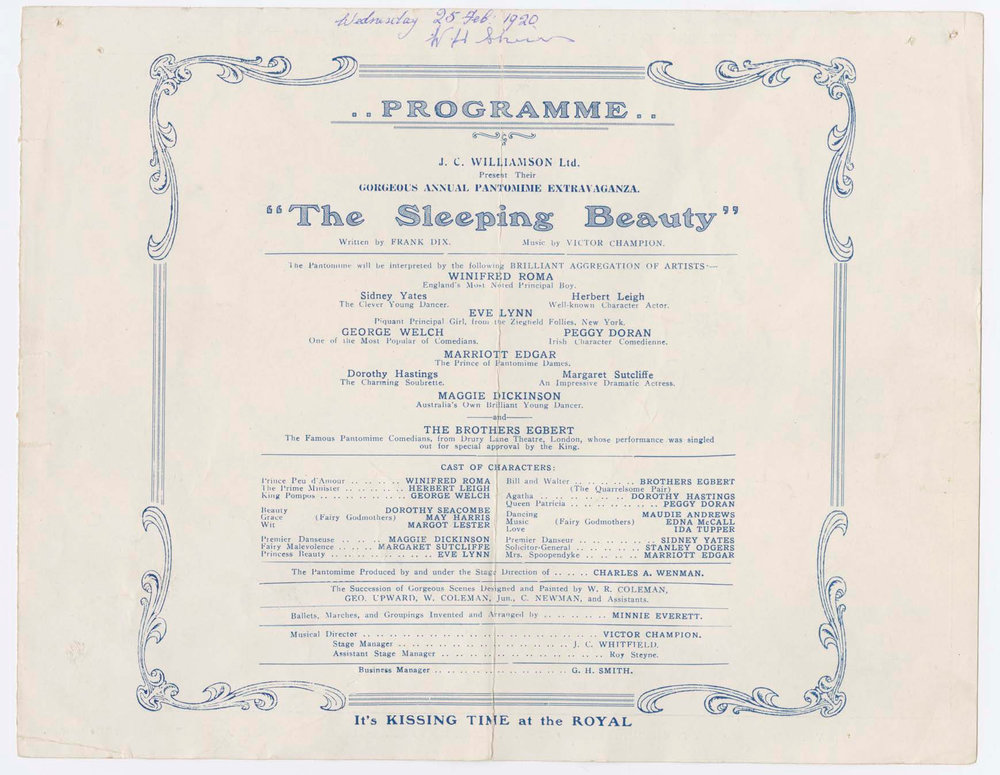
Where Australians have gone the way with the North Americans across the Pacific pond is dropping ‘-me’, so it’s anachronistic, though not completely gone, to see the word ‘programme’ in Australia – it’s now just ‘program’ on all accounts.
So how about words that end or contain ‘-our’ in UK English such as ‘harbour’, ‘labour’, ‘colourful’?
OK, this is where it gets a little tricky.
In most cases, Australian English now follows the standard as per UK English, so the above words are spelt the same way in Australia.
However, that was not always the way in Australia, and to this day there are some glaring exceptions. Unfortunately, there’s no rocksteady rule to determine where these are applied – they just have to be learnt.
The most prominent exception comes in the name of one of Australia’s main political parties – the Australian Labor Party. See, Labor is spelt with an “-or”. Compare this to the spelling to other labour parties in the Commonwealth, such as the New Zealand Labour Party or the Labour Party in the UK. However, in every other case where the word “labour” is used in Australia, it’s always spelt with an “-our”, such as the name of the public holiday in all Australian states – Labour Day.
Sydney is famous for its harbour, and there are plenty of places around Australia that have “harbour” in their names – Darling Harbour, Coffs Harbour, Fremantle Harbour, etc. Go to South Australia though and there you’ll find places such as Victor Harbor, Outer Harbor, Thevenard Harbor, Whyalla Harbor. But catch the train to Victor Harbor, when you arrive at the station you’ll find a sign saying “Victor Harbour”.
Now if you were to pick up and read through an Australian newspaper from as recent as the 1990s, you wouldn’t see any mention of “colour televisions” – it was always “color televisions”. However ad copy, such as in junk mail or posters, would always state “colour TV”. But at school at the time, if you wrote “color” the teacher would have taken a red pen out and corrected it with a “u” between the “o” and “r” – except if you were in Victoria, where the instruction was for “-or” spellings until the 1970s.


So why the discrepancies?
The main reason why is because spelling in Australia, and throughout the British Empire, only became truly standardised in the 1920s at around the time the Concise Oxford English Dictionary became widely distributed, thereby entrenching throughout the Commonwealth spelling norms that are now commonly attributed to UK English. The dictionary’s release also coincided with the expansion of compulsory comprehensive education for children, resulting in a major rise in literacy levels. Prior to that, it was a pretty much free-for-all when it came to spelling, so it was quite common to see both “color” and “colour”, “honor” and “honour” etc. used.
However, old habits die hard.
That was the case for spelling style guides dating from before the 1920s for Australian newspapers, which did not change spelling “-or” words for “-our” until the 1990s, a good 70+ years after they had become standard in general Australian English usage. The last newspaper to make the change, due to massive pressure from its readership, was Melbourne’s The Age... in 2001!
And you may have heard that the reason why Australian newspapers would leave out the ‘u’ in ‘-our’ spellings was that ads were charged by the letter and so this was a cost-cutting exercise – sorry to say but that’s completely untrue.
In Victor Harbor’s case, it was simply that the city had been incorporated in the 1910s and the spelling “harbor” appeared in all of the founding acts, at a time when this was the spelling most in use in South Australia. The local Victor Harbor newspaper and railway station did change their names to reflect the new standardised spelling for “harbour” in the 1920s, however the newspaper did change back to “harbor” in 1978.
Confusing? Absolutely!
Still, despite its history and diminished yet continued presence in Australian English, when Aussies see “-or” spellings, they immediately claim that’s US English, where this has been the standard since Webster’s released its dictionary in the early 19th century. Take for instance this 1980 Sydney Morning Herald ad below that recently appeared on an Australian nostalgia social media site. Almost immediately, irate Aussies were commenting claiming that this must be a US ad solely based on the spelling of “color” – that’s despite the list of retailers with clearly obvious Sydney locations at the bottom, and when would anyone in the US refer to a “[insert number] cm TV”?

It is also guaranteed for someone to claim that “Victor Harbor” should be “Victor Harbour” whenever mentioned in a post on social media, along with obligatory complaints of American English “infecting” Australian English, that some sites pre-empt this with a no-comments policy or disclaimer.
As for why it’s the Labor Party and not the Labour Party in Australia?
Well, it was founded in 1894, so before the “-our” spelling became standard. Though the Labor Party did change the spelling of its name several times in its early years: in 1902 it was “Labor”, then in 1905 it was “Labour” but by 1912 it was back to “Labor” and has been ever since.
Many, usually people without a linguistic background, base their claims on the Labor spelling ultimately on the erroneous analogy that “-or” spellings are exclusively North American. For instance, political historian Frank Bongiorno claims that “in the labour movements, the trade unions that formed the Labor parties in the 1880s, and also the broader socialist movement at the time, there was a lot of reading of American texts in particular” where the spelling of “Labor” appeared, therefore that’s the source.
Others have claimed that given the Irish Catholic core to Australia’s Labor Party, it’s a reflection of Hibernian English spelling. That notion is supported when looking at New Zealand’s Labour Party, whose founding base was English Protestant and hence its use of the “-our” ending.
However, Tiger Webb, the language research specialist at Australia’s public broadcaster the ABC, has rightfully said that “like many words in the English language, ‘labor’ was derived from both Latin and French, with the former using the ‘o’ spelling and the latter using ‘ou’. Both spellings today, which are thought of as American, were used globally into the 19th century. It wasn’t until 1828 that Noah Webster published his comprehensive dictionary of American English, which championed spellings such as ‘color’ and ‘center’. You look at British Hansard records, look at Australian newspaper sources or parliamentary sources from the mid to late 19th century, you’re going to see spellings like ‘labor’ with an ‘o’ and no ‘u’,” And as we saw with the Australian newspaper style guides, it was until well into the 20th century when the shift in Australian (and British) English was near complete.
More about the Labor Party spelling can be read here.
So Australian English is not as straightforward as it might seem when seemingly small matters such as spelling can cause major outrage. That's why you need someone to make sure that your text and copy for Australia is just right. I'm here to guide you through this for Australian English, so if you have queries, email me at info@nicknasev.com.










_(8249451687).jpg)








.jpg)














.jpg)






.jpg)













_logo.svg.webp)



_(52052470251)_(cropped).jpg)











.jpg)