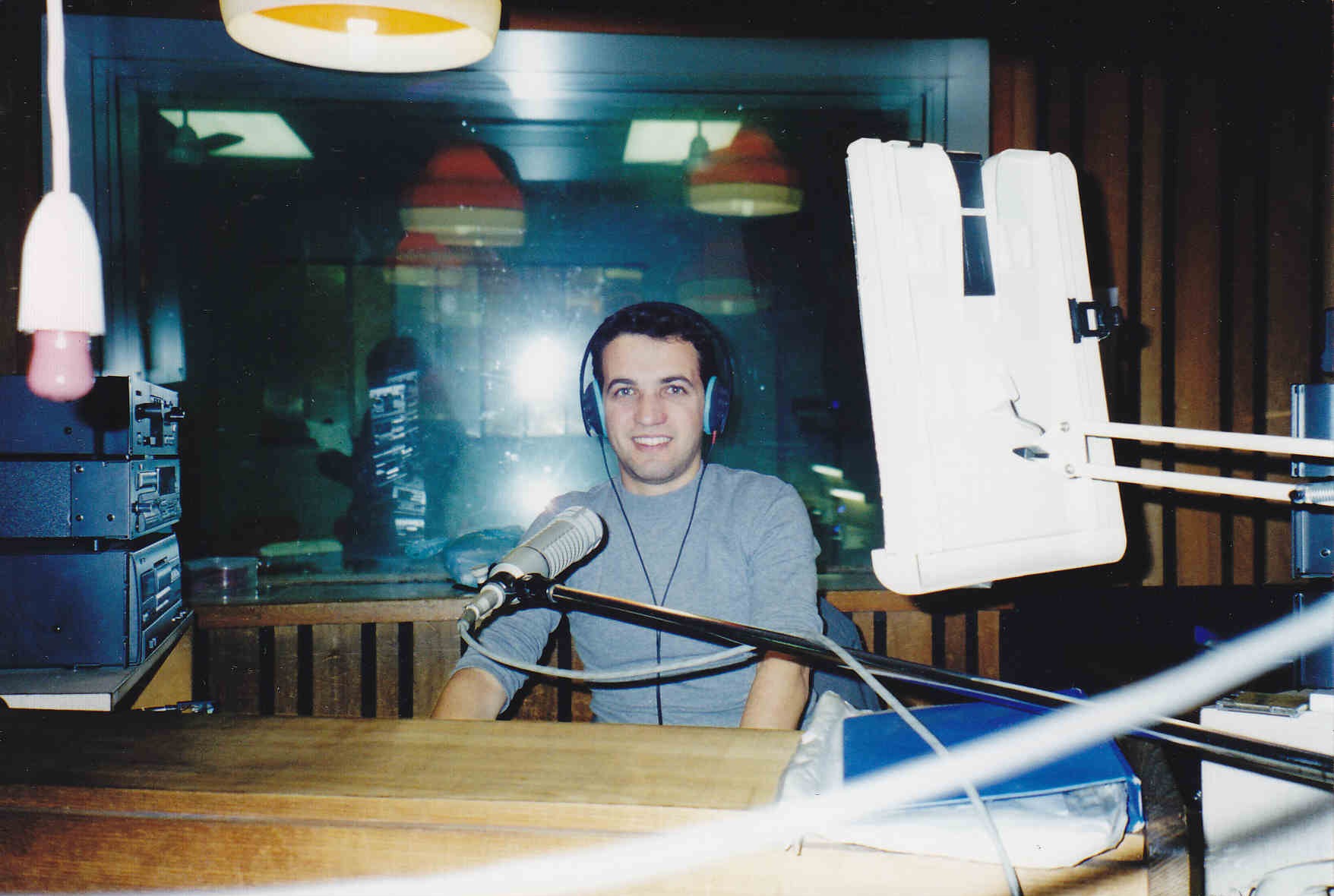
Honestly, I didn’t expect at first that I’d have this much to say about my seven years doing the Macedonian radio program in Adelaide, Australia in the 1990s, but here we are, Part 4.
Part 1 covered what ethnic radio (to use the term used them) in Australia was all about in the 1980s and 1990s, Part 2 was how I joined the Macedonian radio team and scared the establishment of sorts with the hardcore turbo folk songs I’d regularly play, and Part 3 went into the problems that come when a standardised language is an unwanted and unwelcomed compromise.
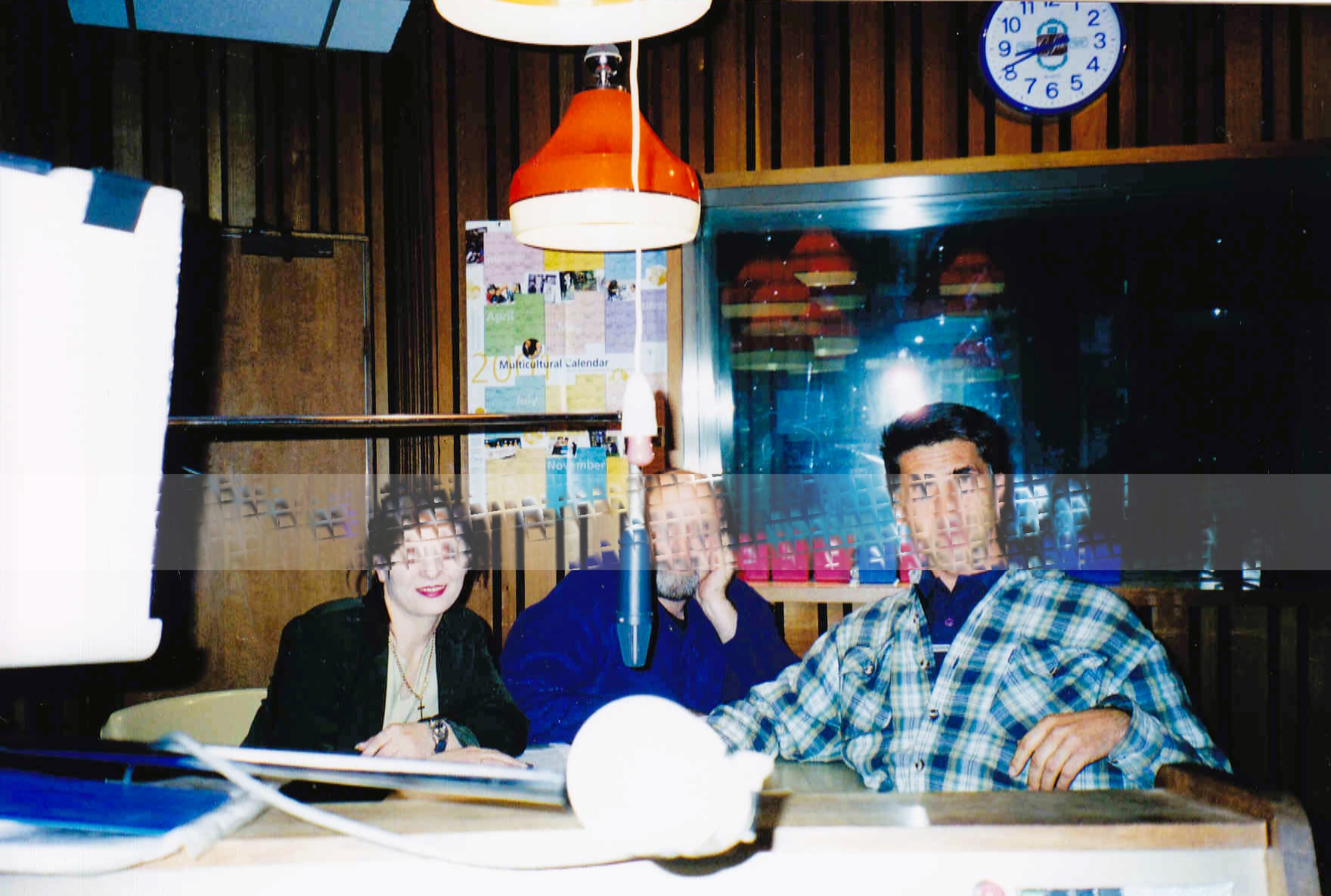
But I mentioned “team”. Though there were times when I was a one-man show, most of the time doing the Macedonian program meant I had company, and what an interesting bunch of people they were.
Before I started on the program, for years it had been two people – a loving and fun couple Cveta and Bosko1, who lived with Bosko’s parents not that far away from where I lived.
Cveta is a wonderfully chatty and effortlessly fashionable person, thought we’ll forgive her for the time when she came dressed to one event in a shaggy purple top that one of my sisters derided as “the toilet cover”. Back in her hometown of Prilep, she had been a promising middle- and long-distance runner (a contemporary of Slobodanka Čolović) and once even won the Prilep best sportsperson of the year award. But as Cveta would regularly admit, coming from a very humble background, her parents simply didn’t have the connections (all too crucial in the Balkans) to allow her running career to go forwards, so instead she turned to cigarette smoking. Oh, she loved smoking, and we’re talking about full-strength cigarettes that would fill your lungs with thick tar from one inhalation. Prilep, after all, was the centre of Macedonia’s important tobacco-growing and processing industry, so to smoke in Prilep was an act of civic duty and kept the city’s economy rolling.
Cveta also had a wonderful voice for radio – so much so that when encountering new arrivals from Macedonia, they would often be convinced that she had learnt her craft from having worked in radio broadcasting in Macedonia. Nothing of the sort! Cveta was a natural.
I remember one of the first direct encounters I had with Cveta on the infamous 287 bus to Fulham Gardens. I would’ve been a teenager. It was a warm day in Australia (shocker!) and I was on the bus and had the window open. Cveta happened to be sitting in the seat in front of mine. Now, Macedonians have a thing with promaja, the dreaded draught that people from the Balkans and wider European continent firmly believe is the cause of all sorts of fatal illnesses. So Cveta turned around to me to ask, in Macedonian, for my window to be closed as there was too much promaja. Understanding the seriousness of the situation, and the fact that Cveta spoke such a mesmerising form of high-level Macedonian (that’s my linguistic side coming out), I promptly complied. Hey, the fact that Cveta felt so comfortable enough to be able to conduct such interactions, or make such demands, in Macedonian certainly says a lot of the nature of Fulham Gardens. This is the suburb back in the day when in the local supermarket (a huge Foodland, a local South Australian chain, by the way), if any of the local oldies – dressed not much different from their peers back in the village in Macedonia – couldn’t find the thing they wanted down what seemed like endless rows of produce and products, then all they needed to do is shout out what they wanted in Macedonian… and someone would respond. Mind you, the same could be done in Bulgarian, Italian or Greek. It would also come as no surprise that this supermarket was the first major one in Adelaide to stock ajvar and ljutenica in the 1990s.
Cveta had the most extraordinary accent when speaking in English – a mix of Macedonian and the broadest of Australian! The way she would incorporate those long, nasally Aussie English vowels was unintentionally entertaining. Just imagine someone from the Balkans saying the Aussie “naur” and you pretty much have it. The Macedonian community of Adelaide would regularly have picnics at the Harry Bowey Reserve… now that was a bit of a challenge for Cveta to say, the resulting sound being at first a beastly growl but then as the years passed, a thing of beauty.
Later, I was joined on the air by Sime, who had this amazingly deep voice perfect for radio. Sime had been one of the many highly educated Macedonians who migrated to Australia in the late 1980s just as Yugoslavia was sliding into ever greater economic chaos with the prospects of civil war going from ‘unlikely’ to ‘matter of time’ far too quickly. This generation of migrants from Yugoslavia, and the Balkans in general, was unlike all previous waves. Up to then, most migrants from what was Yugoslavia had basic education at most, were often unskilled apart from agricultural work, but were very much willing to do hard work. What distinguishes the pre-1980s migrants from most who have arrived since is that they came with no knowledge of English whatsoever. But when Australian migration policy changed in the 1980s from the legacy of ‘populate or perish’ to the much vaunted ‘points system’ – or the ‘beauty contest’ as I’ve seen some English people describe it, which is apt considering how much ‘beauty’ was involved in early post-WWII Australian migration waves, e.g. Caldwell’s ‘Beautiful Balts’), the migrants coming to Australia, particularly from southern Europe, changed completely in terms of nature and numbers. Now they were armed with university degrees, could speak some English and did crazy things such as listen to prog-rock or go to art exhibitions – activities unthinkable for us peasants who came before them. They also couldn’t do simple folk dances, which we found both amusing and shocking. Sime was definitely one of them.
A civil engineer in Yugoslav Macedonia before migrating to Australia in 1988 to join his visual artist sister who had migrated a few years earlier, Sime certainly made an impression on his first encounter with the local Macedonians. You see, he was very much a product of Yugoslavia… and that means he had an interest in playing the system, which any self-aware and forward-focused Yugoslav at the time knew (and still knows) is how to get ahead. The thing is that those tricks don’t work the same way in Australia.
However, Sime had skills that he would later be able to hone and apply not only to his advantage but for the better of whole communities of people beyond the local Macedonians – a seemingly effortless charm and an uncanny ability to relate to people, especially from Yugoslavia, of all socio-economic groups, whether they be like him from the intelligentsia right through to your average folk. He had the gift to make people feel at ease and be on an equal footing as him. Now, if you know how snobby people from urban elites, let alone Yugoslav ones, can be like, this was quite a feat.
Though Sime was a civil engineer by trade and qualification, there was another calling for him in Australia and much more suited to his persona. As more a product of Yugoslavia’s and not just Macedonia’s educated urban culture, his command of Serbo-Croatian, Yugoslavia’s effective national language, was on par with his native Macedonian. Added to his excellent knowledge of English and his very amiable character, he made for the ideal interpreter.
After the Balkan wars started in 1991, what had been up to then a steady trickle of new arrivals from what had become a fragmenting Yugoslavia soon turned into a flood of refugees. The first wave were, curiously, people who either had lived in Australia before (usually the 1970s) but had the foresight to at least take out Australian citizenship (when it was relatively easy to do so) before returning to Yugoslavia, or, as was more the case, young people in their early 20s who had been born in Australia to parents who were those who returned to Yugoslavia after not liking life down under – these young people had automatic Australian citizenship based on the laws at the time. For most of this latter lot, going to the other side of the world and for the first time tasting the freedom of not living with their parents certainly made many of them go a bit wild. Some of their actions caused such friction within the community that we started referring to this lot disparagingly as “imports”.
The second 1990s wave of arrivals was made up of refugees fleeing the wars in the territories of Croatia and Bosnia and Herzegovina, but also highly educated cultural refugees fleeing Belgrade and Zagreb, which by then had been gripped by organised nationalist madness. Many of them had been assisted by relatives already in Australia, but as the wars progressed, Australia then gave priority to the most pressing of refugee cases – people who had been made to flee not once but twice (I definitely need to write about this another time), and the huge number of couples and families who were now deemed to be “mixed”.
Reflecting the conflicts in the Balkans, it was during this time that tensions too between the existing communities in Australia originating from now ex-Yugoslavia were rising, with even cases of open violence – particularly at football (soccer) matches. This greater division was also reflected linguistically. While the “Yugoslav” communities of Australia were on the whole already operating on ethnic lines, officially the language that the Serb, Croat, Bosniak and Montenegrin communities spoke was deemed as one – Serbo-Croatian. That meant that a qualified Serbo-Croatian interpreter in Australia would be sent on assignments regardless of the ethnicity of the interpreter and/or client. For example, a Serbo-Croatian interpreter who otherwise is ethnic Serb and spoke Serbo-Croatian as used in Serbia could be sent to interpret for a Croat who spoke the form of the language as spoken in Croatia. While this was acceptable (to a degree) when there were no overt tensions between the ethnic groups originating from Yugoslavia, that was no longer the case with the war happening.
Nickipedia is available on Substack!
One time during a break while taping a radio progam, Sime gladly announced to me that he had become an interpreter. I congratulated him, but I was curious to know whether there was that much need for a Macedonian interpreter to sustain a full-time role. Oh no, he was already fully booked doing assignments as a “Serbo-Croatian” interpreter. I use scare marks here as the term was no longer in official use by the early 1990s as the language then had devolved into three (at the time) – Serbian, Croatian and Bosnian. What the local Australian authorities had ruled that due to problems and complaints they received, and to avoid any possible uncomfortable situations, this will be the case from now on: anyone who identifies as “Orthodox Christian” (regardless of whether they were religious or not – most weren’t) will have Serbian interpreters assigned; Croatian for “Catholics” and Bosnian for “Muslims”. No consideration here was taken that the new languages were, in practice, more regional than ethnic-based – many of the “Orthodox Christians” from Croatia, for instance, spoke what would be better classed as “Croatian” than “Serbian”. But there was no other way in defining or ascertaining which interpreter would be the best match. In fitting with the tribalism happening at the time, this was the simplest solution.
But what about the “mixed” families? These were the people who had been officially of Yugoslav ethnicity. They were the ones who formed the bulk of the new arrivals and were most in need of interpreting services.
Sime told me of the absurdities surrounding the handling of these new successor languages to Serbo-Croatian. He showed me a list of families that required his interpreting. It was clear-cut what language and appropriate interpreter applied for the families where every member was of the same “religion”… but what about the “mixed” families? Making sure to hide everyone’s name from me, even though it was unlikely I would’ve known them, Sime showed me the most extreme example from his list of clients: the father was “Orthodox Christian”, the mother was “Muslim” and yet they raised their children as “Catholics”. As Sime pointed out, according to instructions, a Serbian interpreter must be sent for the father, a Bosnian one for the mother and a Croatian one for the children. How in the world can this family then communicate with each other?
That’s where Sime came in.
Macedonia was fortunate at the time not to have been dragged into the Balkan wars of the 1990s. Part of that came from not being in the same language as the Serbo-Croatian speakers, so the separate ethnic identity of the Macedonians was already a given amongst Yugoslavs. And even though there were a small number of extremists amongst the Croats and Bosniaks that would attribute the Macedonians as being no better than Serbs on account of being majority Orthodox Christian, and some extremist Serbs belittling Macedonians as recalcitrant and misguided “Southern Serbs” not deserving of sympathy, an overwhelming majority of ex-Yugoslavs saw Macedonians as neutral bystanders, so no-one really had any beef with them. That made it perfect for Sime, as an ethnic Macedonian Yugoslav interpreter of Serbian/Croatian/Bosnian being the right person to be sent for interpreting assignments for these “mixed” families. Thanks to this, Sime quickly established himself as the prime conduit of verbal communication between these “mixed” families and the Australian authorities, medical staff and judicial officials. For the past three decades that has been Sime’s important role for these people.
Sime and I would do the Macedonian radio program together on Fridays right up until I left to go overseas in 2001. For him, he was doing this to maintain his connection to his Macedonian roots – speaking in Serbo-Croatian all day and having a Croat girlfriend (now wife) meant he was only rarely speaking in Macedonian, but like with me, being on the program maintained that. If you don’t use it, you lose it.
While Sime would have a pleasant demeanour all the time, there was one topic that would make him feel melancholic – his son. Sime had married relatively young and had fathered a son soon after, but his marriage didn’t last long. Migrating to Australia was a way of getting over his relationship, but it did mean he was not there to see his son grow up, which was something he felt guilty about. Sime would always light up whenever he’d tell me the latest with his son, but I knew very well never to ask Sime about his son as this was a topic that solely Sime should determine when it is appropriate to talk about.
Sime was also a very inquisitive person who would always ask me about the latest English language grammar or Australian English quirk he’d heard. That’s what happens with people who work with languages! One saying that he loved bringing up was “dig deep”. One time when doing a live broadcast from the radio station as a part of its annual fundraising drive, my sister accidently found herself in the studio with us and a whole panel of other illuminaries from the radio station. With no preparation and no prior on-air radio experience (the first time is scary!), the head of the radio station, who also happened to be Macedonian, asked my sister if she had anything to say to the audience for the fundraising drive. After a slight pause out of shock, she simply said – dig deep. Sime was taken by the saying. He had never heard of it before, and for years afterwards he would just say it out of the blue and laugh. You have to admit that it’s a great saying.
While we would do recording, Sime and I would entertain ourselves with our own humerous observations of the things happening around us. One time, Sime told me how had been invited to a dinner party with some very pretentious people who had found Sime intriguing for coming from Macedonia and Yugoslavia. I remember saying to him: “Oh don’t tell me they spoke like this”… and I proceeded speaking in a plummy accent mispronouncing his name. “Yes, that’s how it was” Sime told me. So after that for years we’d occasionally go into posh accents with each other for fun.
I left the radio program in 2001 just before I left Australia to take up an opportunity in Canada. Sime was never great when it came to emails and communication, so even though I did attempt communicating with him, he never responded. It was a while after that I asked my parents whether Sime was still doing the program on Fridays – no, as soon as I left, so did he.
The last time I encountered Sime was over a decade ago. I had undergone intense chemotherapy for stage IV cancer in 2008, followed by nine years in remission. During that time, once I reached the stage that I could do check-ups at six-monthly intervals I was able to move back to London. Yes, I’d go all the way to Australia every six months for a check-up! One time while I was in the sterile and highly unglamorous hospital seating area waiting to be called in for a CT scan to be done, I heard a familiar voice chatting away in the distance. Don’t tell me it’s Sime? Yes, it was! He was still doing what he does best – interpreting for the ex-Yugoslavs. So I approached him and surprised him when I said in my plummiest of accents: Mister PetrOFFski, I presume. His response in equally plummy accent: Oh Mister NEIGHzeff! A pleasure!
It was indeed a pleasure!
What happens when technology advances leaps and bounds riding on the wave of this newfangled worldwide web, changing the very nature of reporting news. And what happens when armed conflict happens in the home country? That’s in Part 5… on the way.






_(8249451687).jpg)



.jpg)










.jpg)






.jpg)









_logo.svg.webp)


_(52052470251)_(cropped).jpg)






.jpg)