Have you unwittingly done a hand gesture that meant something completely different in another country?
Here’s a true story…
During a state visit to Australia right at the start of 1992, US President George HW Bush was confronted by protesting Australian sugar industry workers angry at the US dumping cheap, subsidised sugar in their traditional markets in Asia.
How did Bush acknowledge the protestors as he was driven past them in his bulletproof Lincoln limousine near Parliament House in Australia’s capital Canberra?
By flashing them a “V” for victory sign ✌🏼
Nothing wrong with that, right?
Well, there was…
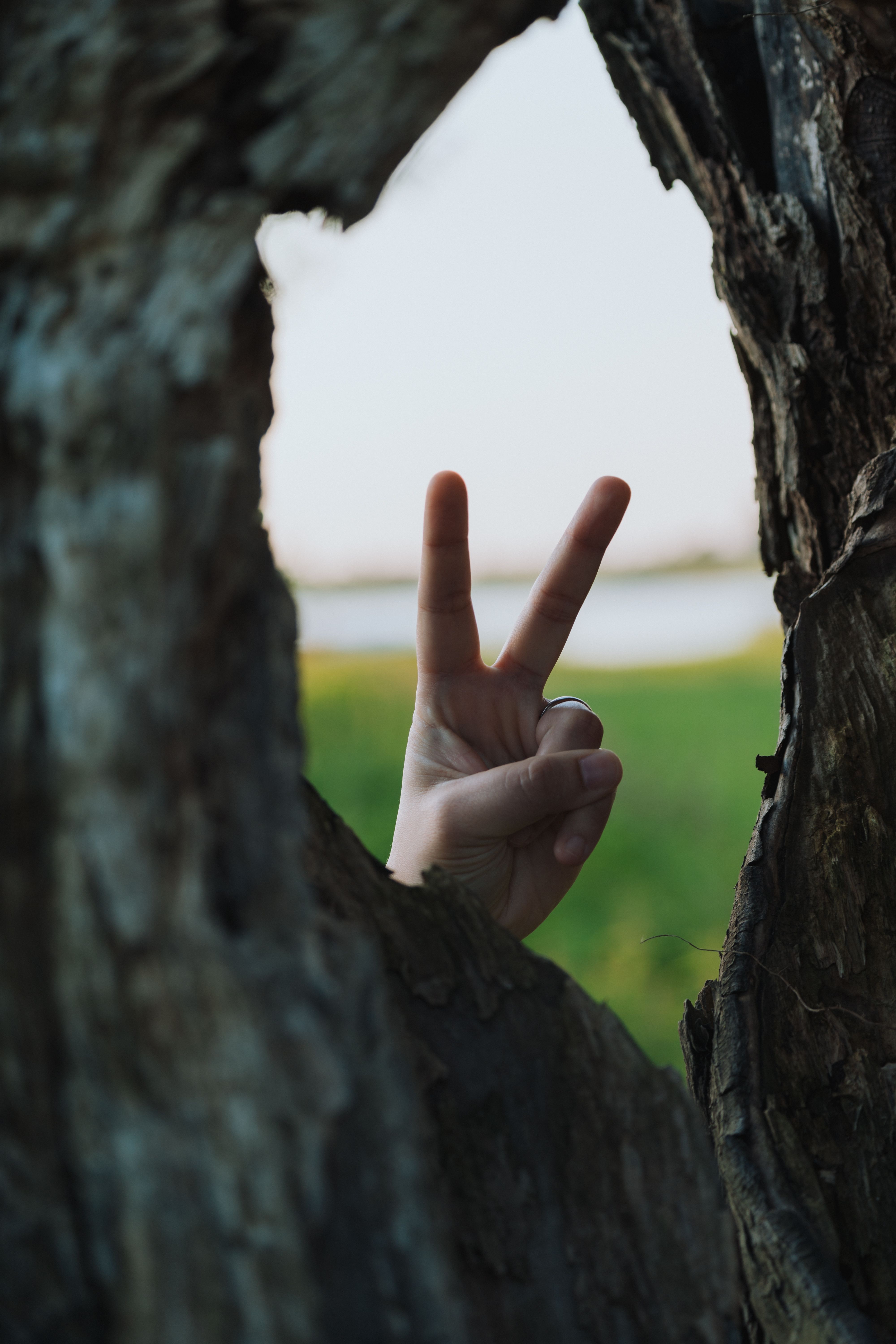
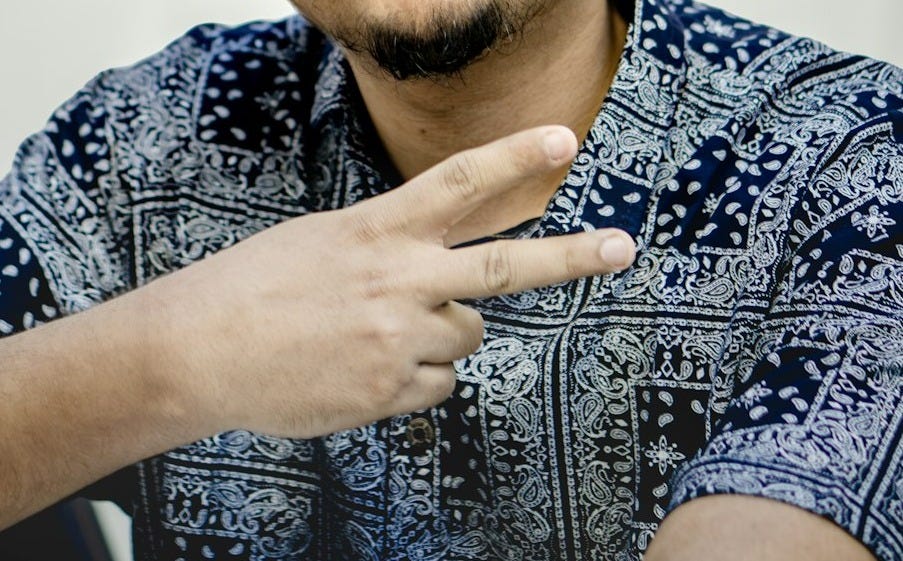
Bush did the universal hand gesture with his fingers to the front and the palm facing back like this in the photo below (a big apology upfront for this but I’m just providing a visual, not endorsing or making a statement)…
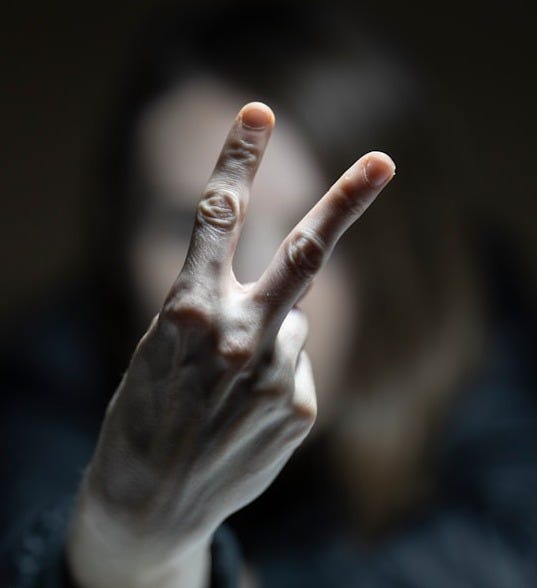
Bad move – that particular hand gesture in Australia does not mean “peace” or “victory” but is the equivalent to the middle-finger salute – you know the one, flipping the bird. Needless to say, by doing this President Bush caused great offence.
And he didn’t stop there! The Australian Financial Review at the time also reported this:
As President Bush’s motorcade drew away from a group of journalists last week he unwittingly gave his most honest message to Australia – a reversed ‘V’ for victory sign.
The United States will talk free trade with countries like Australia as much as we wish, but when its interests are threatened its actions tell us none too subtly to ‘get stuffed’.
Just to explain, get stuffed is a relatively politer and now somewhat dated way for what most Aussies would otherwise now say – f**k off.
At the time it wasn’t for certain whether this was a genuine gaffe or not. Regardless, you’d think that with all the resources at the disposal of the world’s most powerful man, including protocol experts and diplomats, that someone would’ve whisphered into Bush’s ear about this major faux pas. But at the time, it truly felt for Aussies that this was a case of “tell us what you really feel”.

So what’s the story behind the V sign?
First of all, like so much of Australian communication, whether it be speech, slang, writing, etc., this hand gesture originates from the UK. According to Rick Steves on the explore.com site:
“The exact origin of the British two-finger salute is hazy. One popular myth relates to the Battle of Agincourt in 1415 when French troops threatened to chop off the drawstring fingers of Henry V’s deadly longbowmen if they were captured. The legend goes that the English archers would taunt the enemy by waggling the offending digits in their direction. In more recent history, it is believed the first V-sign captured on film dates back to 1901 when a disgruntled worker stuck two fingers up at the camera.”
The person most famous for giving the victory hand signal has to be wartime British Prime Minister Winston Churchill, though despite the sensitivities that gesture has in the UK and throughout the Commonwealth, he would use inward- and outward-facing forms interchangeably, as these images show.
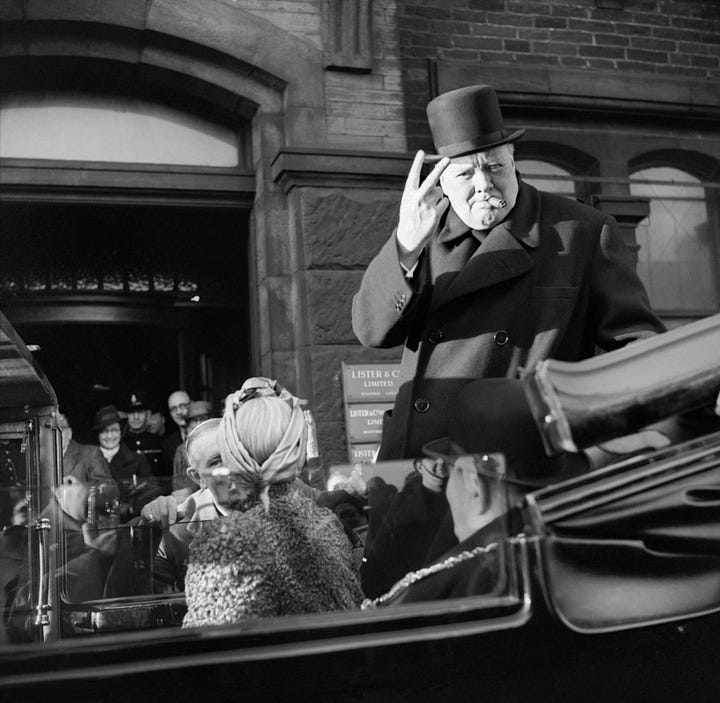
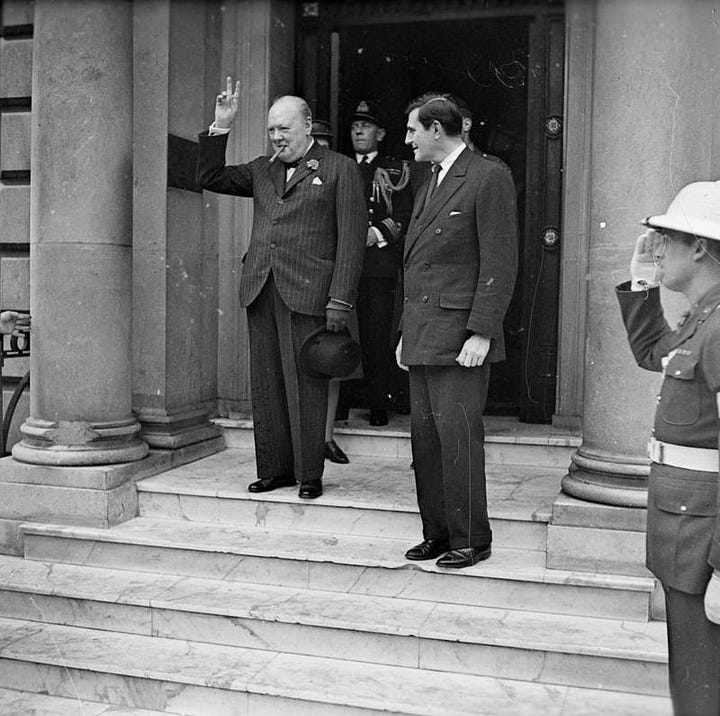
Later, to give in-yer-face street cred, punk rockers in the 1970s and Britpop stars in the 1990s would regularly employ the offensive two-finger salute as a signature hand gesture.
Then we had the peak of peace signs – when all the East Germans started protesting were flooding the west when the Berlin Wall fell in 1989. Cue Winds of Change by the Scorpions.
And in more recent times, the V sign is associated with East Asians and taking photos.

But what’s the case now? Is this hand gesture still widely taken as offensive in Australia?
While older Australians know the gesture well, nowadays if anyone in Australia wants to gesture “up yours” using their hands, it’s usually with the standard single middle finger – at least that’s been mainly the case since the mid-1980s. Using the two figure salute with palm inwards these days for its original meaning is very “OK boomer” and some younger Australians won’t even get what you want to say.
But that doesn’t mean you can get away using this hand gesture (palm facing inwards) to signify wanting “two” of something in Australia. With the offensive connotation having the palm facing inwards with this hand signal firmly established in the collective conscious, the way Australians usually gesture for “two” is with the palm facing outwards, like this…
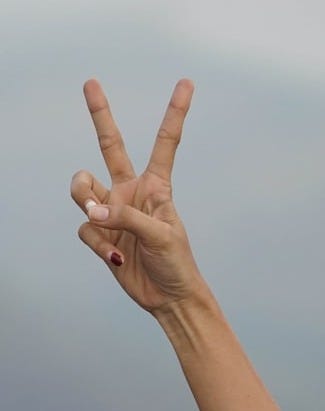
Now if in the heat of the moment you’re not sure whether palm inwards or outwards is the right way in Australia to signify “two”, here’s a tip to avoid offence: instead of pointing your fingers upwards, have them point sideways and rigid (otherwise it may be mistaken for the “scissors” sign). However, in this position, if you want to change from “two” to “one”, withdraw the middle finger and leave the pointer/index finger so as to avoid possible offence. Still, it’s always best to use the hand gesture in the picture above to get your message across clearest.
While we’re here, it’s time to address one major internet myth about “rude” hand gestures in Australia.
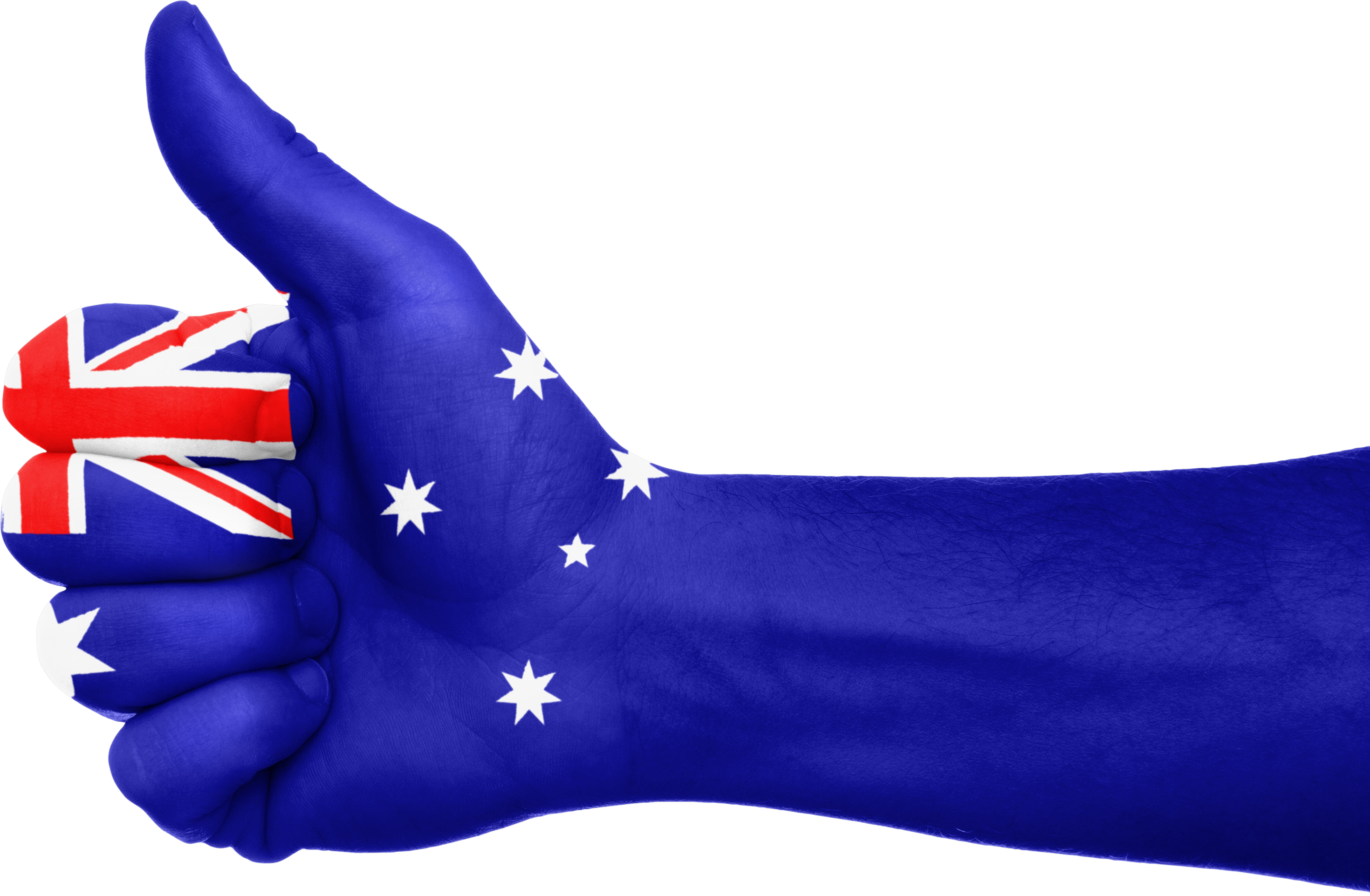
From around 2017, US sources started claiming that the thumbs up hand gesture, which in most countries around the world is a sign of approval, is apparently considered in Australia to be “a rude gesture having a meaning similar to that of a raised middle finger”. As unverified viral details often go, this was soon accepted as undeniable fact, where even Reader’s Digest regurgitated this.
Well, I can assure you that, for the most part, this is completely wrong.
Australians regularly use the thumbs-up hand gesture as a sign of approval and no offence is taken from it whatsoever. Actually, a thumbs up is often given when an Aussie says Onya mate! meaning “well done”.
I did find one random answer on Quora claiming the thumbs-up hand gesture used to be offensive in one unspecified rural part of Australia ages ago, with the respondent claiming only hearing about this once in the 1970s, so that’s just one person’s hearsay and hazy memory. What is more likely the case here is they’re referencing how Indigenous Australians traditionally use an elaborate system of hand gestures when communicating. Many of these signals appear the same as those used worldwide but they often employ different meanings and connotations. Now as there are more than 250 different Indigenous nations in Australia, these hand gestures also then vary greatly in meaning between groups. So there’s bound to be at least one Indigenous Australian nation that interprets the thumbs up as something offensive. For more about the unique system of hand gestures in Indigenous Australian communication, here’s an introduction to check out.
Though if we go back, what was once offensive was doing the thumbs up with a sharp thrust motion upwards, to mean “up your bum”, accompanied by a scowling grimace. However, we’re talking about even before my time here, so that’s way before the 1970s now. You’re in safe territory nowadays.
To prove how much a thumbs up is not at all offensive in Australia, then how about this…
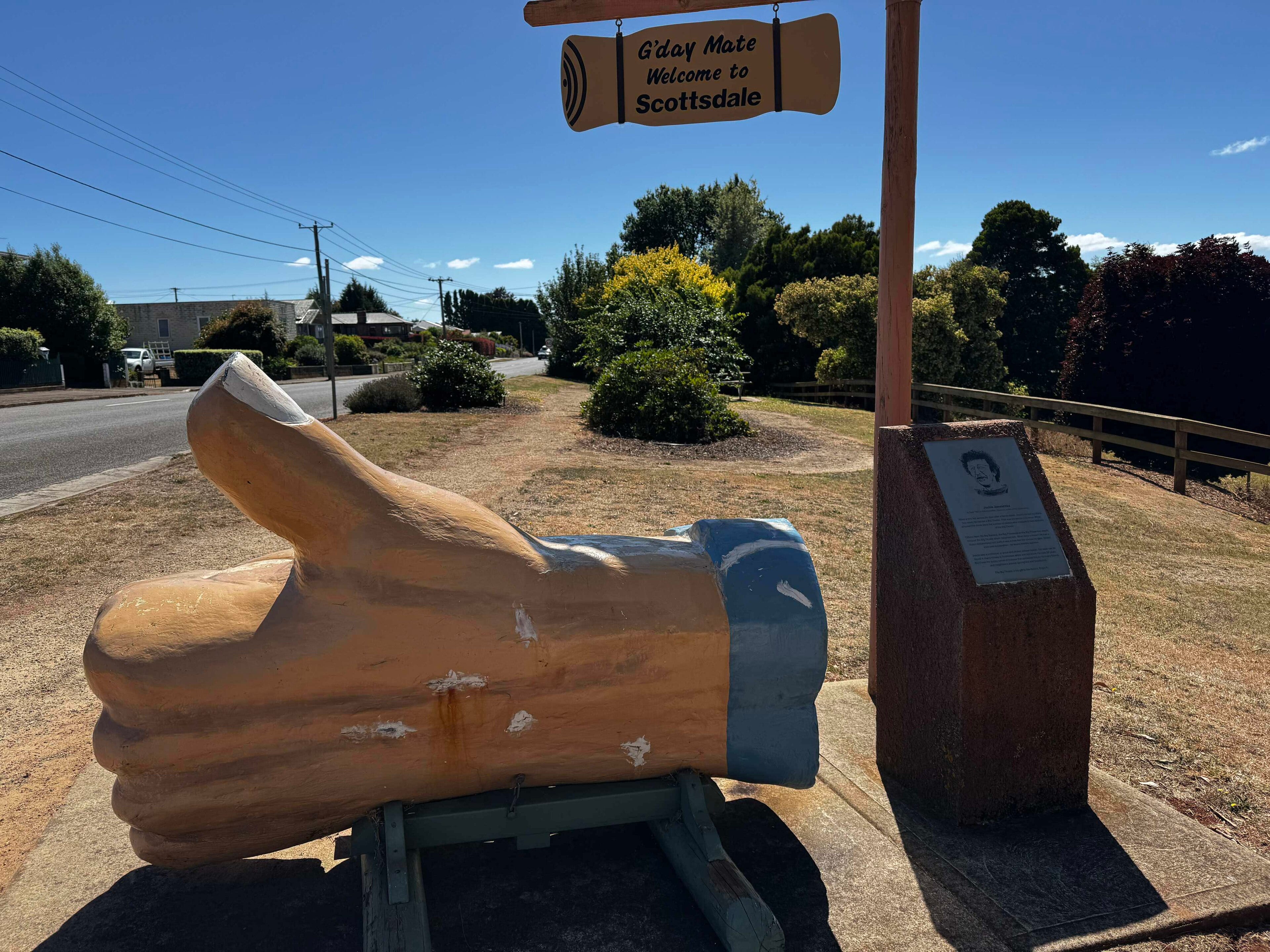
Australians LOVE tacky big things, whether it be a big pineapple, big merino, big banana, big golden gumboot… you name it. Well, Scottsdale, Tasmania has its own big thing to lure the tourists… a big thumbs up!
So let’s get it all clear then for Australia…
V sign with palm outwards ✔️
V sign with palm inwards ❌
Thumbs up ✔️
I give you a big thumbs up for reaching this far. Onya mate!
If you’re interested in finding out more about Australian English, drop me a line at info@nicknasev.com and let's discuss.
Photo credit right: Philipp Deus: https://www.pexels.com/photo/a-person-showing-a-peace-sign-25478093/










.jpg)

















.jpg)





.jpg)














_logo.svg.webp)




_(52052470251)_(cropped).jpg)












.jpg)









_(8249451687).jpg)