An event in March 2026 commemorating 50 years of Macedonian radio programming in Adelaide was what prompted me to write these tales. I didn’t expect that it would go for five instalments, but given the nature of how my memory’s going, it’s best that I record it now before I forget to think about it. What was intended to be a memoir of personal experiences ended up exploring how our tight-knit community and the issues within it was a microcosm reflecting the bigger ones in the “homeland” most of our members had to flee.
Part 1 covered what ethnic radio (to use the term applied then) in Australia was all about in the 1980s and 1990s, as well as touch on how the various radio programs from the different former Yugoslav ethnic groups certainly fanned the flames of extreme nationalism. Part 2 was about how I joined the Macedonian radio team and scared the establishment of sorts with the hardcore turbo folk songs I’d regularly play, plus explain the complexity of how the community’s overall loyalty to Yugoslav Macedonia did not extend to Yugoslavia as a whole. Part 3 went into the problems that come when a standardised language is an unwanted and unwelcomed compromise. Part 4 was dedicated to the amazing people who made the programs with me, and how Macedonians are the best neutral parties to arbitrate in intra-Balkan relations.
So for my final instalment, let’s get into the massive transform in technology with the advent of the internet… and what happens when the “homeland” finally succumbs to armed “ethnic” conflict.
Nickipedia is reader-supported. Want to receive new posts and support my work? Then how about becoming a free or paid subscriber.
I was involved the program from 1994 to 2001 – a time when technology advanced in leaps and bounds riding on the wave of this new-fangled worldwide web, changing the very nature of receiving and reporting news and entertainment. We went from analogue to digital like that!
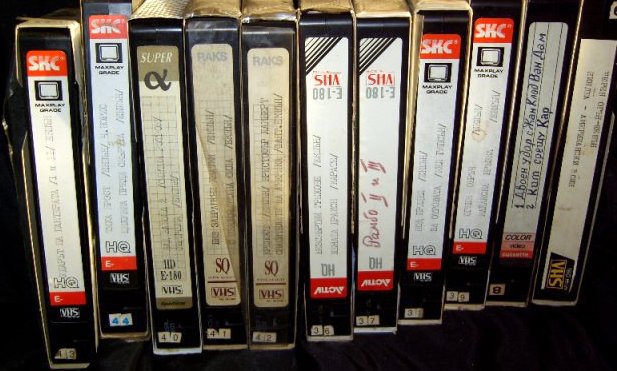
In 1994, we used to receive the “latest” news – meaning anything major that’s happened in the past week – by fax from a news agency in Skopje, Macedonia. On a good day, it’d take about 30 minutes for the waves of paper with partly illegible text to gush out of that noisy machine. We’d also receive a weekly 20-minute news bulletin, Radio Biljana, specifically recorded for Macedonians abroad and naturally with a name like that, the Macedonian folk song Biljana platno beleshe, played on a keyboard, was its call-sign. To receive it, we had to call Radio Skopje (an expensive international call) and record it to tape by placing the telephone receiver on a phone microphone connected to a tape recorder. Hi-tech! Sometimes we had to call back later as Biljana (yes, that was the name of the person in charge of these calls at Radio Skopje) would be on the line with the Macedonians of Detroit, Vienna, Dortmund or Lugano. Once we’d get a spot and everything was set up, we’d have to leave the studio during the analogue and real-time recording lest our smokers’ coughs would get caught in the recording – perfect time for a smoke break! This smoko gave us time to share what community goss we had. I mean, it was big news when Dimche had bought that third house no-one was supposed to know about, especially as he claimed he was on the pension – suspo!
The other source of news for us (genuine and, at times, gossip) would be the two main Macedonian newspapers in Australia – the Australian Macedonian Weekly and Today Denes. Now, you’d think that just reading articles from the newspapers, which any of our listeners could buy at their local newsagency (newsstand for you North Americans, newsagent’s for the rest) would be a waste of time. Well, given that most of our listeners, though native speakers, couldn’t read Macedonian, the newspapers were not much use for them, so reading the articles for them was providing accessibility.
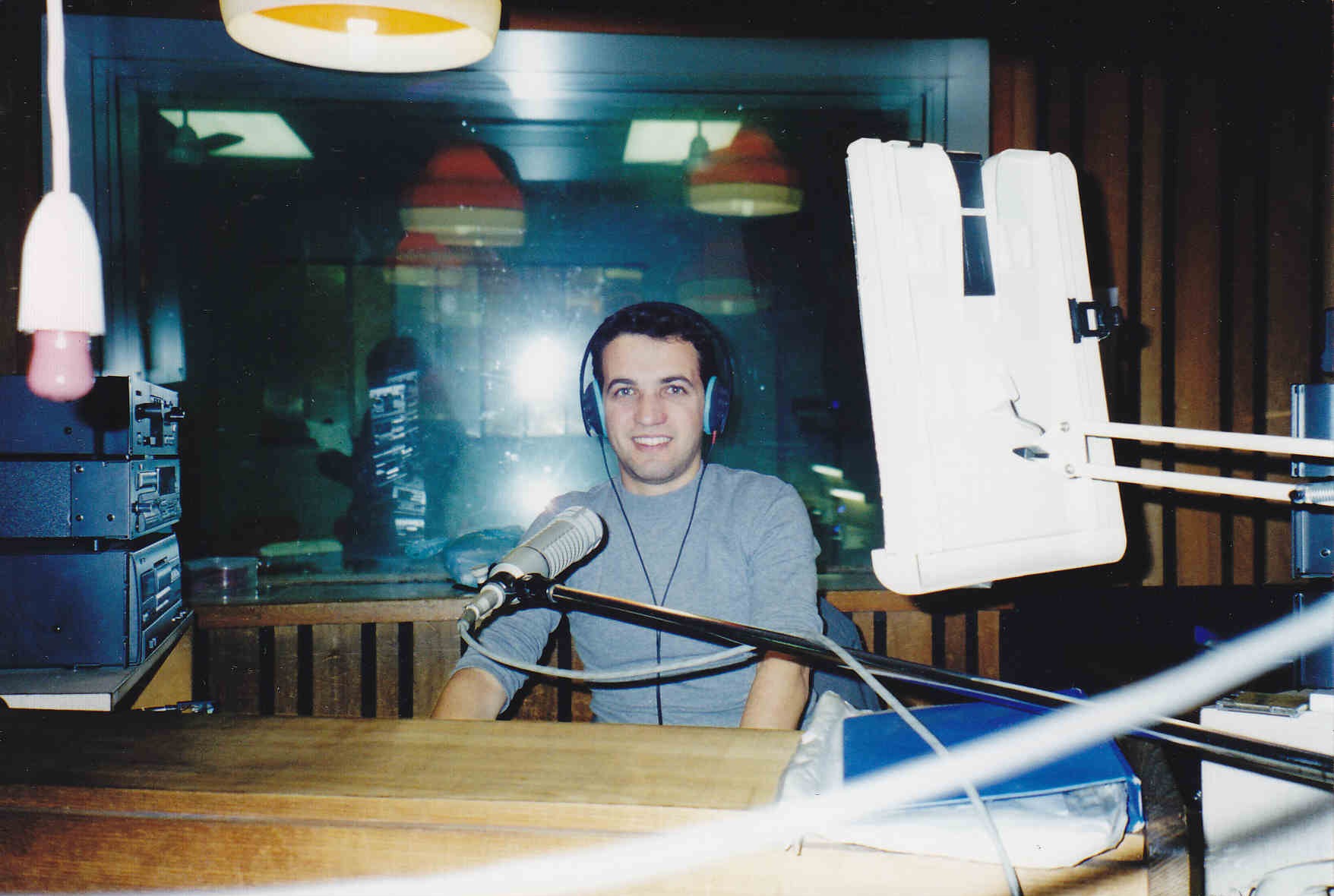
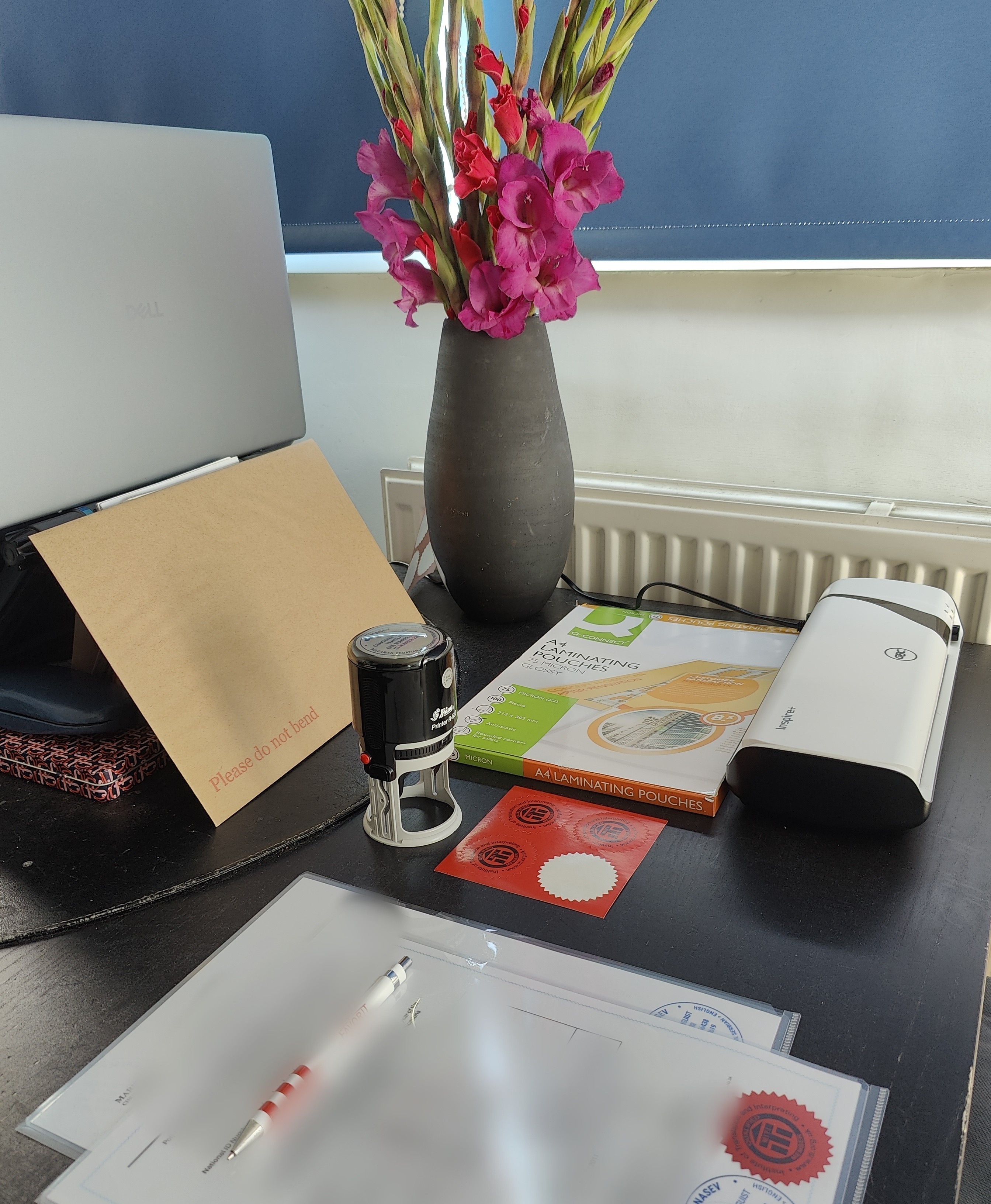
By 2001, I was receiving the news straight off the internet and recordings on mp3 files via links and torrents. Instead of pre-records, I’d just present the show live, with me behind the desk doing everything (see photo above). That freed my Thursday evenings, and I would also be able to get the news hot off the press just minutes before going to air.
The internet and all the other new ways of communication it introduced was a gamechanger. I remember the first time I got a work email address – that was in 1999. To test it off, I sent an email to a cousin of mine in Bulgaria, who replied within minutes. Until then, apart from those international calls that cost an arm and a leg, the only economical way I could communicate with my relatives in the Balkans from Australia was writing letters. Given the disarray postal services in the Balkans were during the 1990s, to receive a reply to a letter within 6 months was a miracle. So to go from months to mere minutes of being easily informed of what was happening with the family on either side of the world certainly changed the dynamics of our relations. No longer were we near clueless of each other’s daily lives.
I owe a lot to this letter-writing. Because of my interest in and enthusiasm for languages, by the time I was a teenager I was designated the family’s letter-writer for correspondence with relatives in the Balkans – a task more like a second job when we started receiving near daily letters from distant relatives, often tenuously connected to my grandfather, from all over the world after having fled either the chaos of Bulgaria’s post-1989 transition or the chaos of Yugoslavia’s disintegration. Good, old-fashioned writing with pen to paper, bad handwriting or not, certainly hones in the language skills. And with no Google Translate or AI to rely on to give instant prompts or write whole texts for you, it was all grit involved… and much trial and error – if I didn’t know a word or how to conjugate an improper verb, I had to get out the dictionary and look it up. This was how I truly learnt to communicate in my additional languages.
The internet also made music and audio recordings far more accessible. The first mp3 I downloaded was the Bulgarian chalga hit Ogan momiche (“Fire Girl”) by Kamelia (Novak Djokovic’s favourite singer, by the way). The Macedonian services of the BBC World Service and Germany’s Deutsche Welle had their current affairs features available for downloading and broadcasting on mp3 too. As a result, our radio programs became more diverse and professional.
These factors would become vital when things started to go downhill in Macedonia at the start of 2001. A war was on the horizon…
As the news was coming of numerous police stations being attacked in Albanian-majority populated parts of northwest Macedonia, the fear that the 1998-9 conflict in neighbouring Kosovo would spill over to Macedonia was becoming a reality.
We’ve seen this happen before – give otherwise young unemployed males a masculine-related purpose such as being “heroes” and they’ll embrace it. But what happens when the fighting comes to an end, especially when fighting is the only thing that has given them something “meaningful” in their otherwise sad lives? For some who are unable to readjust to peace times, and when no other options are provided to them, then continuing the fight is the only thing left for them to do.
Albanians had genuine grievances in Macedonia and their status as a minority meant that they were not in the prime position to gain benefit from the system. But considering that there were a number of government ministers who were ethnic Albanians, could it be honestly said that the Macedonian government these ministers were part of was repressing the Albanians, as claimed as the rationale for the armed conflict, to a point that innocent peoples’ lives were worthy of being lost in a fight against this “repression”? As the few, and very much muted, alternative anti-war media sources in Macedonia have pointed out, it was too much of a coincidence that the 2001 war in Macedonia started at a time of intense and, at times, bloody competition between smuggling gangs regardless of ethnicity – usually these groups are mixed as crime knows no border. The main factor that allowed this smuggling (mainly of cigarettes) to thrive was that the border between Macedonia and Serbia (which officially included Kosovo at the time) was not properly defined, effectively creating a grey zone through the Shar mountains. The (occasional) enemy of these smuggling gangs was the police, so what a surprise that the first place to be attacked in this conflict was a police station – in the border village of Tearce. And surely it was not a coincidence that this attack happened just days after the Macedonian and Serbian governments signed an agreement that properly defined the border between the two countries – eliminiating the grey zone and, subsequently, the smuggling trade. Now crime works best when there’s chaos and lawlessness, and with loads of unemployed former KLA fighters on the Albanian side and as many unemployed ethnic Macedonian men on the other side, what better way to achieve this than whipping up ethnic differences and getting an armed conflict going to provide the cover to settle criminal scores. This, I believe, was the true cause for Macedonia’s 2001 armed conflict and not any of the official accounts on either side of “protecting national interests” or “ethnic rights” blah blah. In the end, it’s always the little people on all sides who suffer.
And it was those little people that many of our listeners were concerned about. They were their relatives and friends, as well as their wider community. They wanted far more detailed info than any of the English-language sources could provide, so our program became the primary source for the latest news of what was happening in their ancestoral land.
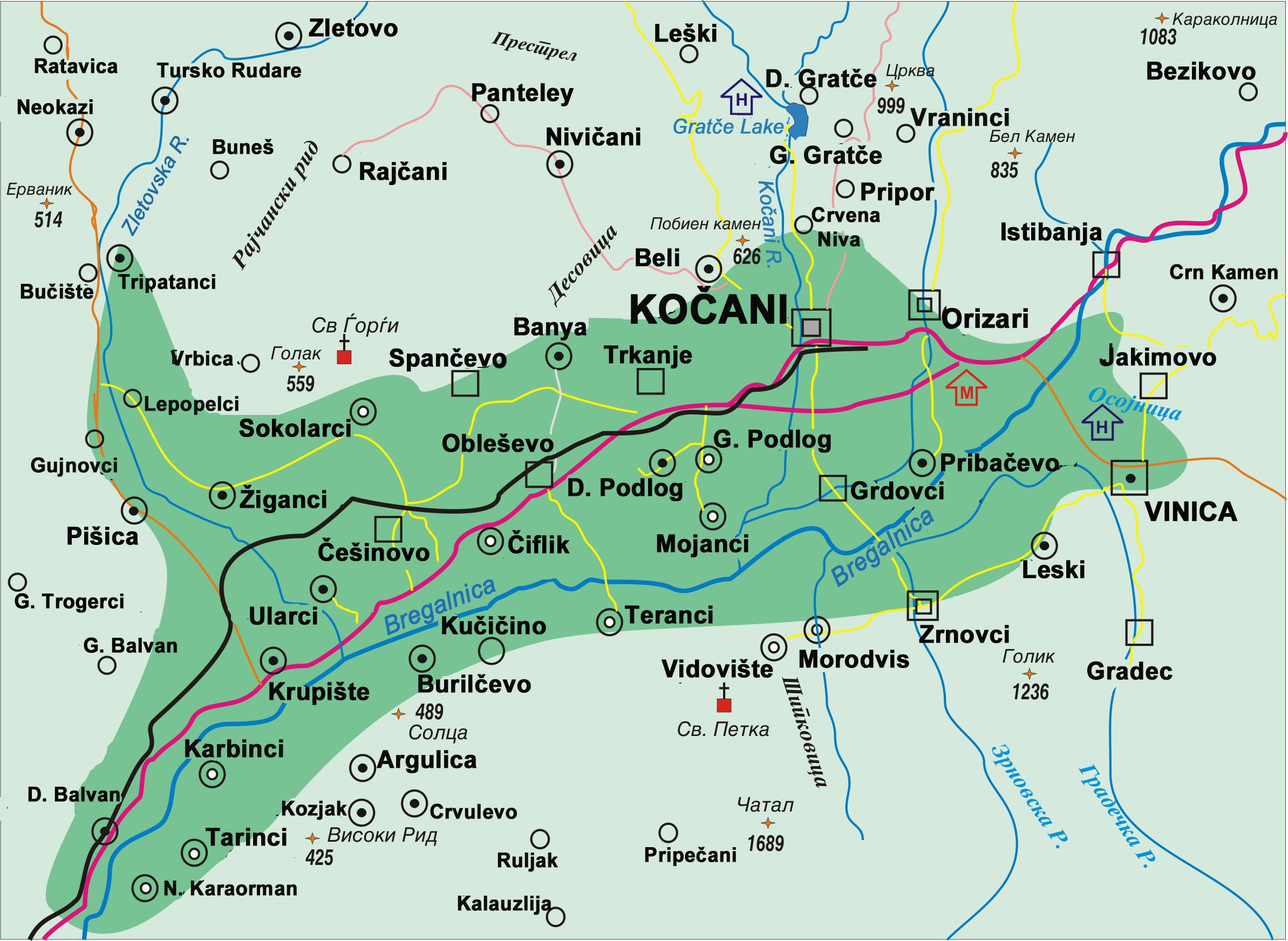
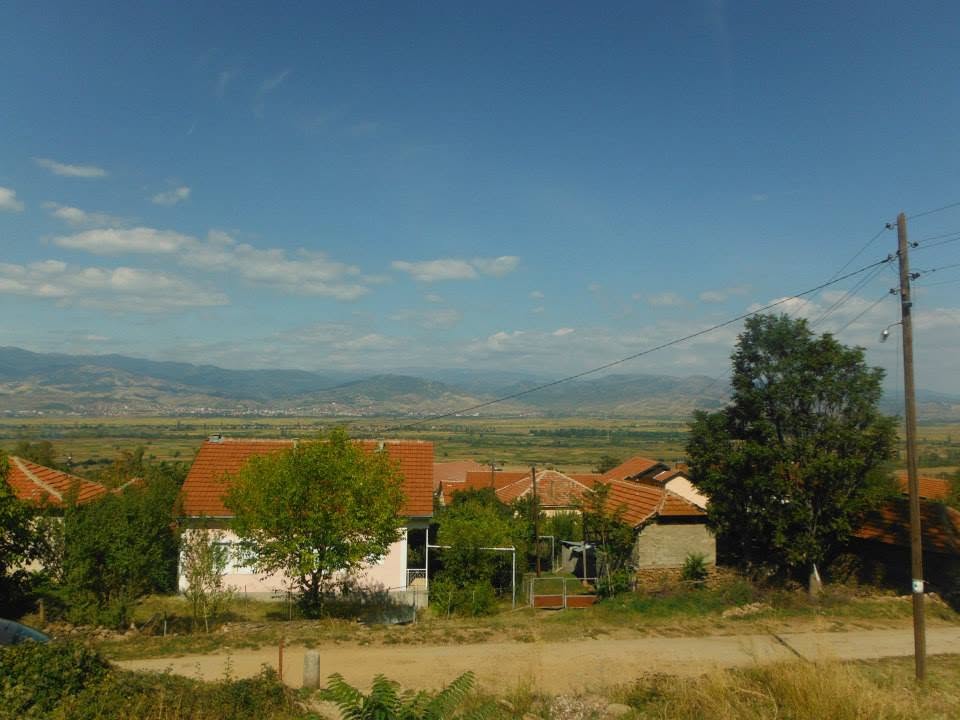
I also had a personal interest in the situation – my own little person was my first cousin Biljana (there’s that name again). At the time, Biljana and her husband and infant son were living in a village to the north of Skopje a few kilometres away from the newly formed frontline. In March 2001 Biljana had a littler person – a daughter. A day after returning home from having given birth to her daughter, and with the gunfire intensifying – an audible sign that the frontline would soon be at their village, she and her family made a fateful decision: they grabbed a few essential items, locked the door on their humble home and fled. Knowing that Biljana was due to give birth, my father had contacted his sister, Biljana’s mother, who told him what happened. That was the last we heard of their whereabouts…
In conflicts like these, it’s very easy to be caught up in the tribalism deliberately cultivated, fanned and exploited. It’s all black and white – “we are the 100% good side and the other is 100% bad” and “you’re either with us or against us”. Very primitive stuff, and if you think you can rise above it, then good luck! I know that I was going to do my best not to succumb to it, even though I was presenting a Macedonian radio program being fed news solely from Macedonian news sources that we had no possible means to verify if the information being provided was accurate, genuine, hearsay, propaganda or complete lies. Did I then contribute to this tribal politics? No doubt, yes! We’d all like to think that in situations like these we’d be like August Landmesser, the man in the famous picture where he’s the only person not giving the fascist salute within a sea of 45-degree poised arms, but let’s be honest here – sticking your neck out and going against the tribe has consequences so severe that only the truly brave… or foolhardy would contemplate. One thing though I did make a conscious effort in doing is not to resort to ethnic slurs that so many people in these situations easily slip into. Neither did I truly hate the Albanians as an ethnic group – they were being as manipulated by their corrupt leadership as much as the Macedonians were by ours.
There was one incident during this period that certainly caught me by surprise.
As I’ve mentioned in my previous tales from ethnic radio, our 11:30 am Sunday show would be followed by the one-hour Croatian program. The coordinator of the show, a devout Catholic woman who would rush straight to the studio after Sunday mass had finished, ran a tight ship. While doing my live show, when I’d have some Macedonian song playing, the whole team would pour into the studio (strictly speaking, they weren’t supposed to) and start preparing for their show. I didn’t mind as I knew they were very professional in their approach and kept quiet when they had to.
But there was this one time, in the studio….
It was late May 2001. I was doing one of my last live Sunday shows giving the latest accounts from the frontline in Macedonia. The Croatian team came into the studio as per usual and starting preparing themselves for their upcoming broadcast. Now, Croatians can at least get the gist of Macedonian as our languages are related though not mutually intelligible, but having been in the same country before – Yugoslavia – meant that there had been some linguistic levelling and mutuality, especially when it came to administrative, political and military language, and when there’s an armed ethnic conflict, there’s plenty of that. Of course, I was informing the audience of the latest attacks and where villages had been ethnically cleansed – familiar territory for the Croats, and which my colleagues in the studio had been listening quietly to so as not to disturb me or create any background noise. I went to a song and the Croats in the studio went back to organising their program.
Then a woman from the Croat team went right into an unexpected yet familiar rage rant…
“If these shiptari* don’t like it in Macedonia, then they can all go to Albania for all I care. They’re always causing trouble. Get rid of them all! Violence – that’s the only language they understand. They’re backward primitives. No-one can live with them…”
And on she went!
I admit, I was stunned. “What do I do?” I thought to myself. “Do I reply?” I gave a simple “a-ha” just to acknowledge that I’d heard her, but to change the awkward mood in the studio, I decided to cut the song and go immediately into reading the latest community announcements. “Coming up this week at the Macedonian Hall…”
25 years later and this rant is still etched in my mind. This is why…
What this woman said was not out something random or unique – it was the standard rant Serbs, Macedonians and Montenegrins would, and still, say about Albanians in (ex-)Yugoslavia. I knew that this attitude had been shared by many others in Yugoslavia towards Albanians. I won’t dwell too much or unpick this, but I will say that outstanding writer Slavenka Drakulić did state in one of her books how growing up in Zagreb, Croatia, Yugoslavia, due to language, culture and (to a degree not as significant as it might seem) religion, the attitude prevalent at the time was the Albanians “came from a different world”. Being the most numerous non-Slavic ethnicity in Yugoslavia and primarily still predominantly rural, they were an obvious cultural and linguistic “other”, though physically they did not stand out like the Roma did, who are the ultimate in Balkan “others”.
I should point out that this is no one-way street. Again, extremism knows no boundaries. For instance, whenever some internet war heats up between Slavs and Albanians, like the times when someone falsely claims that Tom Hanks said ‘Kosovo is Serbia’, prompting internet comments wars of epic proportions, then it’s only a matter of time that some Albanian will demand that all Slavs “go back to beyond the Carpathians where you came from”. This implies that unlike the Albanians, who are supposedly fully “autochtonous” (just ask Dua Lipa), the Slavs don’t belong in the Balkans as they’ve only been in the region for a mere 14 centuries, which is the Balkan equivalent of an overnight stay in the greater scheme of things.
What made this rant from a Croat in 2001 stand out was that it came soon after the Yugoslav wars of the 1990s. Until then, I had been under the impression that Croats and Albanians were allies of convenience in that classic arrangement of “the enemy of my enemy is my friend” – that common enemy being the Serbs. One of the most high-profile Croatian Army generals who fought against the Krajina Serbs in Croatia’s 1991-5 “Homeland War” was Rahim Ademi, an Albanian born in Kosovo, who in 2001 was indicted (and later acquitted) of war crimes against Serbs. So there were close links there, but as it seems, they were solely superficial – despite shared animosities, not only is it not automatic that Croats would sympathise with (Muslim) Albanians but some outwardly and non-apologetically hate them to a level greater than towards Serbs. Even Ademi himself alluded that as a dispensible Albanian, his Croat superiors threw in him under the bus, so to speak, to protect other ethnic Croat generals who were more involved in war crimes than he was.
The other aspect of this rant that surprised me is that this Croat woman had a greater intensity in expressing her feelings towards the Albanians on this matter than any Macedonian, or most Serbs, I knew at the time, who had greater cause (whether justified or not) to feel such rage. But that wasn’t the first time I’ve seen bystanders be greater advocates for blood. I was just as shocked when during the 1999 Nato bombings of Yugoslavia, the most passionate outburst against the west’s actions I witnessed came from a Ukrainian colleague of mine – an otherwise calm and kind grandmother who had come to Australia after WWII as a displaced person (my grandfather was from this immigrant wave). With a passion betraying her otherwise default demure disposition, she urged how we needed to “uphold the Orthodox Christian faith in the face of the satanist west and its evil Nato”. This was at a zeal greater than any Serb I knew at the time showed. Looking back, it’s quite an about-face now to hear that a Ukrainian once would have said things of the west and particularly of Nato, considering the west’s full support for Ukraine now. This shows how attitudes can change completely based on immediate circumstances… but as the Croat woman showed, that the undercurrents of older, deeper attitudes can remain bubbling under the surface only to burst out given the right time and place.
In both cases, and as I’ve also witnessed with others since thanks to the rise of social media providing a platform for anyone to express their views, is that those calling for the most extreme solutions are the ones who will have no immediate repercussions from them. It’s very easy to call for all-out war or genocide when no-one within your circle will have to suffer from any of the grief, carnage and death subsequent to such evils. With that in mind, there’s a reason why some countries don’t allow their diasporas to vote in elections (such as Israel) or that there’s great discontent that people outside of the country can vote and ultimately determine the course their country takes based on nationalist and not immediate issues (such as Croatia).
In a way, I was quite relieved that I was bowing out of the Macedonian radio program when I did given the intensity of war and the all-encompassing tribal politics that comes with it. I saw what it did to my friends from other parts of Yugoslavia throughout the 1990s. Macedonians had a certain smugness at the time in that by having risen above the nationalism and not going into war was ultimately a sign of our higher sense of “civilisation” and “decency”, though the reality was that we were only in delay. Part of that smugness came as a response to prior Yugoslav prejudices that saw Macedonians as being backward, uncultured seljaci (country bumpkins) that only know how to play the gajda and make ajvar. This shows that you can never be dismissive – of a practice, a belief, a political move, extremism, genocide, whatever. Never assume that something “could never happen here” because… it can. Trust me, the circumstances going from living in harmony to killing your neighbour can happen anywhere and so fast that it’ll be too late before you realise it. “Ancient hatreds” don’t cause this to happen. Checks and balances? Rule of law? They can easily go and with hardly any resistance.
Just before I did my last program in the beginning of June 2001, the community put on a special send-off soiree for me. All the community leaders gave rousing speeches in praise of me, and my colleagues Cveta and Bosko half-jokingly even pleaded that I reconsider my plans. At the end of my final show, two songs were played as a farewell to me. They got me to choose one of the songs, so I opted for Ne zaboravaj da se setish na mene (Don’t Forget to Think About Me) by the late Vlado Janevski, which was set and has become my anthem for my decades away from Australia. The thing is, when they did do that event this year commemorating 50 years of Macedonian radio programming in Adelaide – the event that prompted me to write about these experiences – they had forgotten to think about me. At least I haven’t forgotten my time yet.
p.s. When I left Australia in June 2001, the whereabouts of my cousin Biljana and her family were still unknown. But I hadn’t forgotten to think about her and her family. There’s more to this story…
Фала многу & faleminderit shumë for getting this far with Tales from Еthnic Radio. Much appreciated! Please let the word out and share this article.
*While deriving from shqiptar, the endonym Albanians use for themselves, shiptar in Southern Slavic languages is a highly derogatory term for “Albanian”.





.jpg)






.jpg)












.jpg)







.jpg)











_logo.svg.webp)



_(52052470251)_(cropped).jpg)


















_(8249451687).jpg)