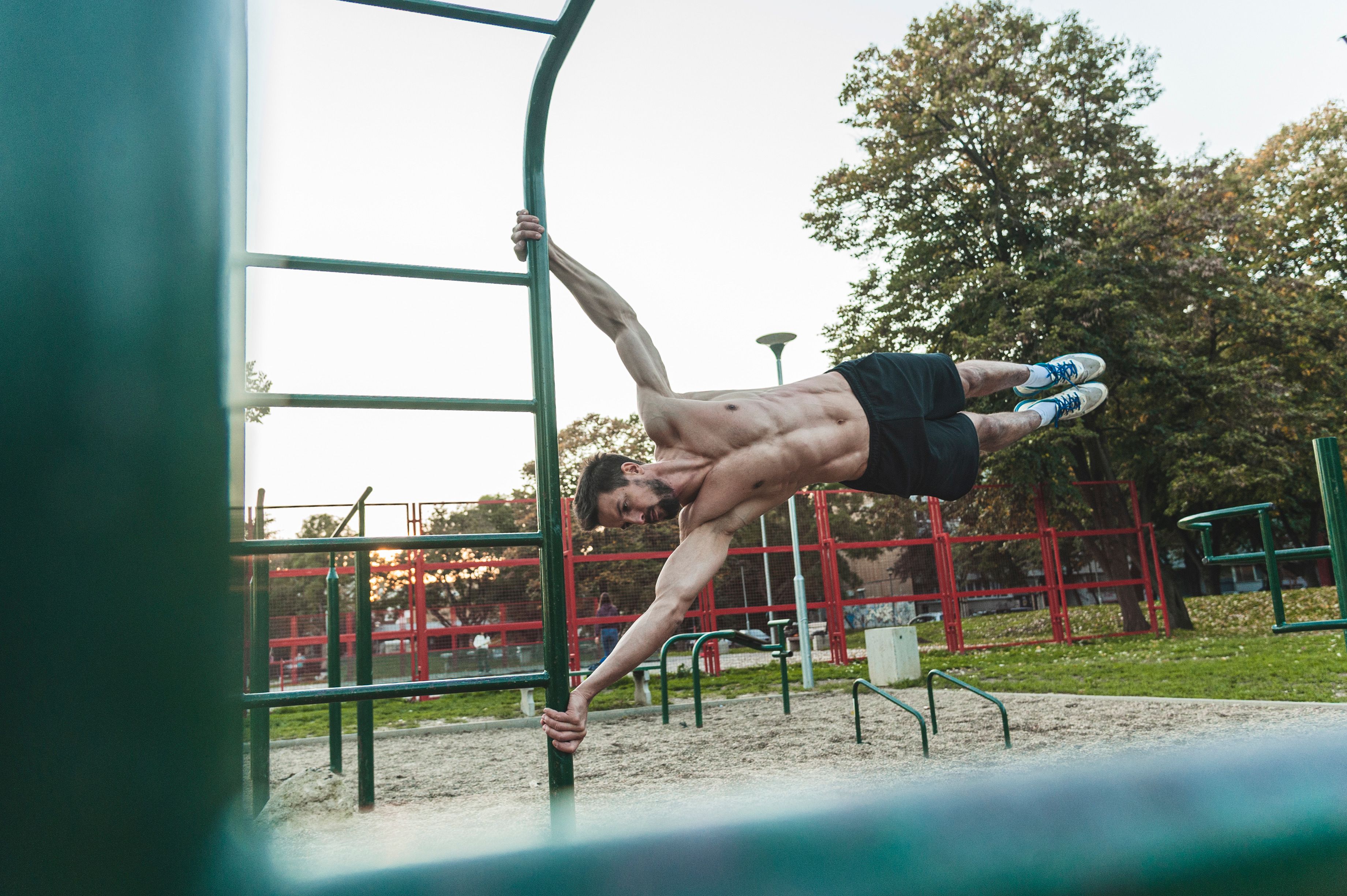
Calisthenics (US English) or Callisthenics (UK English), one the biggest crazes in fitness worldwide, is a form of strength training using bodyweight exercises and minimal equipment.
Not in Australia, though!
OK, it’s also a craze too in Australia. Don’t get me wrong; Australia is just as susceptible to international crazes as anywhere else. It’s just the name for it, because Calisthenics (note, just one l) means something rather different Down Under.
Do a search for “calisthenics” in Australia and what you’ll get are heaps of images of young girls dressed in gymnastics, ballet, marching or dance costumes (did anyone say “sequins”?) and who’ve gone pretty heavy on the theatrical make-up.
Calisthenics (or “Cali” as it’s known by those in the know) in Australia:
- is a competitive performing art involving primarily teams, but also solos and duos
- combines elements of gymnastics (primarily rhythmic, but also artistic), ballet, dance and precision marching
- has a strong emphasis on theatricality (both musical and dramatic)
- is performance-heavy with elaborate costumes and make-up
- has traditionally been a completely female art form and sport, primarily for girls up to 18 years of age, but that’s been gradually changing as of late
- has been a unique and intrinsic part of Australian suburban life ever since it divulged from mainstream calisthenics in the 1950s
That final point cannot be underestimated. An overwhelming majority of Aussie schoolgirls have at least given Cali a go, if not fully been involved in it.
And I should know; two of my nieces are Cali champions.
Cali competitions in Australia feature many different elements: figure march, club swinging, free exercises, rod exercises, aesthetics, song and dance, folk dance, rhythmic, etc. And these comps are a big deal! The girls who win them become stars within the Cali scene. For you Americans, think about them in the same way as competitions for cheerleading.
Still not quite sure then what this uniquely Australian calisthenics is all about? Then check out this clip that gives a good summary of all the performance elements of Cali…
So what then is “calisthenics”, as it’s known everywhere else, called in Australia?
Well, we have a clash here brewing between the local and global.
Calisthenics clips from overseas on the net with millions of views have brought the international meaning of term to Australia, and is the first thing that comes to mind for a small minority of fitness-minded, predominantly inner-city-residing, young people – mainly male. But when these guys mention to other Aussies they do “calisthenics”, they usually get some strange looks as for almost all Aussies calisthenics first and foremost is what the girls do, costumes, make-up and all.
So there’s been a move to rebrand international calisthenics in Australia as Calisthenics Street Workout or simply Street Workout to distinguish it from the Australian mainstream meaning and, not to mention, to give some macho cred to ease some bruised male egos. This is evident with the name of the main association for this in Australia. Another name in the mix is urban calisthenics.
But it’s not all one way. The traditional Australian female-based performance art is feeling the competition from international calisthenics, so recently the marketing push has been to either emphasise its geographic uniqueness by calling itself Australian Calisthenics or its performance nature with the term Cali-Dance.
Australian Calisthenics clubs can be found in most suburbs and towns throughout Australia… except, curiously, in the island state of Tasmania. However, thanks to migrants, some who have come from across the Tasman but later returned home after many years in Australia, and others being Aussies marrying Kiwis, this form of Calisthenics has reached New Zealand, making it no longer just an Aussie thing, with clubs and competitions having started up in the land of the long white cloud.
Another aspect about calisthenics in Australia is that it wasn’t always a female sport. Calisthenics in Australia until the 1950s was like it was in elsewhere in the world – strength-building exercises for males and females. There is plenty of visual evidence showing Australian schoolchildren doing calisthenics from this period, such as these pictures below of girls at North Adelaide Primary School in 1927 and boys at Goodwood Boys Technical School in 1945.
.jpg)
.jpg)
This is yet another example of how major differences in meaning are encountered in the least likely of scenarios, and shows how unique Australia, its culture and, relatedly, its form of English truly are. And if you need any assistance it getting around Australian English, then feel free to contact me by emailing me at info@nicknasev.com
Photo right by Nikola Vu: https://www.pexels.com/photo/a-masculine-man-balancing-himself-on-a-monkey-bar-10021277/









.jpg)

















.jpg)






.jpg)











_logo.svg.webp)


_(52052470251)_(cropped).jpg)









.jpg)












_(8249451687).jpg)