The last Monday in August is a bank holiday in England, Wales and Northern Ireland.
Now this term bank holiday often confuses many from outside the UK or Ireland. Does this mean that it’s a day off for banks only?
Absolutely not! Bank holidays in the UK and Ireland are what otherwise are known as public holidays. Schools, offices, businesses and banks (of course) are all closed.
But what’s the case with Australia?
Do Aussies then call them bank holidays too?
Well, even though they are still legally defined as “bank holidays” in the Australian states of South Australia and Victoria, Aussies refer to them as public holidays only. Most Aussies will look at you weirdly if you use bank holiday with them – it’s one of the many terms that differ between UK and Australian English.
But there’s a twist...
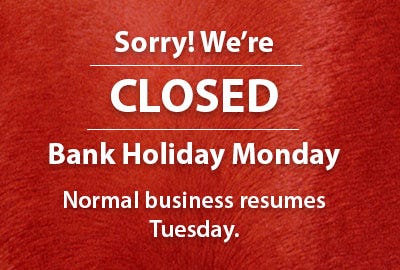
The first Monday of August in the state of New South Wales (NSW – Sydney is its capital) is an actual bank holiday, i.e. banks and other financial institutions are closed while for everyone else it’s a normal work day. So in this part of Australia, a distinction is made between a public holiday (days like Christmas, Australia Day, Labour Day etc.) and a bank holiday.
This day is a leftover from the original purpose of bank holidays in the British Empire: “The NSW Bank Holiday originated from the commercial practice in the United Kingdom of compensating counting house staff for extra work involved in the end-of-financial-year balances by granting them a holiday.” 30 June is the end of the financial year in Australia, so that’s why this bank holiday occurs in August.
So what are the public holidays in Australia?
First of all, these are the national ones:
- New Year’s Day (1 January)
- Australia Day (26 January) – very controversial and, until the 1990s, not even on the day but on the following Monday
- Good Friday (March/April)
- Easter Monday (March/April)
- Anzac Day (25 April)
- Christmas Day (25 December)
- Boxing Day (26 December) – officially Proclamation Day in South Australia
Nearly all of the other public holidays are state-/territory-based, while the rest can be very local – usually for the royal agricultural show in town.
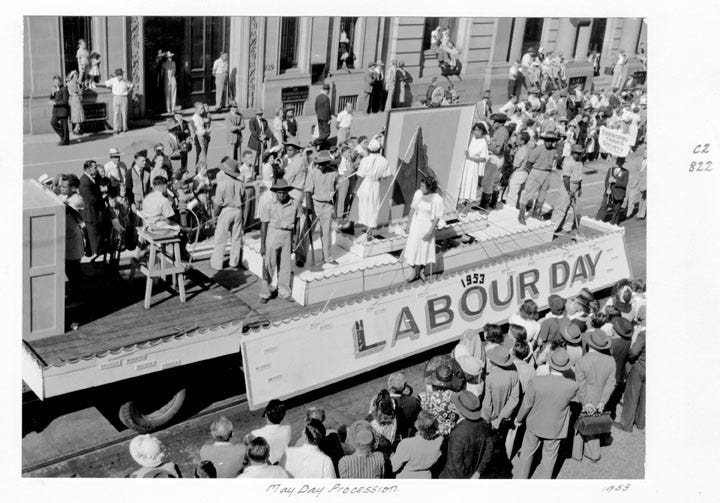
This then makes things tricky. Let’s look at Labour Day (note the spelling), observed to honour the establishment of an eight-hour working day, which happens on different dates throughout the year in Australia depending on the state or territory:
- First Monday in March – Western Australia
- Second Monday in March – Tasmania (where historically it was called Eight Hours Day) and Victoria
- First Monday in October – New South Wales, the Australian Capital Territory and South Australia (where it used to be the second Monday in October, but that changed in the early 1990s)
- The only state and territory where Labour Day is close to International Labour Day (aka May Day) is in Queensland and the Northern Territory (where it’s called May Day) – on the first Monday in May.
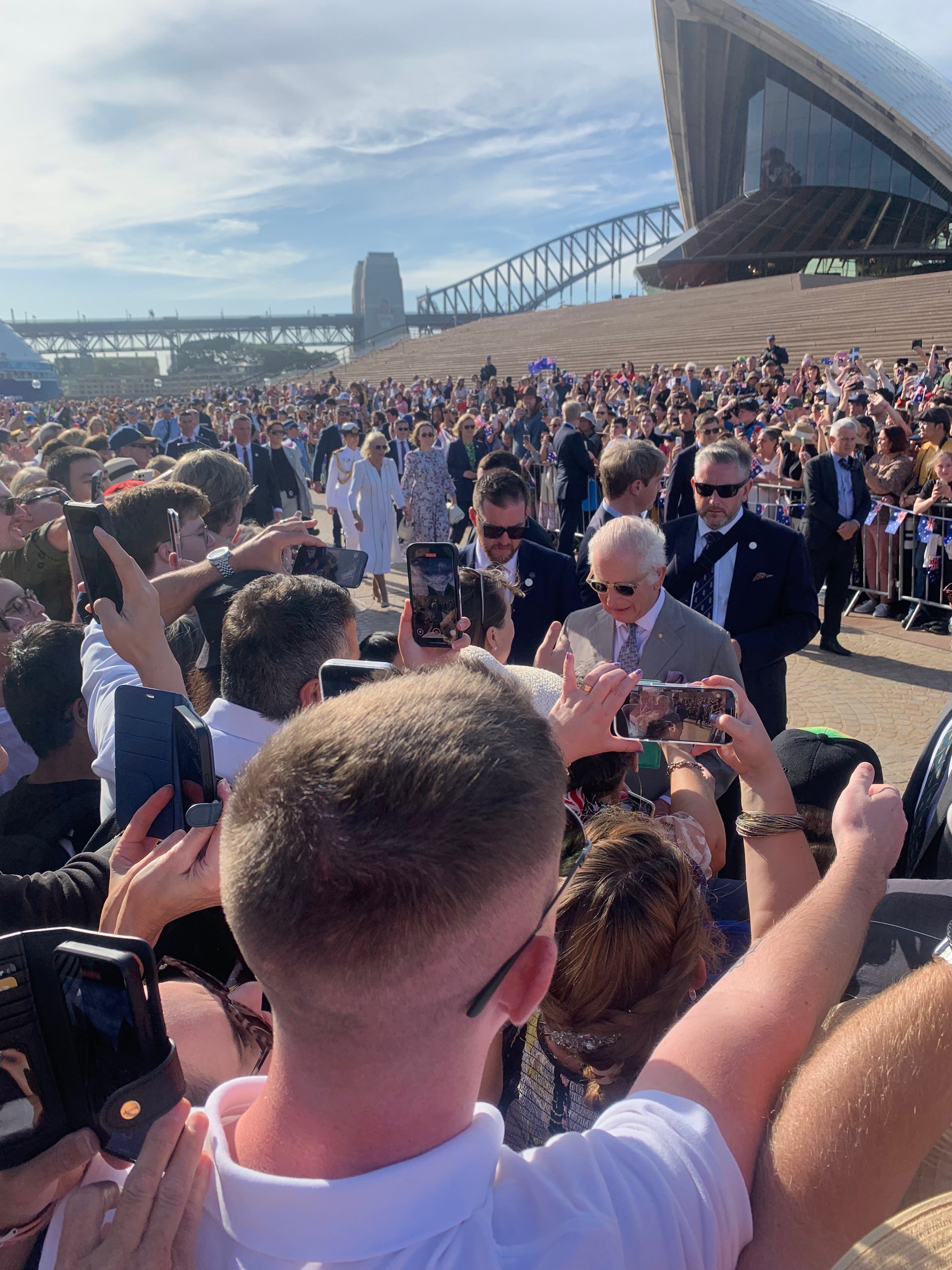
One of the more curious Australian public holidays is the Queen’s… oops, sorry, the King’s Birthday. Nearly all Aussies have known this day all their life as the Queen’s Birthday but after Queen Elizabeth II died in 2022 and King Charles III took over, so too did the name of this public holiday change. More on that later.
But wait, how come Australia celebrates the birthday of a British monarch?
Because Elizabeth II was not just the Queen of the United Kingdom of Great Britain and Northern Ireland (to use the official name) but also of Australia… and 13 other countries. That now makes Charles III is the current King of Australia. Yes, Australia is still a constitutional monarchy within the (British) Commonwealth, with its head of state living ten thousand miles away. The faces of Queen Elizabeth and King Charles appear on Australian coins, they’re mentioned in Australian government acts, and there are a number of buildings and associations in Australia labelled “Royal”, whether it be the Royal Flying Doctor Service, the Royal Australian Navy, the Royal Adelaide Hospital, etc., under their patronage.
So when Charles became king, not just the public holiday’s name but also the date changed too?
Of course not! It remained as it has always been: on the the second Monday in June. This date is nowhere near their actual birthdays: Queen Elizabeth’s was on 21 April and King Charles’s is 14 November.
But why June then?
Because the chances for nice weather for outdoor celebrations are greater in June… during the Northern Hemisphere summer in the UK, where (get this!) it’s not even a bank holiday. June is when winter starts in Australia, making it one of the coolest and wettest months of the year, and when days are shortest in the Southern Hemisphere.
But certainly things can’t get any more complicated or illogical?
Hold my beer. There’s more!
Not all of Australia’s states and territories do the King’s Birthday in June. Queensland has Charles’s day permanently set for the first Monday of October, while given its Foundation Day public holiday is observed the Monday before, Western Australia then does the King’s Birthday on the fourth Monday of September or the first Monday of October (the date is proclaimed each year by the state’s Governor, i.e. the King’s representative). So when it does occur in October, Western Australia is off along with New South Wales, ACT and South Australia (Labour Day) and Queensland (also King’s Birthday). Victoria, Tasmania and the Northern Territory – to work or school you go!
All clear?
Back to the name. As many Aussies appear unwilling to let go and accept it now as the “King’s Birthday” (out of habit!), and also for the day to be more palatable to the many Aussies who’d love to cut the cord and become a republic with its own head of state, it’s now quite common to see the descriptor “June Long Weekend” or (in WA and QLD) “October Long Weekend” being used as a more encompassing, depoliticised and less confusing alternative.
Example:
- What’ya doin’ on the June Long Weekend?
- Dunno. Thinking of getting a Jetstar flight to Bali and vegging there.
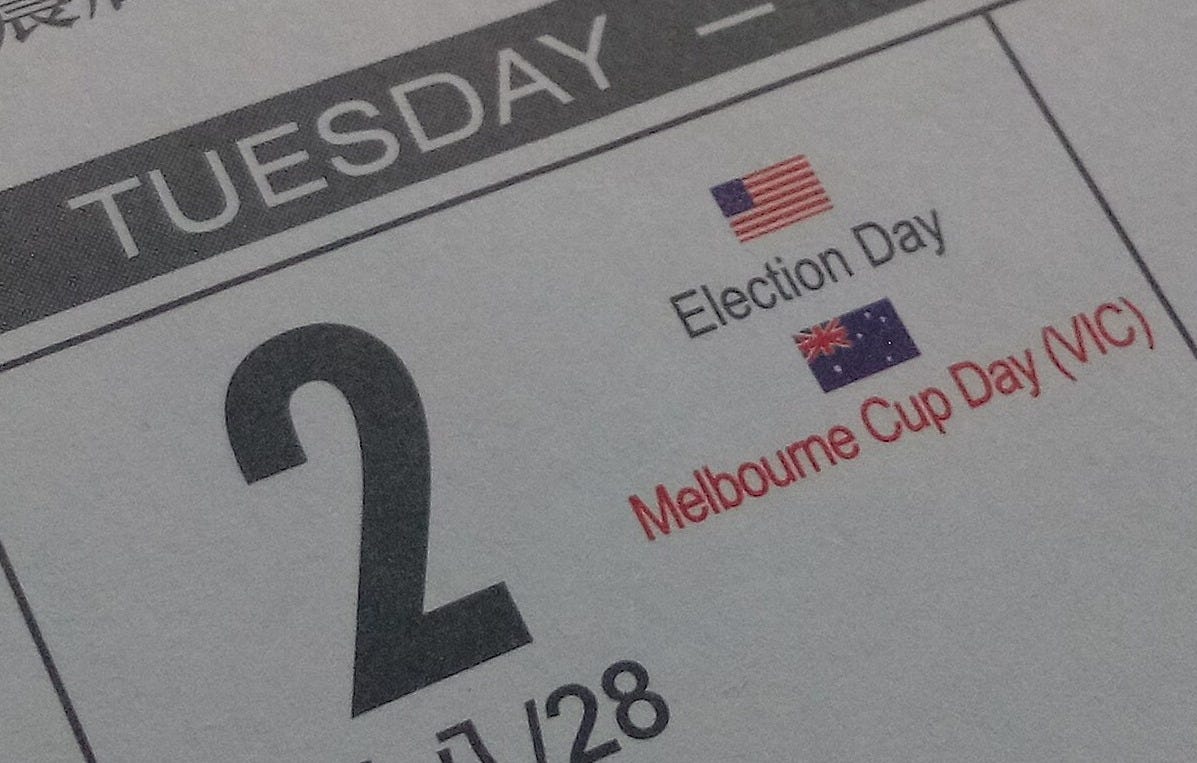
However, what would rate as Australia’s most peculiar public holiday has to be Melbourne Cup Day (usually just referred to as Cup Day) – yes, Melbourne and the entire state of Victoria have a public holiday for a horse race.
Naturally, Cup Day is always on a Tuesday, so that makes the Monday before it a bit awkward, but then again, many people and businesses just take that day off too.
With the massive rise in popularity for Cup Day luncheons all throughout Australia in the 2000s, there were calls to make the day a nationwide public holiday. However, primarily on concerns of animal cruelty, the heavy drinking traditionally associated with celebrations on the day, as well as the deep connection between horseracing and gambling (and corruption), there has been an ever greater decrease in interest in the Melbourne Cup throughout Australia over the past decade. So this proposal to make Cup Day national has been put on the backburner.
So there you go! Bank holidays do exist in Australia, just not in the same way as in the UK. And the public holidays in Australia are a hodge-podge of national, state/territory and local dates, so check your calendars… but then again, apart from Chrissie, most of the shops are pretty much open.
Need to know your bank holidays from your public holidays for Australia? Do you need someone to help you get your text and copy right for Australia? Feel free to ask me at info@nicknasev.com!
Photo right: Nothing Ahead: https://www.pexels.com/photo/paper-calendar-with-months-and-days-in-sunbeam-7059605/













_(8249451687).jpg)




.jpg)














.jpg)






.jpg)












_logo.svg.webp)




_(52052470251)_(cropped).jpg)












.jpg)