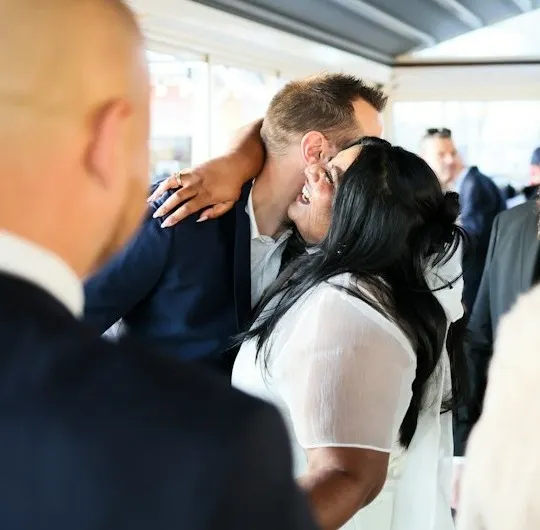
Do you know what to do with hugging and cheek-kissing in southeastern Europe? Do you know which people in the Balkans kiss twice and others three times?
These are all very important things to know!
Let me first tell you a story of when I was caught out.
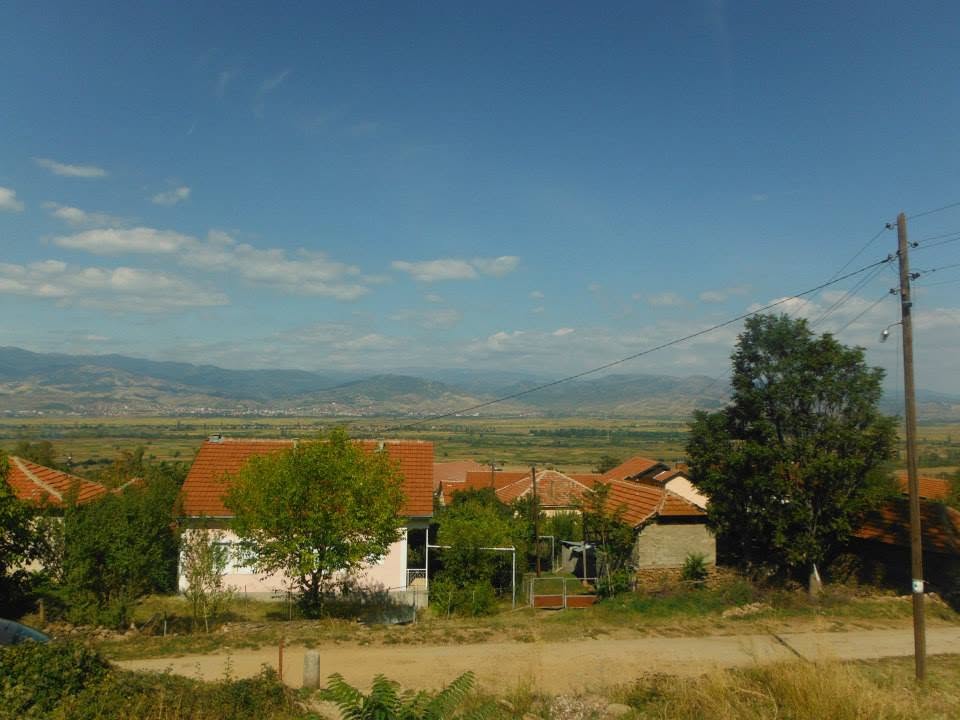
It was mid-1990s. I had reached the Bulgaria-Macedonian border, but the officials at the pre-border checkpoint did not let my cousin drive me right up to the border crossing. So we said our goodbyes and off I went… trudging with heavy luggage up a hill for a kilometre or so. This was in the days when only the rich and pretentious had mobile phones, so I was going in blind – will there be anyone from my Macedonian relatives waiting for me on the other side? Just as I approached the Bulgarian border post, I saw someone who looked like my father… it was his cousin (honestly, they look like twins). He ran up to me, gave the most intense bearhug ever and practically attacked me with kisses all over my face. He hadn’t seen me in over a decade, and especially not as an adult, so he was very enthusiastic to see me. Actually, the Aussie in me was rather shocked by this wholescale display of what seemed to me unbridled affection that I just stood there, frozen. OK, so he also called me ‘Nicole’ instead of Nick, which was a bit disorienting, not least because that’s the name of one my sisters. Yes, I’m Nick and she’s Nicole – totally intentionally as in true Balkan form we’re named after our grandparents. But I digress…
People in southeastern Europe, aka the Balkans, are certainly a mix of the south and the east. Going by crude stereotypes, they can be very affectionate and tactile (the south) and then also seem to be quite distant and appear grouchy (the east).
While there are many commonalities in their behaviour, there are also some subtle traits that distinguish the ethnic groups, some of which are treated as firm identity markers.
But do you know what they are? There are unwritten rules on when and not to hug, kiss and smile, and these vary. Of course, there’s hardly anyone to instruct you of what to do when you meet that grandmother in Montenegro, and old friend of yours in Serbia or that frowning official in Bulgaria.
So let’s start with hugging and cheek-kissing in the Balkans. Here are some of the basics I’ve learnt (usually from great error) when meeting people in various countries of Southeast Europe:
- People in the Balkans don’t tend to hug each other as often as they think they do.
- You hug people you know very well only (relatives and very close friends). It would be a bit weird to hug a stranger or even an acquaintance.
- Cheek-kissing is more common, but again usually with people you know well and upon meeting people you haven’t seen in a while. Insisting on cheek-kissing someone you only saw earlier that day would be considered to be unusual.
- Cheek-kissing is usual between all genders, but not so in Bulgaria and Romania where its extremely rare between males.
- Bulgarians in general are not into cheek-kissing anywhere near as much as in other parts of the Balkans.
- The cheek order is right-left [-right], though Albanians tend for left-right.
- The amount of cheek-kisses, though, is very important and varies between ethnicities:
2 times for Croats, Bulgarians, Albanians and Greeks
3 times for Serbs, Montenegrins and Macedonians - Bosniaks go for either 2 or 3 times
- Though apparently the people of Strumica, Macedonia go all out for four times (yes, four!)
- Nowadays, for more informal situations and particularly in urban environments, just the one cheek-kiss is usually sufficient.
- Cheek-kissing the “wrong” amount of times can be seen as disdain for that person, so be careful.
- Actually, the whole two/three kisses rule is emphasised as one of THE major cultural difference between Serbs and Croats. Just refer to Serbia’s 2010 Eurovision entry – Milan Stanković with Ovo je Balkan [This is the Balkans] where the chorus goes “not once, not twice but three times, Belgrade, Belgrade, three times is our way.”
Note that public displays of affection are usually kept to a minimum and primarily the domain of younger people, though this seems to get more relaxed the further south in southeastern Europe you go.
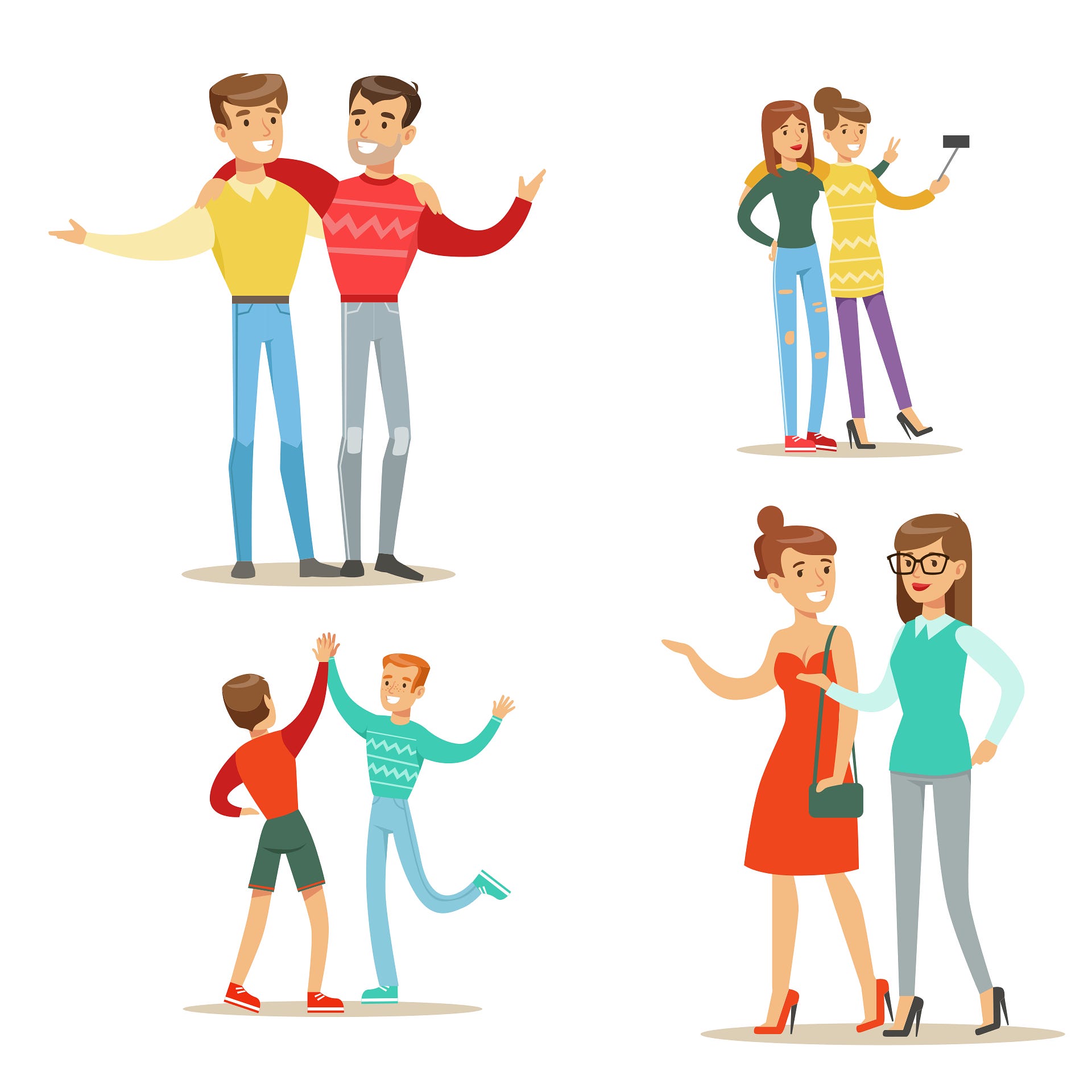
If you see two guys in a side hug or embrace, that means that they’re very good friends and not the sign that they’re in some same-sex amorous relationship. This is something that many from western Europe, especially gay men, get tripped up on. However, western social norms and prejudices have caught up to the Balkans, so it’s less prevalent to see current generations of young Balkan men show such affection like this compared to previous ones. The same with women of all ages, who can at times be seen walking holding hands or in a tight side embrace – they’re close friends and it’s completely platonic.
Coming up: when and when not to smile in the Balkans, and how the smile culture differs immensely from that in a western country such as Australia.
Photo by Filip Rankovic Grobgaard on Unsplash.






.jpg)
















.jpg)







.jpg)








_logo.svg.webp)


_(52052470251)_(cropped).jpg)








.jpg)















_(8249451687).jpg)