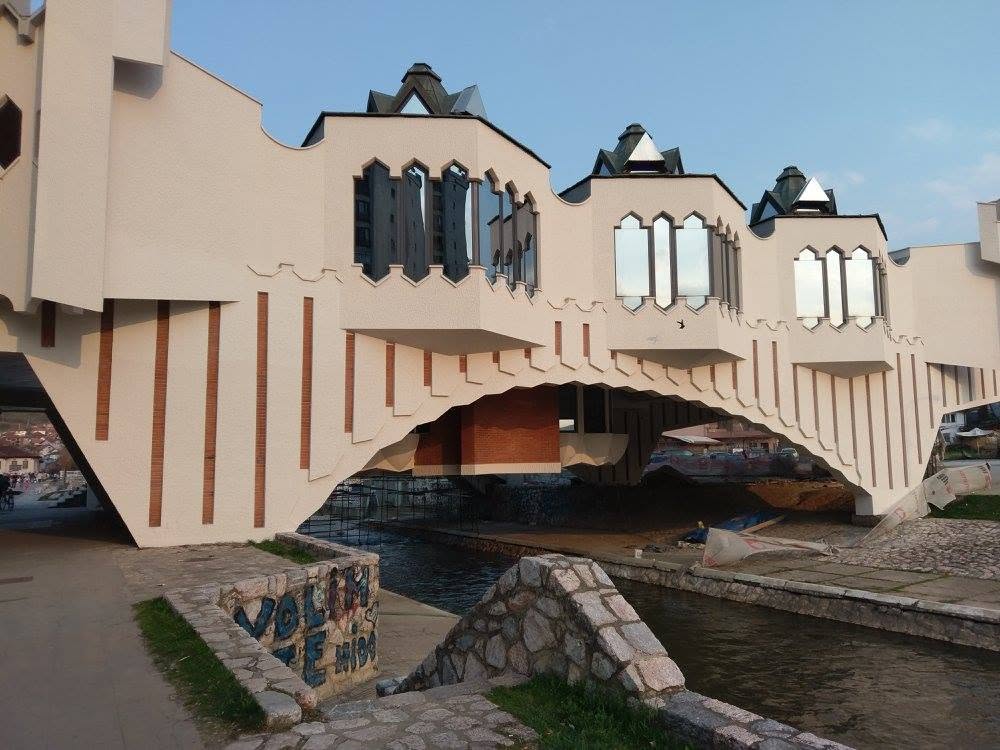
You need a particular kind of confidence to build a hotel across a river and call the result a bridge. Hotel Vrbak, standing on Gazi Isa-bey Isaković Square right in the centre of the city of Novi Pazar, Serbia, does precisely this and has been since 24 July 1976, when it was officially opened as one of the more emblematic pieces of orientalist architecture not just in the city but also in the whole of socialist Yugoslavia. It is not merely a hotel that happens to be near a landmark; by virtue of its unusual design, scale and position right in the centre of the city, it functions as a landmark itself – the sort of building that gives a town’s centre its visual and symbolic shorthand.
The credit, or the blame depending on one’s taste in concrete lanterns, belongs to local architect Tomislav Milovanović.
Literally the “new market” in the “administrative district”
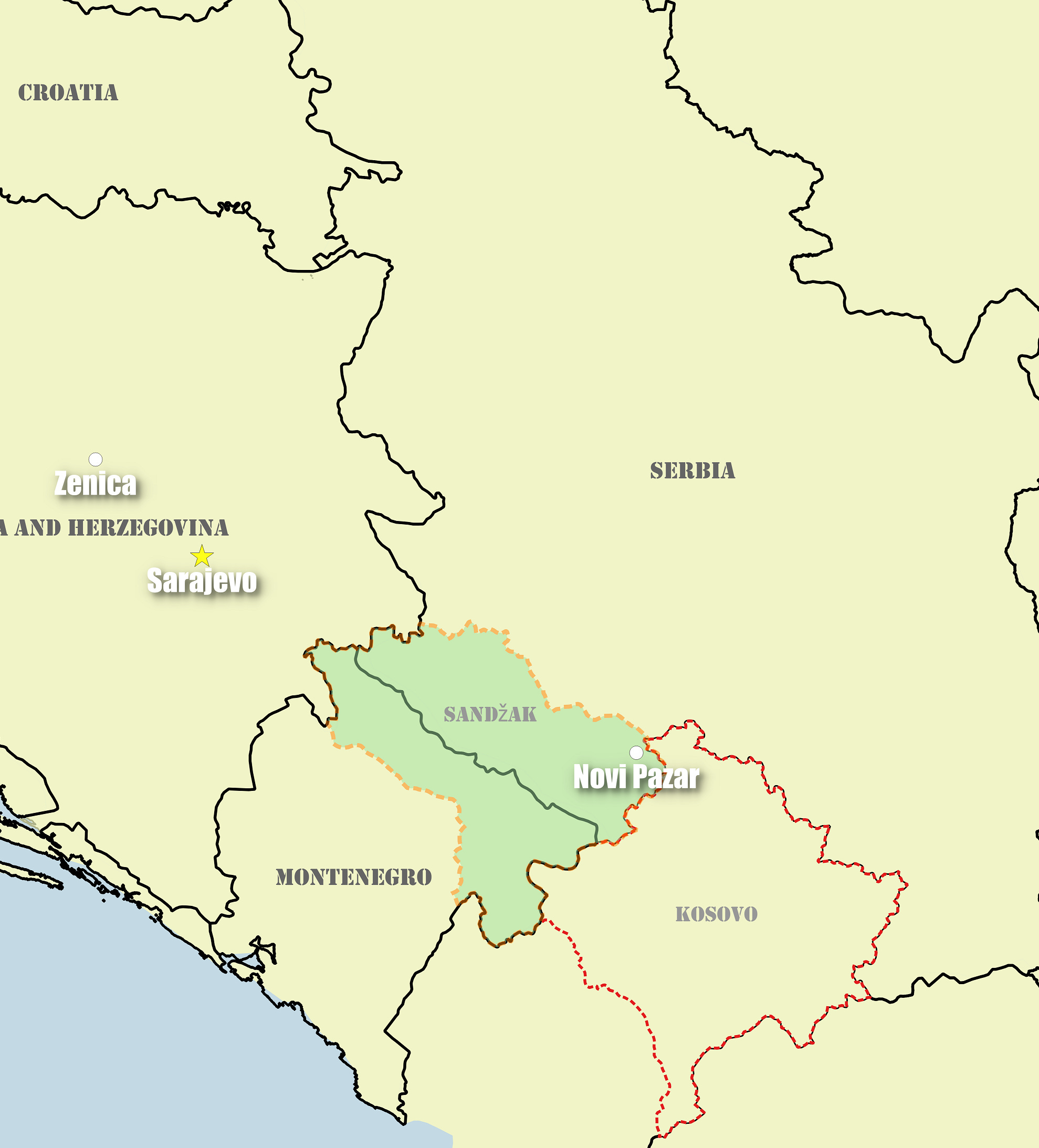
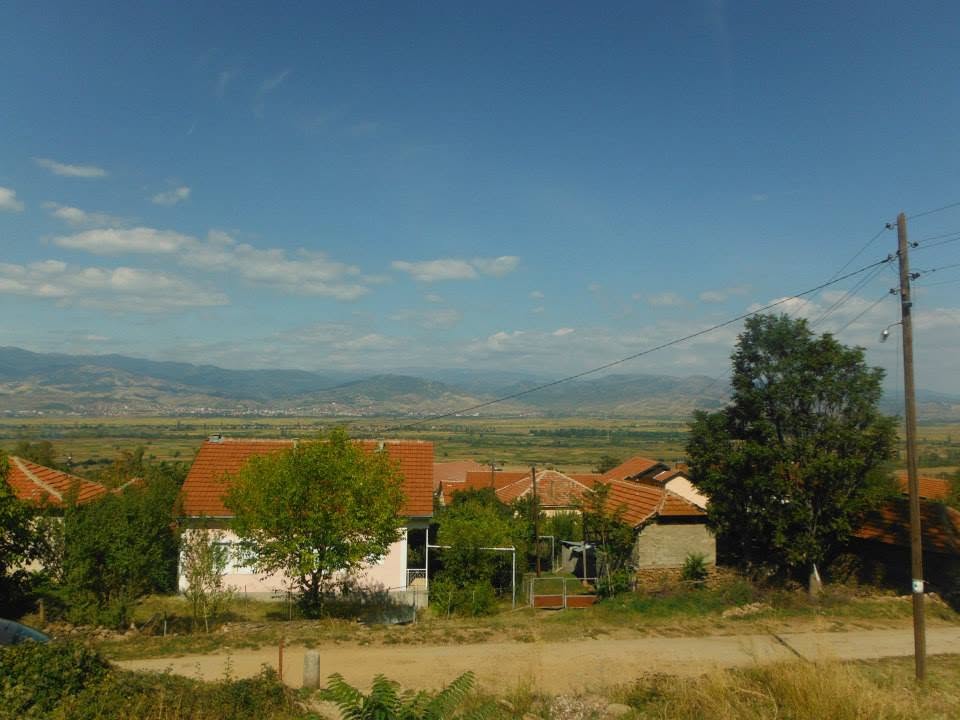
It is worth pausing on where, exactly, Novi Pazar sits. The town is the largest and effectively the capital of Sandžak, a historical region straddling south-western Serbia and northeastern Montenegro, that takes its name from the old Ottoman term for “administrative district”. Sandžak’s population on paper is ethnically mixed due to the legacy of the numerous ethnic labels doled out to the local population over the decades, but an overwhelming majority has the local Sandžak form of what used to be officially called Serbo-Croatian as their native language (Albanians form a majority in the very south of Sandžak around Gusinje in Montenegro) and the only main distinguisher (if anyone is really looking for one) is whether the Sandžaklije are (at least nominally) Muslim or Orthodox Christian. Going from the northwest to the southeast, Sandžak transitions from majority Orthodox Christian to majority Muslim population. Novi Pazar, located in the very east of Sandžak, is 80% Muslim, and is the cultural centre for Slavic Muslims in Serbia.
Now Novi Pazar has a bit of a reputation on two accounts. Mention “Novi Pazar” to people in ex-Yugoslavia who lived through the chaotic 1990s and the first thing that’ll come to their minds is “jeans”. As Yugoslavia broke apart and international sanctions strangled the Serbian economy under Slobodan Milošević, Novi Pazar’s illicit jeans business took off, with hundreds of small factories turning out counterfeit Levi’s and other branded denim. Word has it that the workmanship of these counterfeits was of such good quality that representatives of the original brands themselves were impressed, and Levi’s eventually offered its licence to a handful of the town’s manufacturers. Novi Pazar earned itself the nickname “Jeans Valley”, and by most local accounts, the trade did more than turn a profit but it is credited with keeping the town on its feet through what were otherwise the hardest years Serbia, and particularly Sandžak, had ever faced economically. This was a continuation of Novi Pazar’s time-honoured mercantile and entrepreneurial spirit – after all, Novi Pazar does mean “new market”. Located at a crossroads, Novi Pazar has been instrumental for trade within the Balkans and beyond, with many of the more prosperous members of the Rumeli (Balkan) communities in Turkey quick to point out (and very proud of) their Sandžak roots. Testament to this is the number of business in areas such as Bayrampaşa in Istanbul with “Yeni Pazar” (the Turkish name for Novi Pazar) in their names.
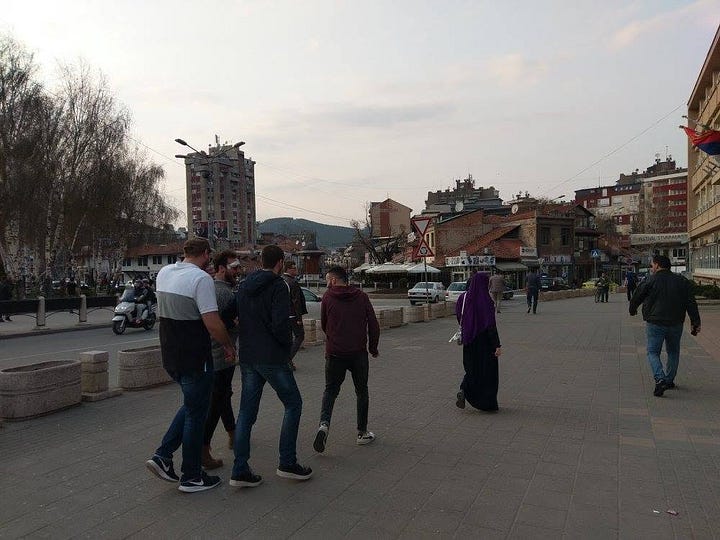

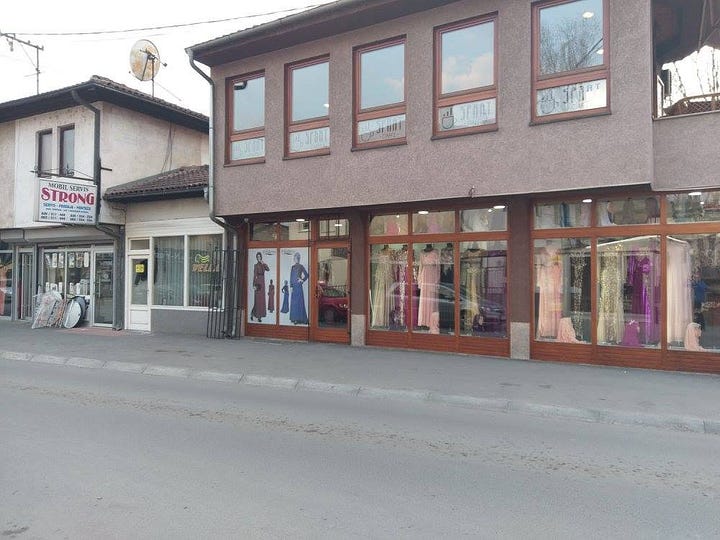

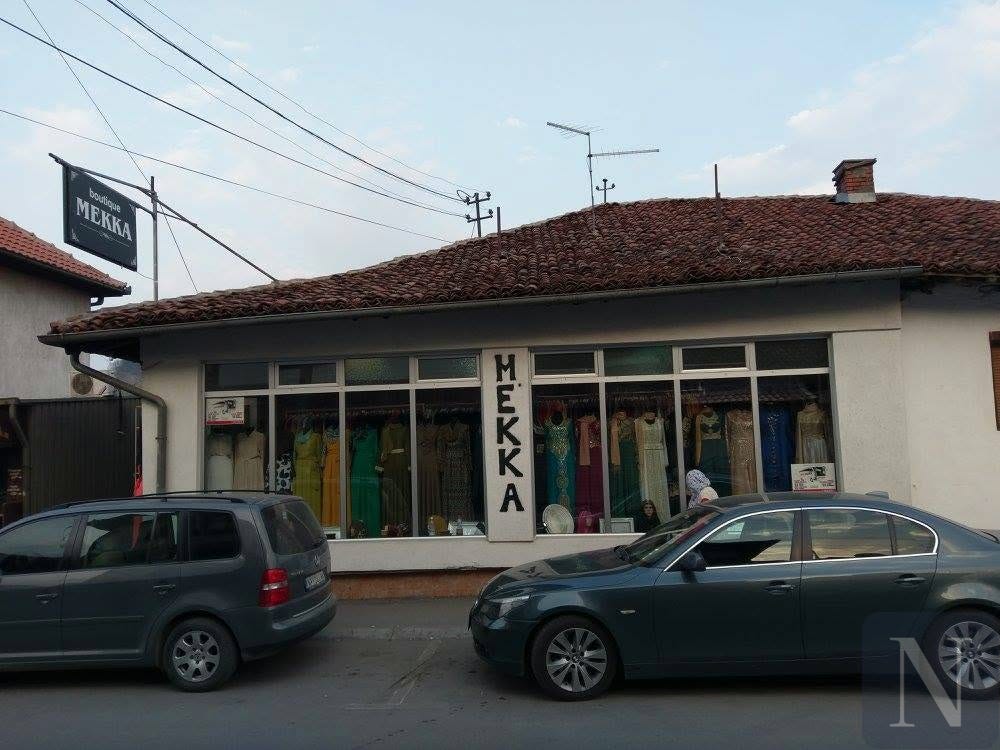
The second, and somewhat more modern, reputation with Novi Pazar and its immediate vicinity is that the inhabitants are amongst the most piously Muslim in the entire Balkans – to a degree that other Balkan Muslims sometimes find too overt and even uncomfortable, but then again, being a minority and feeling the need to emphasise one’s identity in adversity tends to cultivate such behaviour. While it is still very much possible for nominal Muslims in Novi Pazar to lead very secular lives, it’s in Novi Pazar more so than anywhere else in Muslim-populated parts of the Balkans that you’ll see the more visible signs of Islam incorporated into everyday life. These include the large number of local halal skara joints (clearly pointing out that not only there’s no pork in the čevapčići but also no alcohol available) to rows of Islamic fashion boutiques with names such as “Mekka” and “Dubai” and even the female models used in the advertising having their faces blurred. No other place in the Balkans has as many women in full Gulf-style hijab as Novi Pazar, and it was also here in 2016 when for the first time I saw who would have had to have been a local inhabitant wearing a niqab. Granted, plenty of niqabs can also be seen worn in cities in Bosnia, particularly Sarajevo, but that’s usually by the visibly large number of Gulf Arab women – mainly tourists but also some are resident.
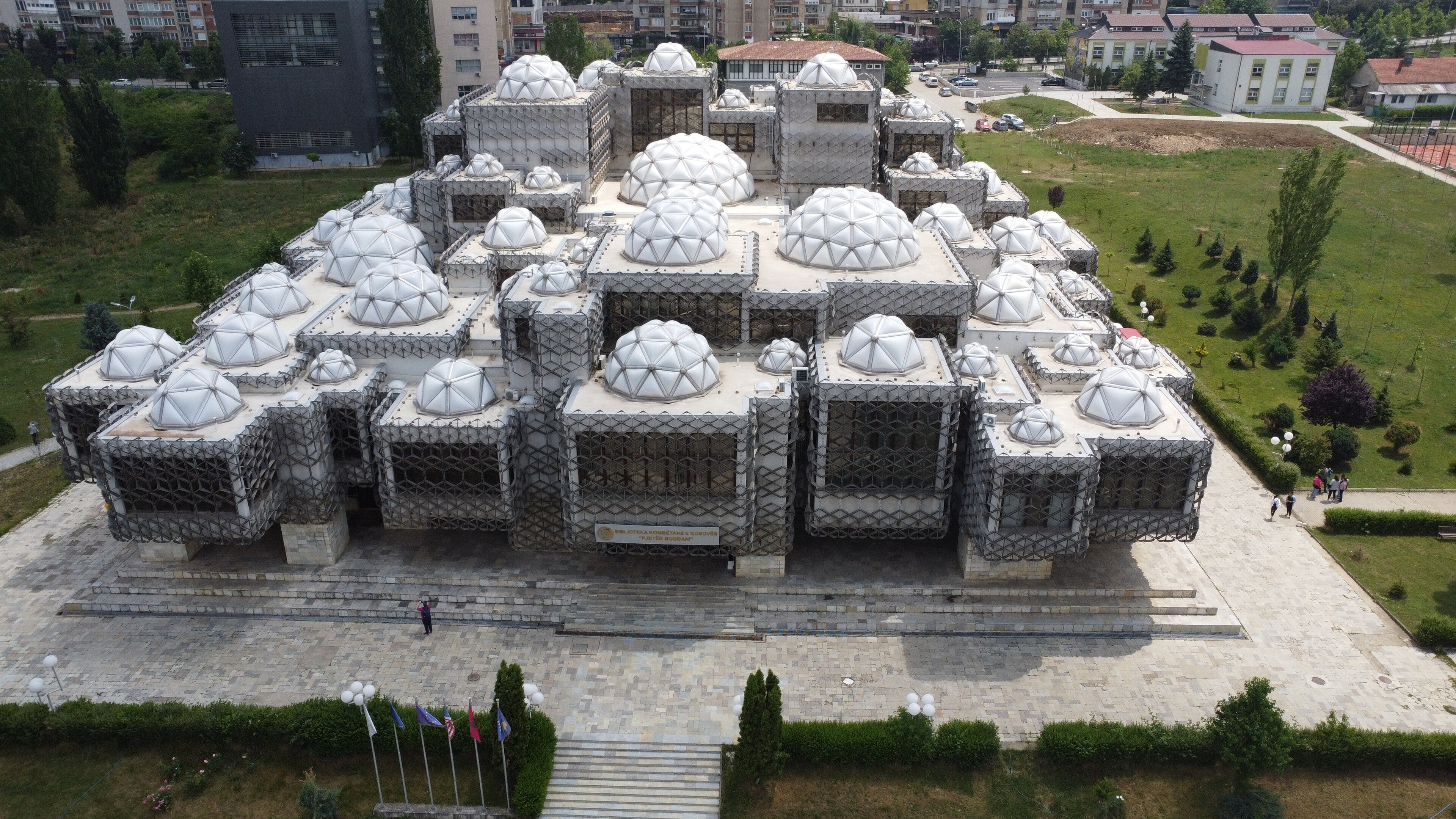
This all matters here because it means socialist Yugoslavia built this showcase 1970s hotel – a Category B establishment meant to impress, in a country then straddling both East and West, in a majority-Muslim town whose community had, across the socialist period, faced its own share of political, economic and cultural pressure, whether warranted or not. The Vrbak’s oriental flourishes were not, in other words, an exotic borrowing applied to a blank canvas. They were being built in the town most entitled to have produced that vocabulary in the first place, by an architect working for a state that was, as others have claimed, at best ambivalent about what to do with that inheritance. Though this was an intrinsic part of socialist architecture and culture in general, where the underlying cultural doctrine pioneered by Lenin and made policy in the USSR under Stalin was “socialist in content, national in form”. Similar architecture where “Ottoman/Muslim” forms the “national” element can also be seen in other Muslim-majority parts of ex-Yugoslavia, particularly Bosnia and Herzegovina and Kosovo, the most famous being the National Library of Kosovo designed by Andrija Mutnjaković.
A hotel on the ruins of another, and a river underneath it!
The Vrbak did not arrive on empty ground. It replaced an earlier hotel of the same name, built between the two world wars by Novi Pazar entrepreneur Ranko Ivković. The original hotel was, by the standards of the day, quietly remarkable: it was rated Category B, the only hotel in the entire area to hold that distinction. Though, how about this – the hotel came with its own private hydroelectric plant! Granted, it was a modest 5 kW affair, built purely to keep the hotel’s bright lights on. Ivković, apparently unsatisfied with lighting only his own establishment, promptly went on to build a much larger plant, the 100 kW Sandžak station, also in the town centre, which went into operation on 8 November 1931. One suspects a man who builds himself a hydroelectric plant is not a man easily talked out of ambitious projects.
The old Vrbak was demolished after WWII. Its replacement, the one that stands today and carrying the old name forward, went up in the mid-1970s and opened in grand style on 24 July 1976.
Venice, by way of the Balkans
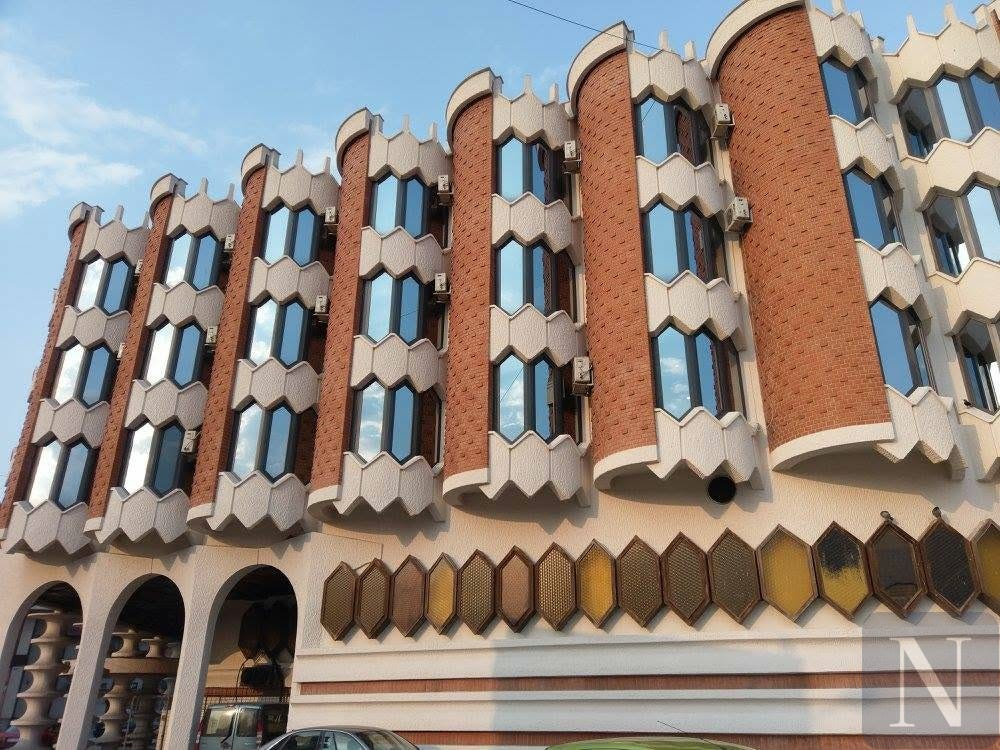
Milovanović’s stated aim was to forge a deep connection between the building and its surroundings, and he leaned toward an oriental register to do it, though he was careful to note, in his own account, that the result was meant to be only associatively oriental, not a literal reproduction of it. His reference point, curiously, was not local. During a graduation trip to Italy in 1957, he found himself drawn to Venice and, above all, to the Doge’s Palace, with its dense ornamentation and its happy disregard for stylistic consistency. That incoherence, it seems, is exactly what he brought home to the Hotel Vrbak.
Milovanović’s instinct to reach for an oriental register at all was, in the Yugoslavia of the 1970s, a somewhat loaded one. The state had spent the post-war decades trying to build an architecture aesthetic of its own that, in uniting six republics under a single socialist roof, deliberately aimed at a Yugoslav identity independent of the colonial and religious-adjacent influence from former imperialist occupiers, whether they be Byzantine, Venetian, Ottoman or Austro-Hungarian. Against that official anti-historicism, a handful of architects went the other way, treating these “colonial” influences not as baggage to be discarded but as part of the “national”. However, whereas Austro-Hungarian and Venetian influences could be considered “acceptable” on account of their central European nature, there was always an underlying unease when it came to “non-European” and, therefore perceptively, “backward” Ottoman and (to a lesser degree) Byzantine motifs. One Yugoslav architect who forged ahead with creating a modern identity for Bosnia based on its vernacular Ottoman heritage was Zagreb-born but Sarajevo-resident Juraj Neidhardt. As well, Yugoslav hotel architecture more broadly developed as its own strand of modernism, strongly shaped by place, with a close attachment to landscape and to locally sourced materials. The Vrbak, going up in Novi Pazar in the mid-1970s with its lanterns, fountain and nod to a beg’s ceiling rosette, belongs squarely in that second, more “contrarian” tradition.
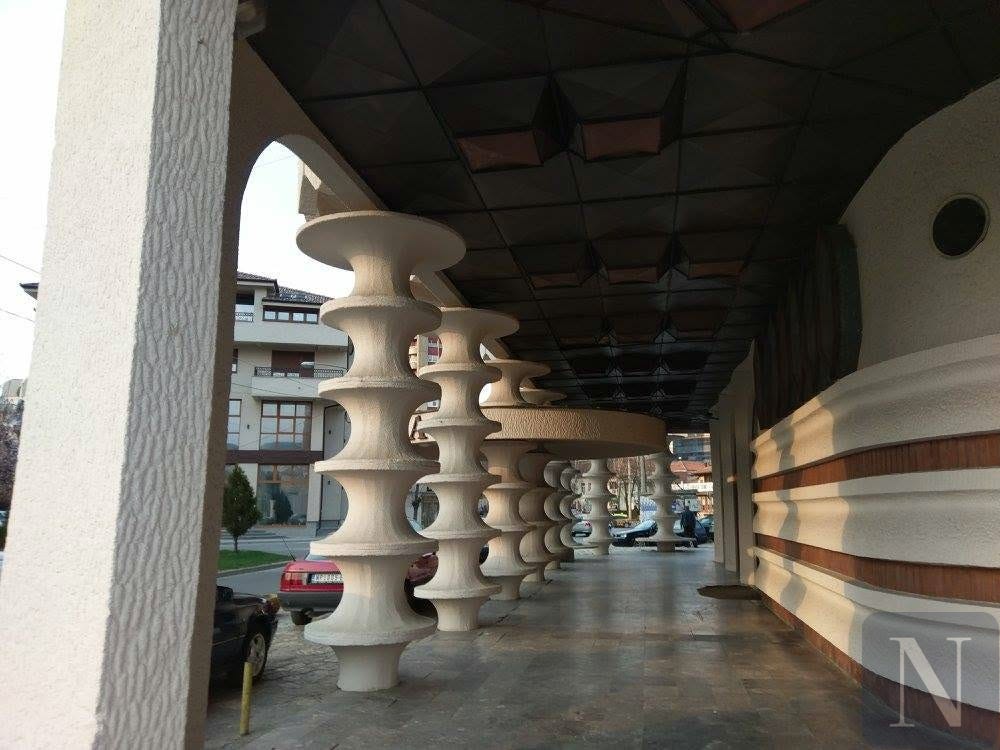
The result is a building split into two parts joined by a walkway, its riverside accommodation block given a polygonal, polychrome façade, its corners deliberately emphasised, its lobby capped with a domed lantern, and its hall fitted with a central fountain – a nod, as per the architect, to the oriental cult of water, alongside greenery meant to recall the city’s gardens. The effect he was after was not historical accuracy but a sense of the liveliness of an oriental kasaba (casbah) or, more so, a han (caravansarai).
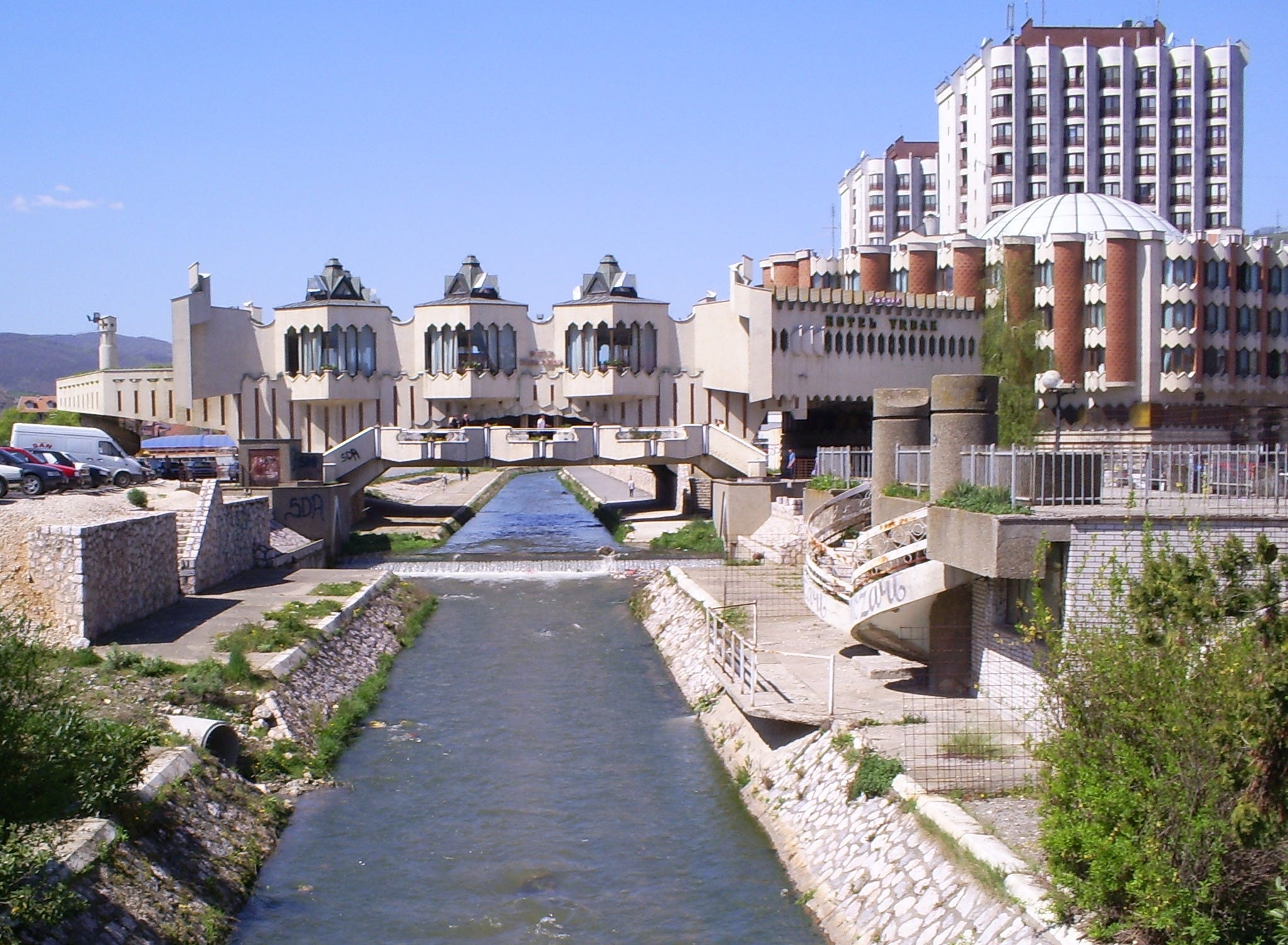
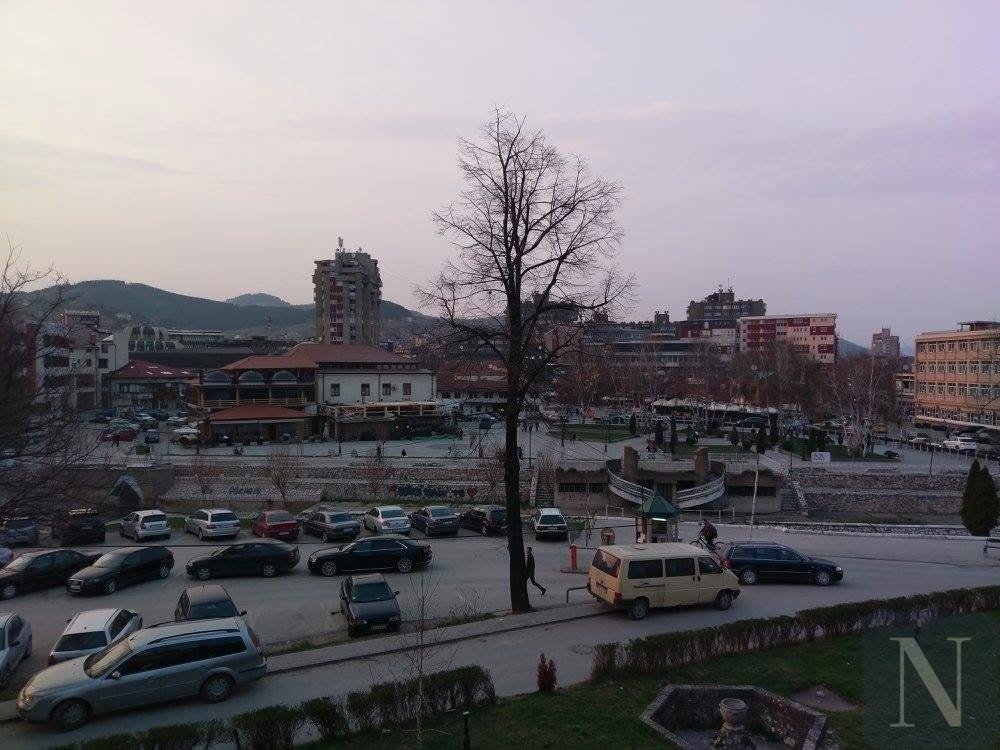
The single-storey restaurant wing is arranged as a bridge across the Raška river, linking the old fortress on the right bank with a modernist plateau on the left, visually stitching together two very different centuries. The rhomboid accommodation block sits on the pedestrian square and connects to it via a first-floor passerelle. Large arched supports, visible from the inside, carry the restaurant wing over the water and also bear a sixteen-metre cantilevered terrace.
As to the result of this, opinions are mixed. Some experts absolutely adore the entire nature of this architecture, while others have dismissed it as “kitschy”, “camp” and an “eyesore”.
An Austrian, a wooden rosette… and a great deal of driving
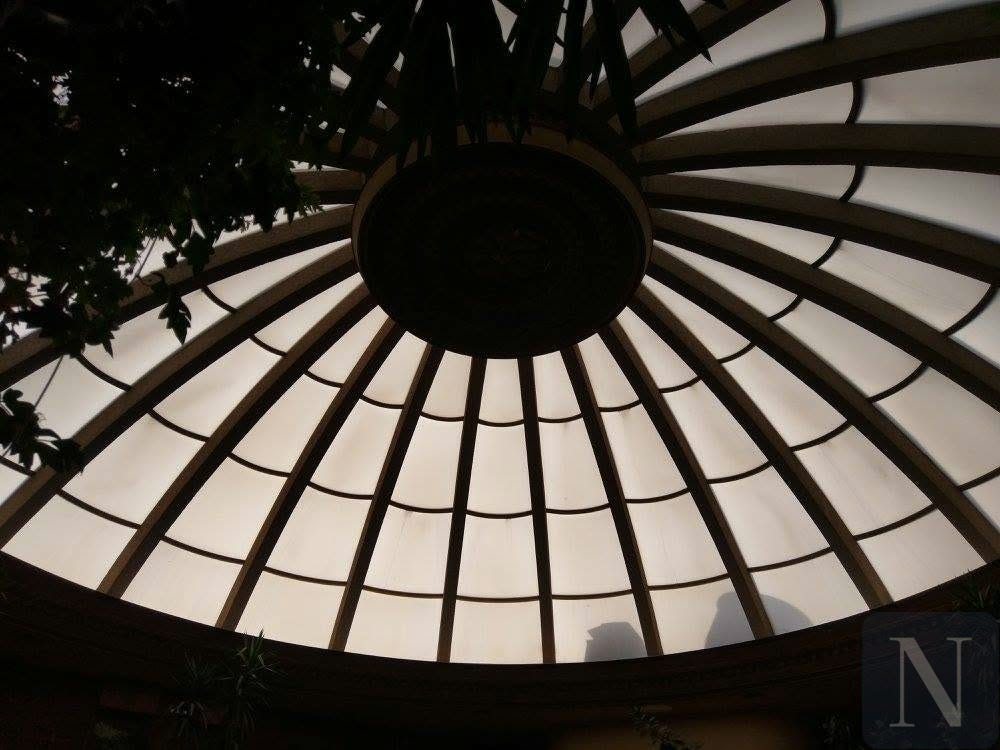
Once the shell was up, Milovanović and the director of the catering company Lipa, the hotel’s investor, took themselves on a tour of Yugoslavia’s entire Adriatic coast from Istria in the north to Ulcinj in the south, scouting contractors capable of executing an interior that could not simply be ordered from a catalogue. What impressed them most was the circular pool at Hotel Adriatik in Primošten, Croatia, fitted with a retractable glass dome by Austrian engineer Josef Stadler. Milovanović contacted Stadler and commissioned a dome for the Vrbak’s lobby, built to the most current technical methods of the time.
The idea for that dome – as a decorative ceiling rather than a purely structural feature – came from something much closer to home: a carved wooden rosette that had once formed part of the ceiling in the main hall of an old beg’s house in Novi Pazar. A second, smaller rosette-lantern now covers the circular staircase leading from the pedestrian zone into the restaurant section. Because of the unique nature of the hotel, so much of the interior was not suited for mass-produced fittings, and therefore the architect ended up personally involved in the individual details for the interior, with factories across Yugoslavia manufacturing bespoke items for the hotel’s fit-out.


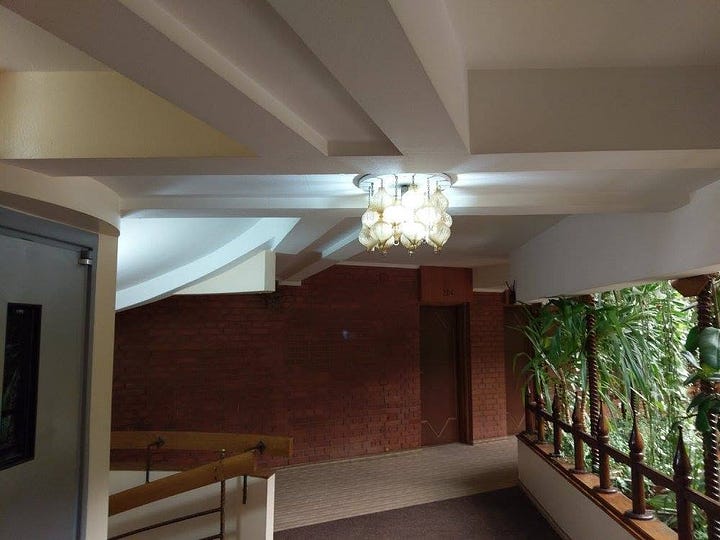

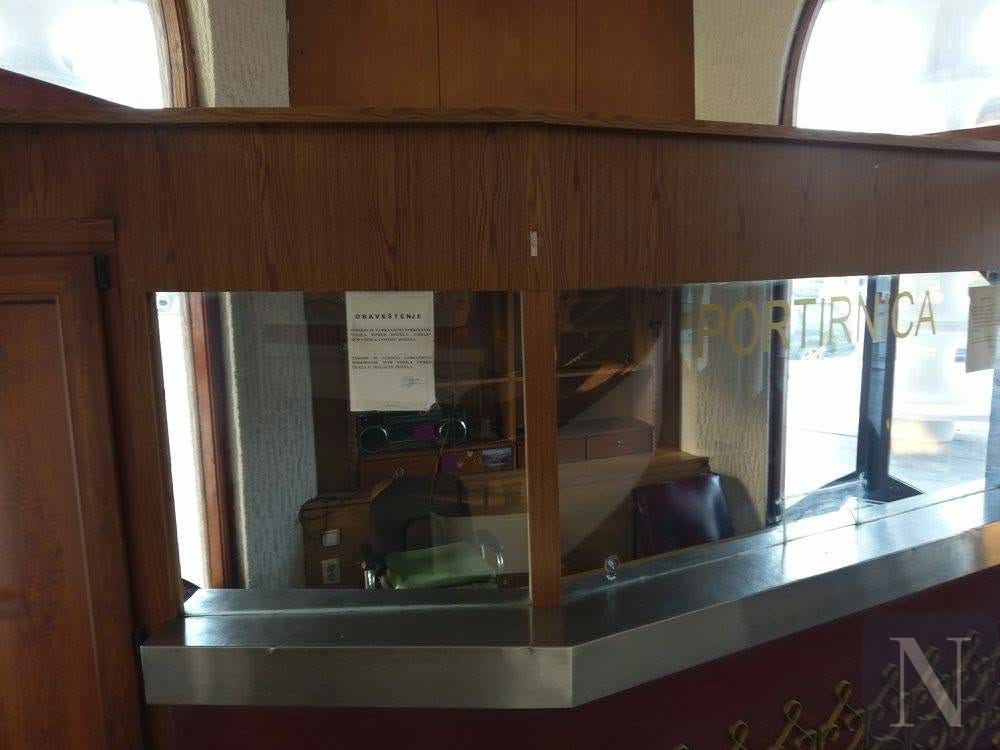
When I visited Novi Pazar for the first time in 2016 and then again in 2017, I made it a point to stay at Hotel Vrbak, and it certainly excelled all expectations. Walking past the portirnica, the security reception desk out front untouched since Tito’s time, and entering the interior main hall of the hotel immediately transported me back to the Yugoslavia of my childhood. Most of the original furnishings, right down to the glass jewels and wooden balustrades, were still there and in pristine condition – symbolising the hotel not only being a physical bridge between the old fort and the new city centre but also between happier times and an uncertain present.
By the numbers, then and now
The original Vrbak was built as a Category B hotel across 4000 square metres, offering 125 beds in single and double rooms and suites, with a restaurant section seating around 600 across a café, restaurant, banquet hall, aperitif bar and tea room.
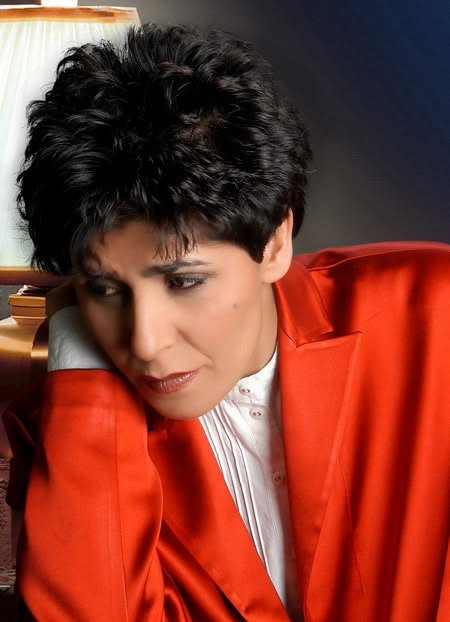
Since 2019 the hotel has belonged to the ND Tourism Group and has been fully renovated. It now offers 59 rooms across three floors in four categories: single, double, double deluxe and suites, along with two function rooms – the Crystal and the Golden, a conference hall, and two restaurants: Trg Isa Bega and O La La Vrbak. It continues, as it has for decades, to host weddings, celebrations, business forums and conferences – a building conceived as a piece of civic theatre that has, somewhat improbably, kept the job. And this was proven recently when local star Elma Sinanović, one of the best voices of Balkan Turbo folk since the 1990s, chose to film one of her latest video clips inside the Hotel Vrbak. Judging by the images in this clip (below), despite the change of ownership and the extensive renovations, the original “Yugoslav” atmosphere is intact.
To experience an atmosphere unlike anywhere else in Europe, where the Slavic, Balkan, Yugoslav Socialist, Muslim and Orthodox all come together, then Novi Pazar is your place. Be sure to pick up a pair a decent, locally made jeans, and do what so many people in region do when driving through and have the local mantije. And where to stay? Where else but the Hotel Vrbak (no, I haven’t been paid to say this). Srećna 50. godišnjica!











.jpg)












.jpg)





.jpg)








_logo.svg.webp)


_(52052470251)_(cropped).jpg)






.jpg)










_(8249451687).jpg)