April 1974. A group from Sweden dressed in crazy costumes, and a conductor wearing a funny hat, introduced the world to a song using the Battle of Waterloo as a love metaphor at the Eurovision Song Contest... and won! That group was ABBA, Waterloo went on to be a big hit around the world and that’s where it could have ended… if it wasn’t for Australia.
Actually, Australia has been pivotal in the ups and downs of the ABBA journey these past 50+ years.
So why Australia?
Let’s start in November 1974, when the Australian public broadcaster, the ABC, launched its new pop music showcase show, the iconic Countdown. No, nothing to do with the UK quiz show with the same name, Countdown is Australia’s answer to the UK’s Top of the Pops or American Bandstand in the USA, with a similar format, influence and legacy. Countdown mainly consisted of live (OK, lip-synced) performances by local pop and rock stars and foreign acts who happen to be touring Australia at the time, in front of a live audience of screaming teenagers, interviews with the stars by the host Ian ‘Molly’ Meldrum, and finished with the Australian Top 10 chart, with the credits shown over footage of a performance of the number 1 song.
Come the 1980s and the advent of all-music TV stations such as MTV, it’s almost inconceivable now for a commercially released song not to have a video clip of some sort. However, video clips in the mid-1970s were very rare. Promoting a song or album then meant music artists doing the rounds of TV and radio stations and appearing on shows. On the other hand, the members of ABBA were wanting to travel as little as possible, and also saw that the wider reach of television opened opportunities to use “promo clips” (as video clips were called then) instead to get the world to know about their music. ABBA pioneered this approach, making sure that most of their songs had promo clips, which they then sent to TV stations around the world to show. This is where it worked in Australia.
Word has it that in 1975, one of the acts that was supposed to appear live on an episode of Countdown didn’t turn up, so the void was filled by playing one of these promo clips that ABBA had sent to the ABC. No one expected the Australian public would take to ABBA like it did, resulting in I Do, I Do, I Do, I Do and Mamma Mia reaching number 1 in Australia – the first time for ABBA to have such success outside of Sweden post-Waterloo. This was just the beginning as ABBA-mania took over Australia in a way later emulated in other countries.
Australia was the then the first country after their homeland Sweden where ABBA encountered enduring success and massive popularity. The greatest hits ‘The Best of ABBA’ album was released in Australia in early 1976 and went platinum… 22 times (!), having reached number one on the Austalian album charts even before it was released, and staying in that position for 16 weeks.
ABBA’s next album, their most successful ever, Arrival, released in 1976 and featuring the band in a Bell 47 helicopter (fun fact: that cover always scared me as a little child – it’s that corrugated tube!), featured the hit Fernando, which went on to be the best ever selling single in Australian history, spending a record 14 weeks at number 1 (only eclipsed by Ed Sheeran’s ‘Shape of You’ in 2017).
1976 also saw ABBA come to Australia to do a promotional tour that featured filming a TV special, ABBA Down Under, that out-rated the 1969 moon landing.
Riding on the success of ‘Fernando’ in Australia, ABBA did something very rare by filming some commercials for Australian TV promoting the electronic goods of Japanese brand National, singing reworked lyrics to the tune of ‘Fernando’. Check it out here…
Abba-mania reached its peak in February/March 1977 when the Swedish band came what ended up being their only concert tour of Australia. Following them around was a TV crew filming a documentary movie set for release later than year – ABBA: The Movie. Unfortunately that film is now very much cancelled as Robert Hughes, the actor playing lead character – an Australian journalist chasing ABBA for an exclusive interview, was later convicted and served time for a number of child sex abuse charges. The ABBA Museum in Stockholm, Sweden, mentions it very quietly in a darkened corner.
Surprisingly, despite the band’s otherwise saccharine-sweet image, ABBA also proved to be a political hot potato in Australian state of Queensland. When in October 1976 the dates of their upcoming Australia were announced, disappointingly Brisbane, the state’s capital, was left off, prompting the city’s ABBA fans to take to the streets in protest, as well as a letter-writing campaign and petition appealing the state authorities (under the near-dictatorial fascistic rule of the infamous and highly corrupt Sir Joh Bjelke-Petersen) to bring their Swedish idols to their fair city. Even the state’s deputy premier, under the pressure no less of his young daughters – major ABBA fans, weighed into the argument, but even Sir Joh’s public endorsement for ABBA couldn’t lure the group to add Brisbane in the end. Still, some were happy ABBA didn’t make the trip up north, with readers of Brisbane’s main newspaper the Courier Mail writing in to say that ‘These people with their indecent costumes have freely admitted that two of them are living together without the blessing of God's holy matrimony’ and that the ABBA members are ‘products of a socialist country’. The shame!
However, just as Australia was the first country to go crazy for ABBA, so too was it the first place where the Swedish band’s popularity started to wane. All of ABBA’s subsequent albums still did well in Australia but none reached the coveted number one spot. And while ABBA was still massively popular around the world in the early 1980s, by that time in Australia being an ABBA fan was considered the ultimate sign (and I cannot emphasise this enough) of being daggy – quintessential 1980s Australian slang for ‘uncool’.
This strong 1980s association of ABBA = uncool immediately provided the cultural reference for Australian audiences of the hopelessly daggy nature of the main character Muriel Heslop, an ABBA stan, in the hit 1994 Australian film Muriel’s Wedding.
However, Australia has a long history of seeing the cool in the uncool. Aussies have a thing for kitsch and won’t be apologising for it. Take for instance the first ever Worst Picture Razzie winner and one of the biggest cinematic flops of all time, Can’t Stop the Music, the big-billed promo film for the eponymously labelled 1980 Village People album. It was universally panned (and for good reason)… except in Australia, where for a whole generation of Aussies it’s considered a classic (seriously!) and would be an event and must-see viewing any time it would be shown on TV – usually once a year in a late Saturday night time slot.
Just how Australia was the source for the celebration of the cringey nature of David Hasselhoff (‘the Hoff’) and subsequent resurrection of his notoriety around the world, so too was Down Under responsible for the worldwide comeback of ABBA. This started in Australia in 1988 in the form of an ABBA cover band from Melbourne, the internationally renowned Björn Again. Lovingly taking the crazier and kitschy elements of ABBA’s style and performance, Björn Again gave an homage to ABBA, providing a cover for Australian audiences to resume listening and appreciating ABBA songs and performances, of course, ‘out of irony’. Björn Again has gone on to become an international phenomenon, with a number touring line-ups performing around the world, and even performing at a birthday party for Vladimir Putin.
One of the catalysts for the unprecedented, renewed interest in ABBA songs came with the release of the massively successful ABBA Gold CD in 1992. However, instrumental in providing a visual aspect for loving ABBA and their songs were two internationally successful, nation-defining and thoroughly quirky Australian films, both from 1994, The Adventures of Priscilla, Queen of the Desert, and, as mentioned before, Muriel’s Wedding. Both featured hardcore ABBA fans and, particularly the latter, an ABBA-heavy soundtrack.
No longer was it daggy to like ABBA. Actually, no Aussie event is now complete with at least one ABBA song being played. Hey, even Kylie Minogue sang Dancing Queen as the crowing glory to her iconic appearance at the closing ceremony of the 2000 Sydney Olympics – it was the most Aussie thing for her to do.
So where would have ABBA been had it not been Australia to show the world the way? Well, we wouldn’t have been talking about them 50 years later.
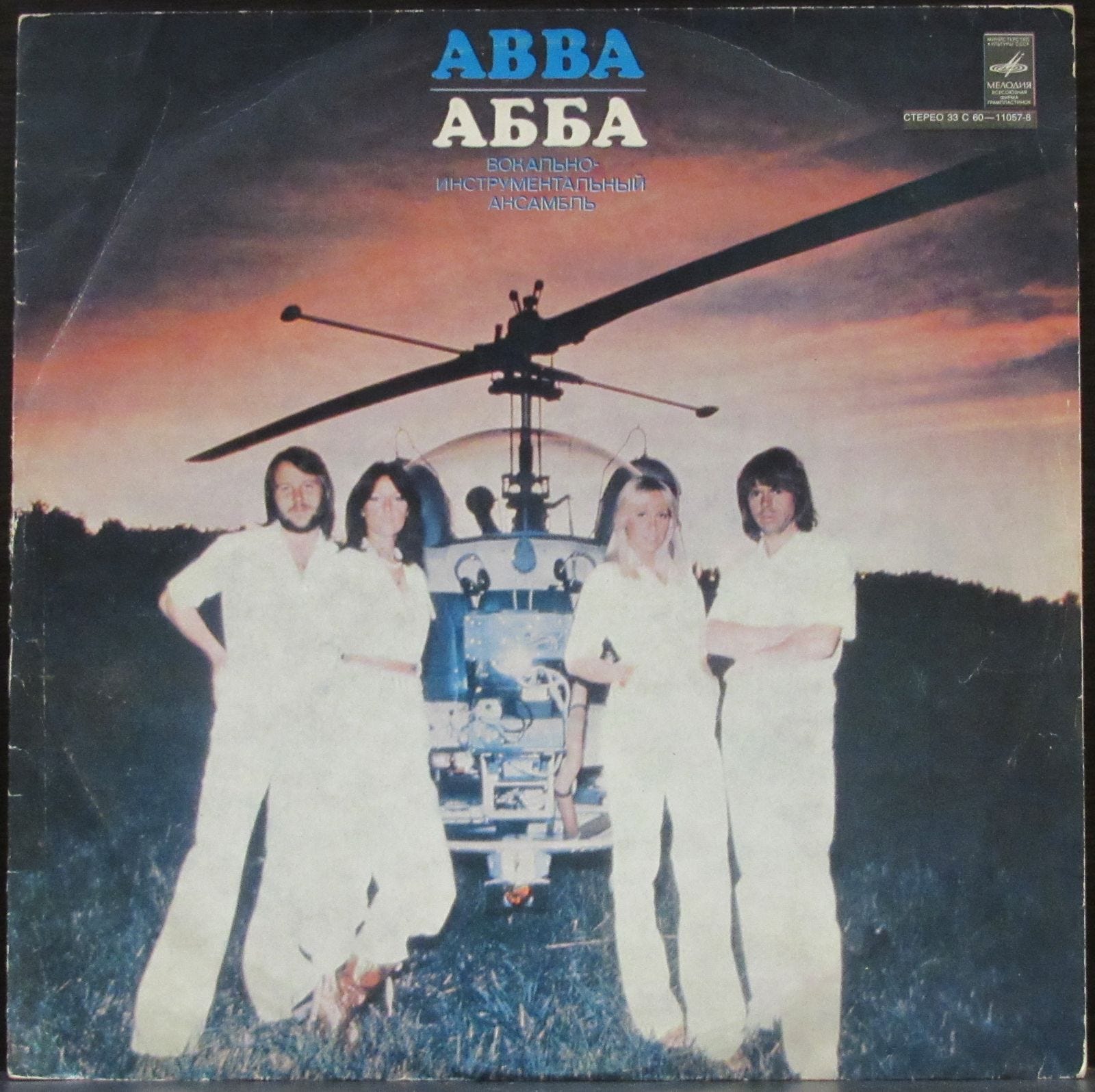
A side note – ABBA was also instrumental in opening the doors for western pop music to be officially allowed in countries of the then Eastern Bloc. The state-owned monopoly record labels of Eastern Bloc countries released licensed copies of their albums, which disappeared off the shelves as soon as they were released. Part of the reason why ABBA was given this access to a market officially closed to most other western pop acts was that they came from a (then) neutral country, Sweden. Band members also visited and performed in the Eastern Bloc, like here when they performed on East Germany’s premier and lavish variety show Ein Kessel Buntes. Even the (outspoken and now officially denounced) Soviet and Russian superstar Alla Pugacheva met with Benny and Björn when they came to Moscow in 1983 to offer her a role in their then upcoming musical Chess to play the wife of a Soviet chess player – Pugacheva turned down the role.
ABBA and the phenomenon surrounding it encapsulate so much of the nature of Australian culture – one that celebrates irony, kitsch and sees the beauty in the disparaged. As language represents culture, understanding this element to everyday Australian life is essential to knowing what makes Australia and its own form of English tick.
Now, if you excuse me, I’m off to buy one of those fancy National cassette players…
Photo right by Andrew Ebrahim on Unsplash