So I was supposed to be on a very important and family-pressured mission. You know, that usual thing where you have to find a family member who’s been made a refugee, or to use that conveniently worded term “internally displaced person” to hide the fact that you can still be a refugee in your own country. But I had been distracted by being an “attraction” in the village where my uncle, auntie, cousins and their families live in the once-forbidden border zone close to Bulgaria’s border with Greece. That was covered in Part 2. OK, I admit… needing to get away from Siika, a woman on her own mission, was also an incentive.
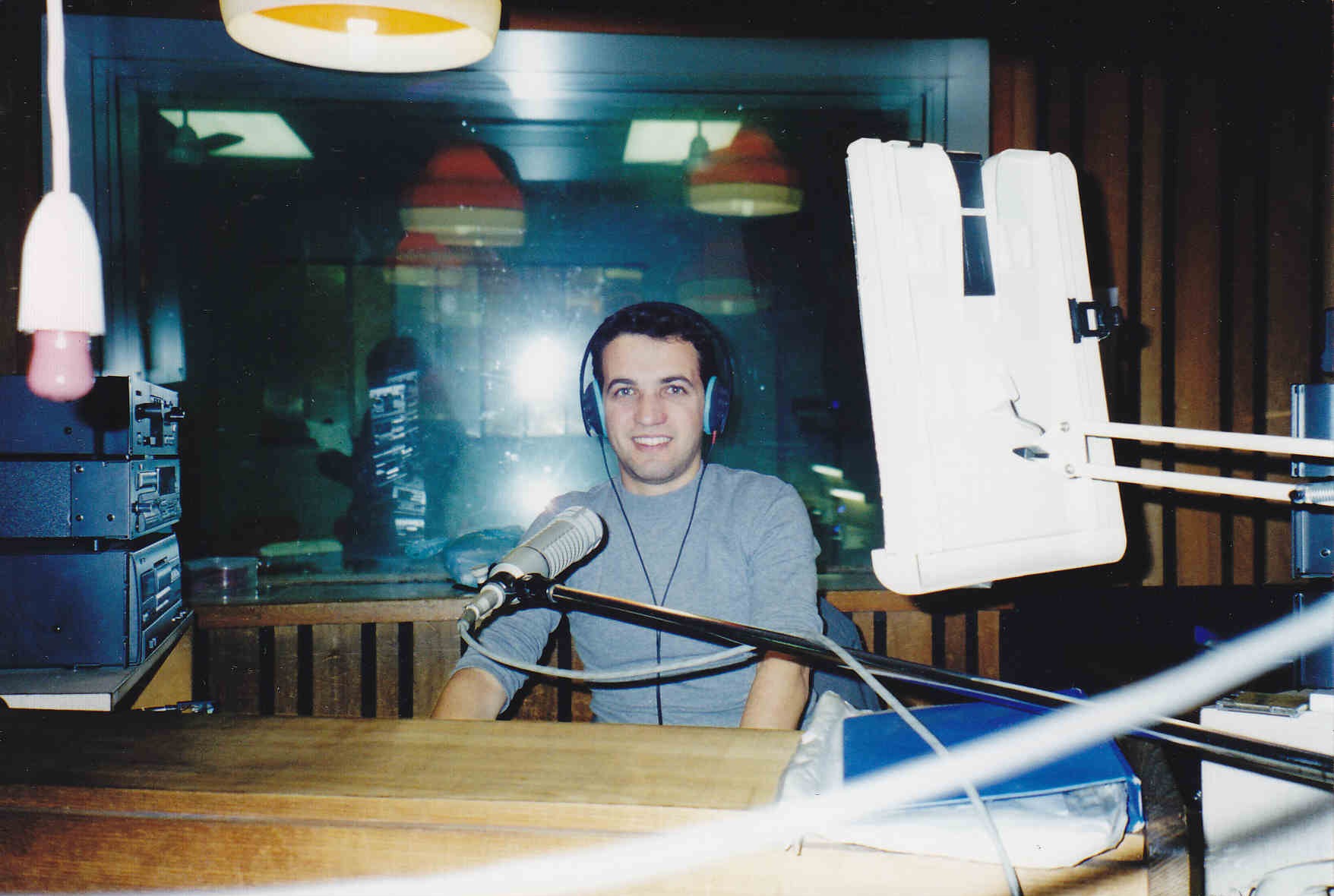
Having spent too much of my time in the village, partly in avoiding the inevitable trauma, I still needed to get to Macedonia quick smart. The reports coming from there were not good. I had for months beforehand been constantly reporting via a radio program to the Macedonian community in Adelaide, Australia of the armed ethnic conflict that had erupted in their homeland that year. People being ethnically cleansed from once mixed villages, security officers being captured and burnt alive, ethnic-based riots in Macedonian cities where Albanian and Muslim-owned business were attacked by mobs… it all sounded, ominously, too familiar. This is how the then-recent wars to the north in Croatia, Bosnia and Herzegovina and Kosovo started too. Up to then, Macedonia, potentially the biggest powder keg of them all, had avoided any ethnic-based armed conflicts, though there had been a few incidents throughout the 1990s that could have been the spark for one. Macedonians were quite proud of this restraint, to the point of arrogance (guilty as charged!), though the reality is that had greater outside powers wanted a war, they could have set one off at any time regardless of what the locals have to say or do. As my parents would say, never say it can’t happen here – and that for them also included peaceful and wealthy Australia, their country of residence.
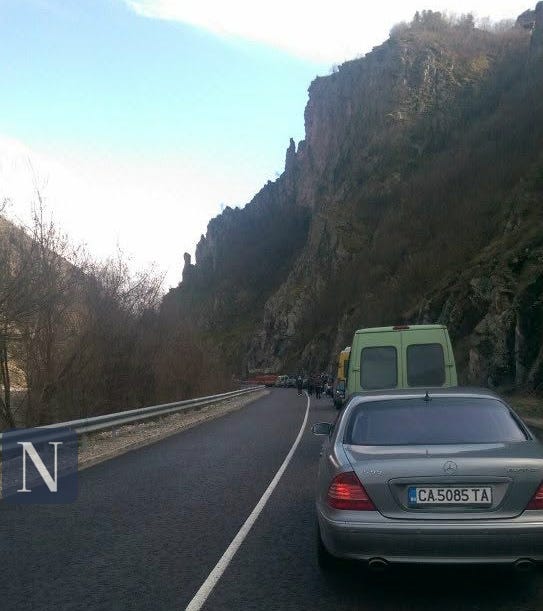
Getting from the village to the Bulgarian/Macedonian border was not a problem. My cousin relishes every chance to get out of the village and speed around blind corners on the tight mountain roads characteristic of the Pirin mountains, all while his Whitesnake-fan wife screams at him to drive safer. Frankly, not a good mix. That my cousin’s battered Audi had a giant crack across the windscreen, as well as a weird sticker on the side window written in Hungarian that appears to be some parking permit, didn’t phase us in the slightest. The car was loaded with some other friends who’d come along the ride to bid me farewell. And we are not going to apologise, except perhaps for our impending hearing problems, for having Sofi Marinova’s Вълшебен танц and Despina Vandi’s Ανάβεις Φωτιές on at full blast and repeat for the whole way.
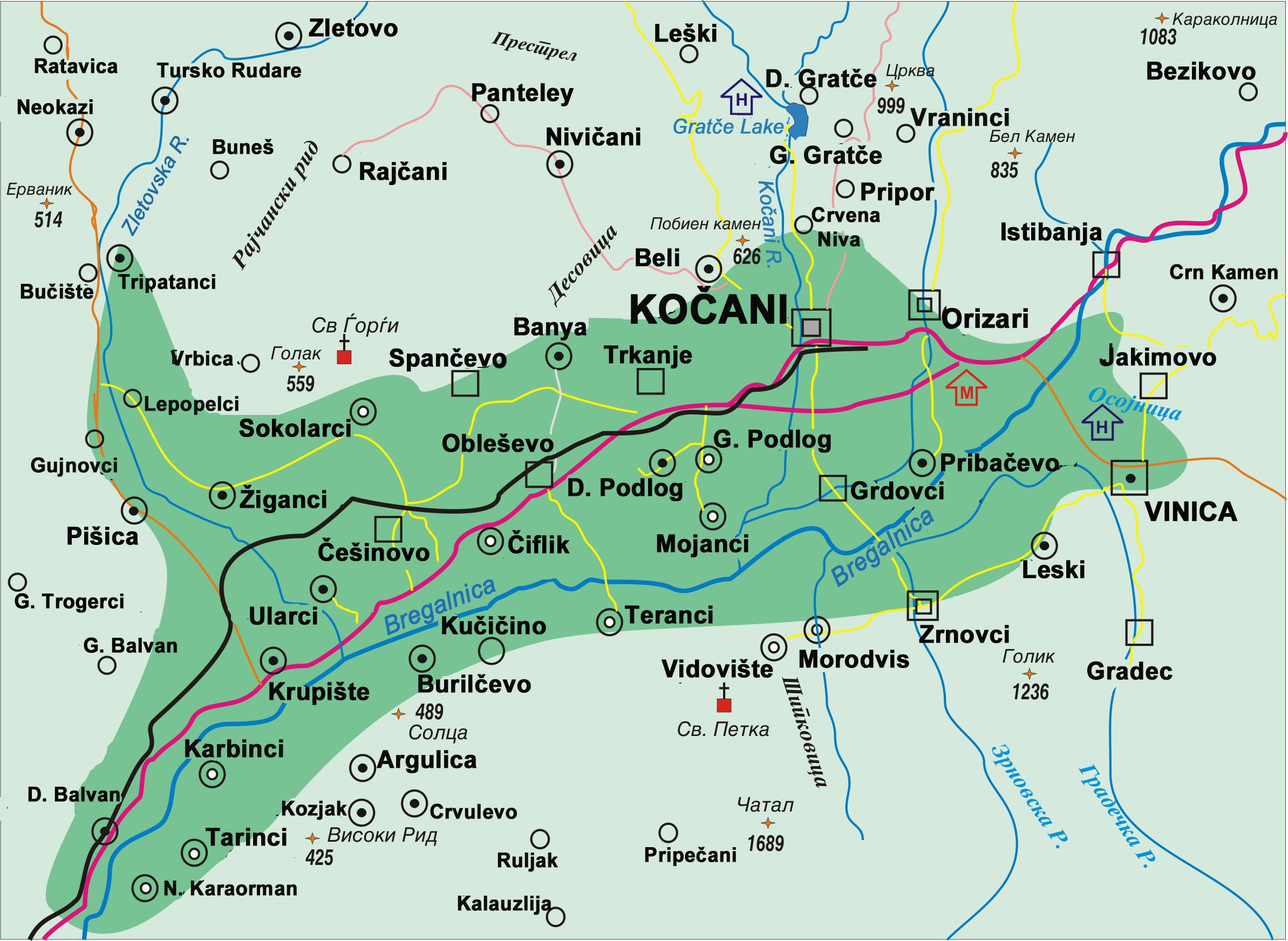
True to form, while my cousin and his reckless driving showed he had no qualms spinning us with him off a cliff and to our fiery deaths, he was deeply concerned to the point of anxiety about how I’ll make it from the other side of the border to my father’s home village outside of Kochani where his parents, i.e. my grandparents, lived. If it wasn’t for the expensive green card insurance needed to be purchased at the border, he would’ve loved to have taken me all the way as there were plenty more blind corners and rockfalls to dodge, plus he’d be able to pick up a sack or two of high quality rice grown in the area. My cousin had nothing to worry about; I’d travelled in the area before. The plan was to catch one of the many waiting taxis on the Macedonian side to the nearby town of Delchevo and from there catch one of the regular buses to Kochani, about 1.5 hours at most down the road. Simple!
My grandparents knew I was coming – I had given them a quick call the day before to tell them I’ll be at their place tomorrow. “We’ll be here. Where else?” said my grandmother. Strange… I could call them from Bulgaria but all attempts over the past few months for my father to phone them from Australia only ended up with that dreaded drone tone.
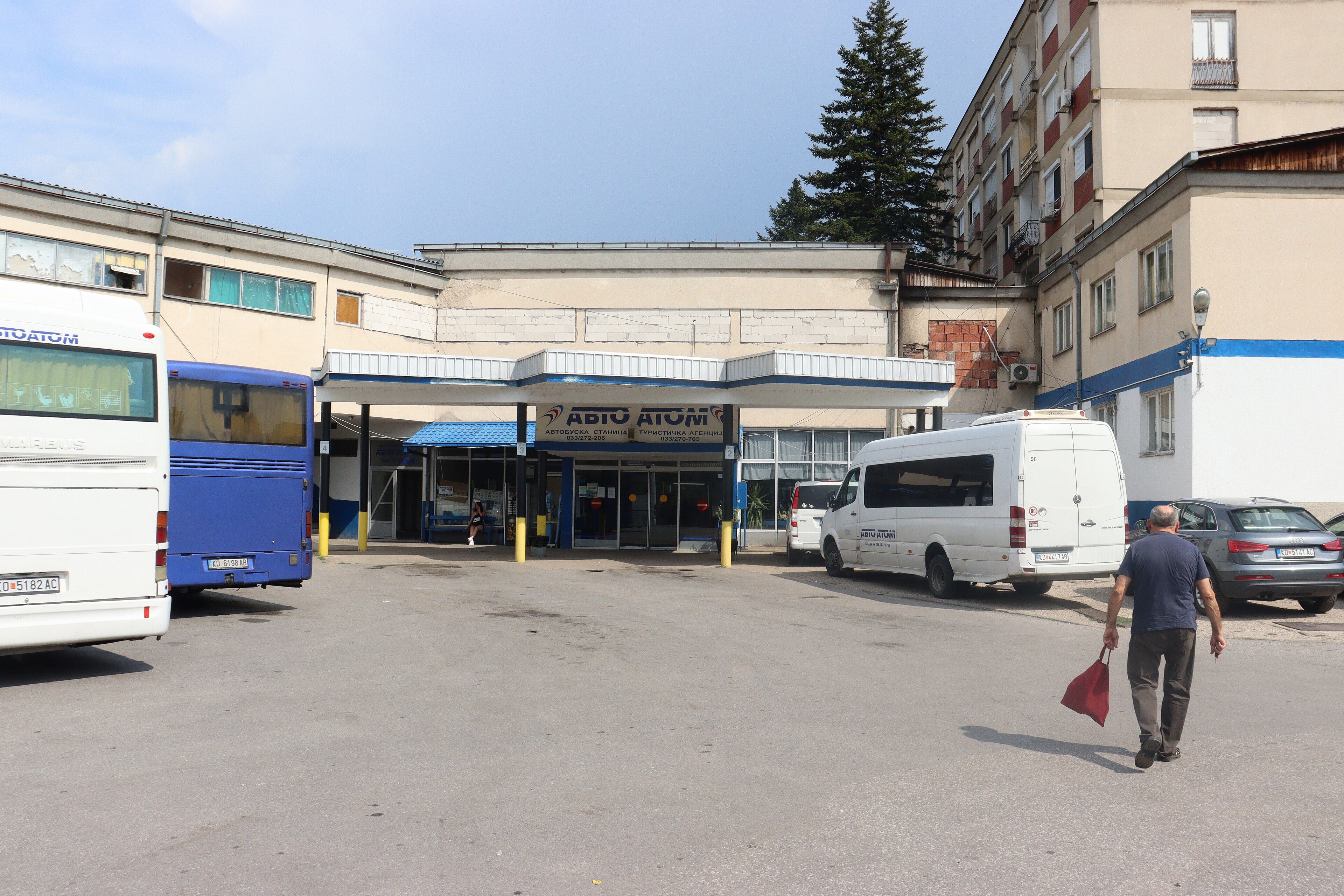
“Are you sure you’ll be OK?” my cousin asked me for the 100th time as we pulled up to the Bulgarian side of the border with Macedonia. “I’ll be fine… wait, look over there!” as I was pointing to a bus also waiting to cross the border. It was an Avto Atom bus! Now what pray tell is an Avto Atom bus? Avto Atom just happens to be the name of the formerly self-managed bus enterprise cooperative based in Kochani. Practically every major town, and some of the larger villages, in Yugoslavia had their own self-managed bus co-op; the bigger the place, the bigger the enterprise. They had names like Lasta Beograd, Nish Express, Jugoturist Kumanovo, Transcop Bitola… or most often [town name]-Trans. But Kochani’s had the best name of them all. Many of these bus companies still exist today, though for most their operations have dwindled. Some didn’t survive privatisation, and whenever that happened, that was usually devastation for public transport for the home town. Delchevo, for instance, during the pandemic saw its local bus enterprise go bankrupt, leading to the closure of its bus station and the end of any bus service to and from the town. Avto Atom Kochani, by the way, is currently up for sale, so if you’re interested, make an offer!
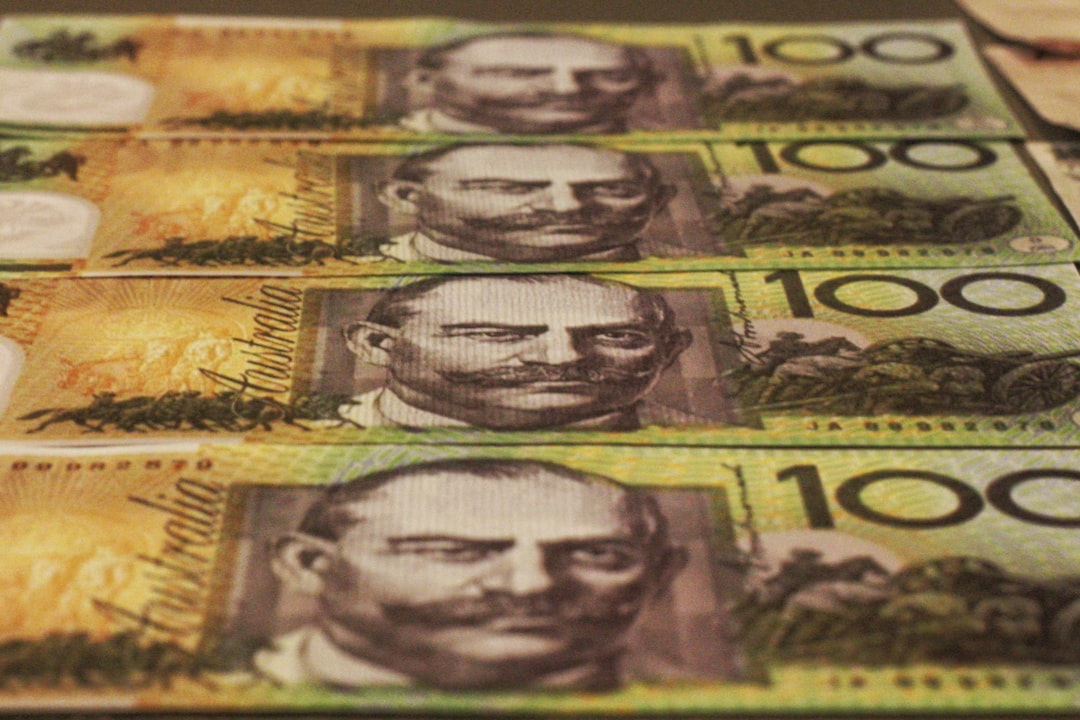
What an amazing coincidence! The Avto Atom bus must be returning to Kochani, so it’s heading exactly where I have to go. I pointed this out to my cousin, and so he said “well, what you’re waiting for? Go to the driver and ask him if you can hitch a ride.” Which is exactly what I did. The driver had taken a group of Macedonian tourists to Bulgaria’s Black Sea coast, and he was on his way back to pick up another group. I agreed that I’d pay him the normal price for a ticket – at the time: 100 denars (US$2). All I have to do is wait for him on the Macedonian side of the border. Deal!
My cousin was massively relieved. I said goodbye to my cousin, his wife and entourage. They reversed back into Bulgaria with the two songs still on loop.
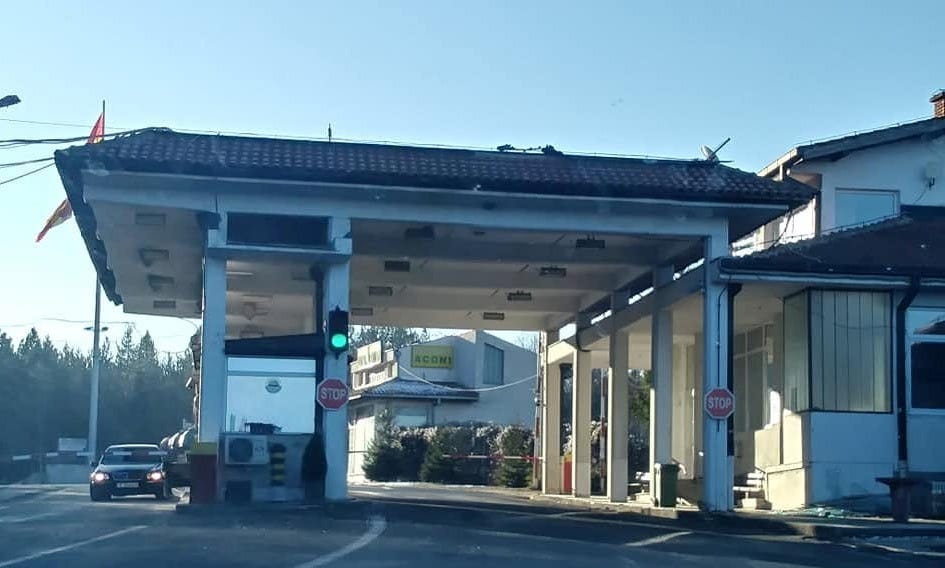
After having gone through Bulgarian border control and customs without incident (phew!), it was then a short walk up to the Macedonian side of the border, where in the border control booth was a woman with the most piercing blue eyes. Macedonian border officials always find it intriguing that I have a middle name (because Macedonians don’t) and that it’s Nick, which to them is “Nitsk”. My name should have been Nikola, in honour of my grandfather, but at the time in Australia that was one of the most popular female names (albeit spelt Nicola), and so the compromise with Nick – a tale I always have to say when crossing borders in the Balkans. I mention “Nick Nolte” to the guards and then all is fine.
The woman, whose name is Aneta, asks me the usual questions: where have you been? (in Bulgaria with cousins); where are you heading? (to Kochani to see my grandparents). “Ah, Kochani. To eat frogs!” That’s the usual thing. Macedonians associate Kochani with three things: rice, being the tidiest town in Macedonia, and the local delicacy – frog legs. Mind you, I’ve been going to visit Kochani all my life, and have even lived in the area… and never once have I seen frog legs on the menu, served by anyone or grilled at the many events I’ve been to there, so no idea where this one comes from. “How are you going to get to Kochani?” asked Aneta showing the same deep level of concern my cousin displayed. I told her an Avto Atom bus is about to cross the border and I’ve made an arrangement with the driver. Aneta was pleased: “I’m so relieved. But if there’s any problems, don’t you worry. We’ll sort something out for you. We’ll make sure that your grandmother doesn’t worry about you.” I couldn’t believe it – a Macedonian border guard being so kind and thoughtful?! Normally people in the Balkans fear the often boorish border officials, who are most notorious for being the most corrupt of public servants in the region. I seriously couldn’t believe my luck. What’s happening?
After having a wonderful chat with Aneta, who I was to encounter a number of times over the years later crossing this border point and would always make me coffee, I went to position myself at a prominent spot right by a duty-free shop (djuti-fri-shop in Macedonian). Just as I plonked my bags down… clink! Oh no, the bottle of Bulgarian vodka I bought as a present for my alcoholic grandfather (yes, I know, I’m an enabler) had shattered. Now he’d appreciate a good vodka from Bulgaria as they do a better job of it than what’s available in Macedonia, and no point getting any rakija as my grandfather has a whole basement full of the stuff… shhh! Don’t tell anyone! I was sad that the bottle broke… and so too were some of the Macedonians in the duty-free shop nearby for me. Oh well, breaking glass has always been a sign of good luck in Macedonia, so long as it wasn’t a mirror.
After a few anxious minutes wondering whether the driver had gone off without me, the Avto Atom bus finally came into sight as it made its way through the border. I started waving frantically and the driver saw me and stopped.
Deal in place. Off we went. I was in the country at war.
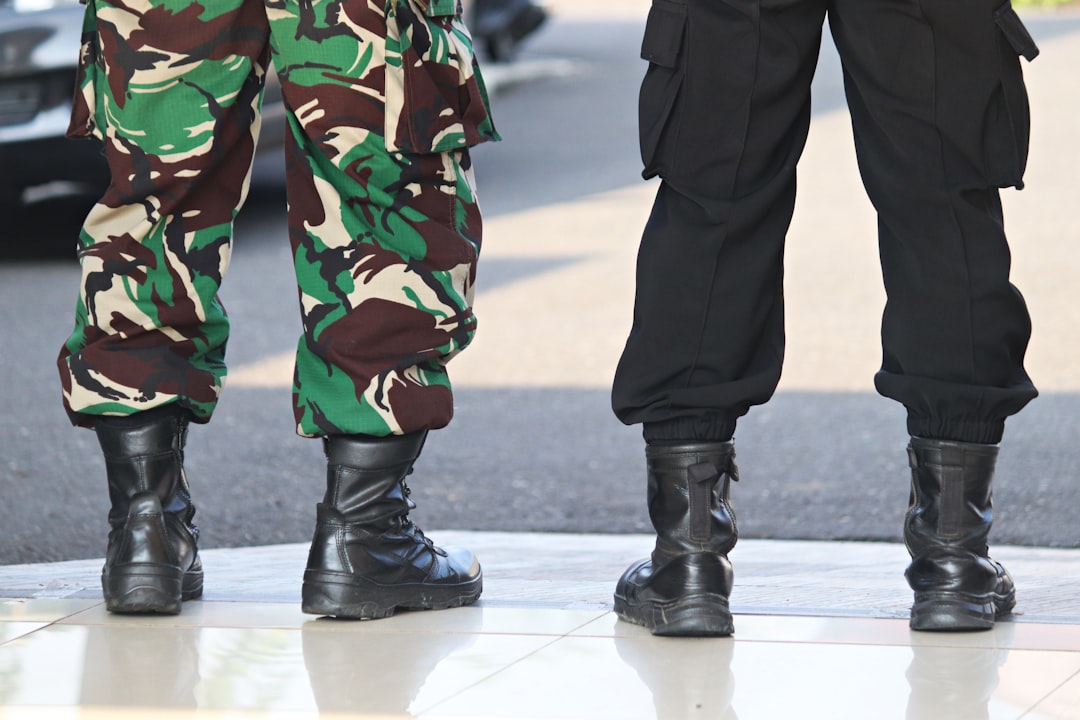
And that a war was happening was first apparent by the apparel. Lots of army fatigues. Whether it be trousers, t-shirts or jackets, it seemed every guy under 40 had at least one item on with army fatigues. You were not someone unless you had camouflage. Pretty much all the young guys, all of whom had done military service, had been called up to do refresher reserves, so things were being prepared for something bigger. Yet another one of the those ominous familiarities of recent events further north.
As a two-hour drive to Kochani was ahead of us, it was the perfect time to find out from the driver, Trajcho, about the latest. He said what was obvious – the mood was tense. No-one really knew what was happening, but thank god that none of the fighting had spread from the concentrated areas in Macedonia’s northwest. Not that it was likely for the fighting to spread: eastern Macedonia is solidly ethnic Macedonian, with small communities of Turkish-speaking Roma, as well as ethnic Turks (Merhaba Atidje Muratova of Honeyland and DJ Ahmet!). You could count the number of Albanians in this part of Macedonia with your fingers, and the beef in this conflict was just between Albanians and Macedonians… so far.
What Trajcho did say was a positive is that there’s a sense of camaraderie and community amongst people, so people have been kind to each other. This was something I was to observe constantly during this time in Macedonia. Normally, Macedonians can be a bit rough and unpleasant to each other, especially if they’re strangers. We are alert and suspicious most of the time – a product of many centuries and many instances of betrayal and wrongdoing. Macedonians even have a number of songs, such as this popular track that calls for all traitors to be damned. And who is the traitor? Often, it’s one’s own sibling or someone considered otherwise to be a close friend. Looking at how many of Macedonia’s heroes ended up being shot, betrayal has played an oversize role. But not now. It was as if all the opium poppies that can be found in Macedonia’s countryside in abundance had been burnt and the wafting aroma had made everyone so blissful and euphoric. But that’s what had happened – the intoxicating and just as addictive essence of national unity. That’s why you get Brits who were born decades after WWII go on about the Blitz spirit in such glowing terms, totally airbrushing or, more likely, ignorant of the then horrible circumstances. Or how a Ukrainian friend of mine told me how “wonderful” that the war in his homeland has brought everyone together. A lovely feeling, and I know it, but to achieve this unity means rallying around a common enemy, a sentiment that needs constant refuelling, and that fuel ends up being raw hate. The thing is that the society that forms the common enemy is also experiencing the same euphoria of unity, fuelled by a hate for their common enemy – your community.
Just as we go through Delchevo, a man starts waving at the bus. The bus driver suddenly stops. “It’s a friend of mine” Trajcho tells me. Fair enough. The more the merrier. The man gets on, says hi to Trajcho and then looks at me. I’ve seen that look on his face before, and always in the Kochani area. It’s often because I look like my father. “You look like someone I know. You don’t live in Kochani, don’t you?” he asks me.
- No, I’m from Australia
- But you look like someone I know. Someone from Kochani
- You probably know my father
- Who’s your father?
- Do you know Mile Nasev?
Yeah, government names rarely work with people not only in Macedonia but all throughout the Balkans. Surnames, particularly in eastern Macedonia, only truly became permanent when the communists started maintaining proper records of people in the 1950s, and most villages, even most families, will have more than one person in them with the exact same name. Nicknames then are the most important identifiers.
- What’s your father’s nickname?
- Džajkata
And that was it, the lightbulb moment!
- Your Džajkata’s son?! Oh my god, you look just like your father! Trajcho, didn’t you recognise him? It’s Džajkata’s son. How’s your father. I used to play in the same football team as him. You know why he’s called Džajkata?
Yes, I know why. In his younger years, my father was the best footballer player in the village, and so he was nicknamed after Yugoslavia’s then best footballer, Dragan Džajić. My father displayed the same flair on the football pitch as, and even bore a physical resemblance with, the Red Star left-winger – also my father’s favourite position. However, my grandfather thought my father spent too much time playing football and not enough time studying, so his football career came to a thunderous and embarrassing end when once his father came onto the field wielding a stick ready to chase my father off mid-match in front of the whole village.
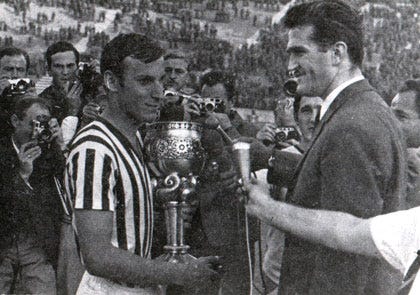
So this old friend of my father’s was Vancho, who was overjoyed by our chance meeting. “I saw your father last year when he visited. How’s your father in Adelaide?”
Trajcho’s ears pricked up. Excitedly, he asked me “Adelaide? Now I know your father! So do you know Milica? Milica Ivanova? Goran’s wife. Their son is Dragan.”
Of course I know them! Milica is one of my mother’s closest friends. Dragan is my brother’s best friend. Goran works with my father.
Small world! Well, it’s only two degrees of separation when it comes to Macedonians, especially when it’s people from the same region. We’re all practically related.
I knew that Milica had worked in accounts before the family migrated to Australia, but I didn’t know it was for Avto Atom. Trajcho and Milica had known each other from kindergarten. They used to be neighbours.
Having all of us worked out who we were, we had a great old chat on the trip to Kochani. Lots of politics, stuff about mutual friends, crazy old stories back from the “good ol’ days” – the usual stuff.
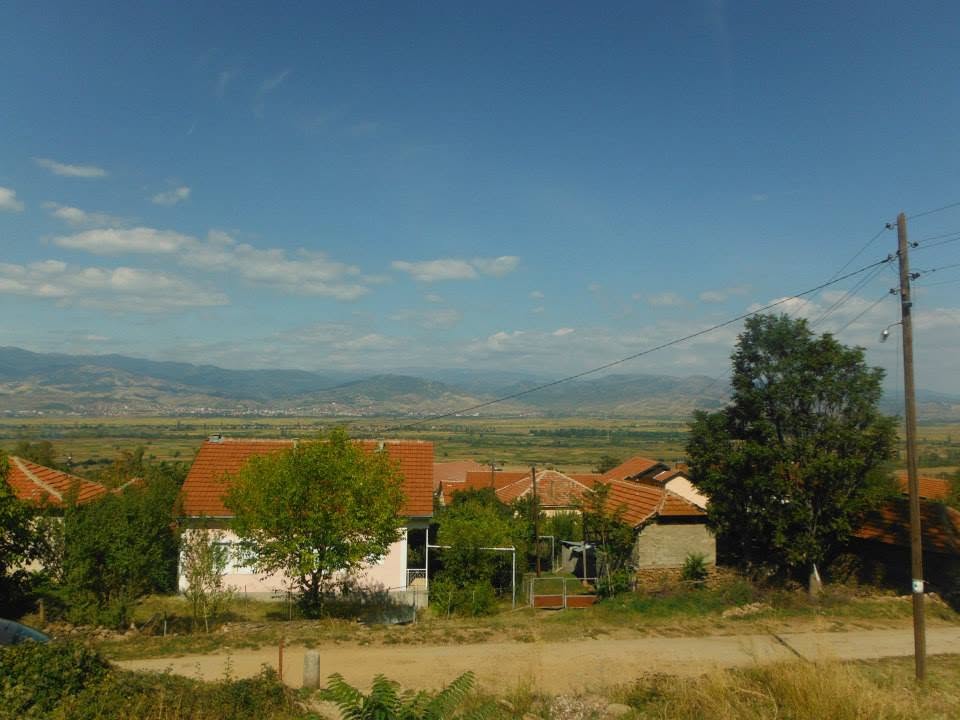
In what seemed like a wink, the rice fields of Kochani appeared in front of us. As we were closing in on the bus stop known locally as fabrikata (“the factory”, even though the factory it refers to was long gone), Vancho pointed out and yelled “look, there’s your dedo Koljo waiting for you on the side of the road”. He was in the Slav squat along with one of my second cousins. I said my farewells to Vancho and promised to let my father know that we met, and then I had the 100 denars ready to give to Trajcho. No, he was offended: “What the hell are you doing that for? Buy yourself something good with that money. Get going! Your grandfather’s waiting for you!” How about it – a free ride!
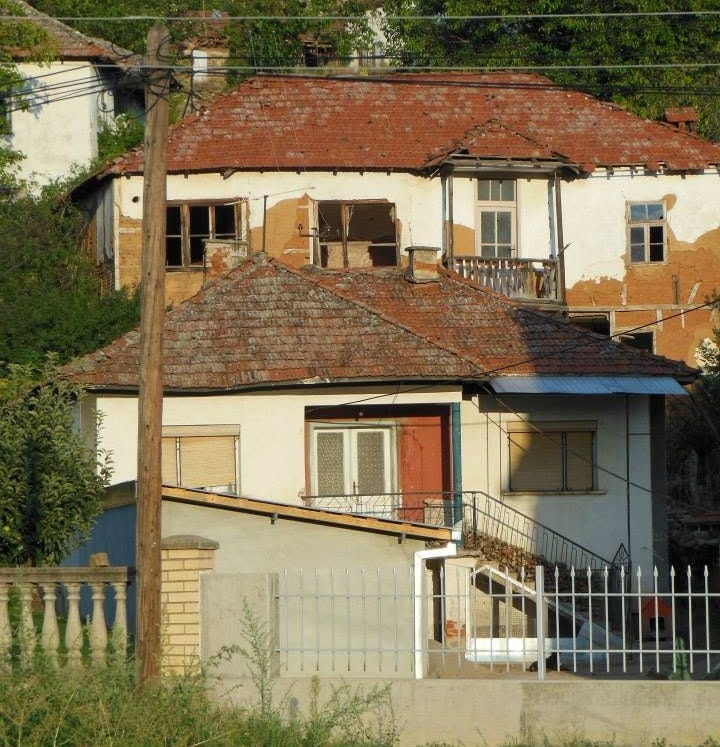
OK, so now to face the music. A short walk through the dusty unpaved streets of the village to a modest house close to the river near the main square of the village –my grandparents’ place. My grandmother was thrilled to see me. Though overjoyed to see my grandparents that the mass of relatives who had come to see me, and having had such a great journey that day, I had to calm myself and bring up the elephant in the room. After the usual pleasantries, and dutifully accepting my grandmother’s offer to eat lunch (which happens late around 3 pm in Macedonia), I psyched myself up for the worst and finally asked for the details we (and you) want to know…
- Babo, where’s Biljana and her family? How is she?
Not even looking up from the oven over which she was preparing my lunch, she just said “she’s fine”.
This was way too casual.
- So where are they? What’s happened to them. We haven’t heard from them in months?
My grandmother began the story.
So after they left their house, near the frontline at the time, they went to my auntie’s (her mother’s) house at the other, then safer, side of Skopje. But then they could hear the mortar and gun fire from the new frontline only kilometres from there. The constant noise of war scared the children, so they had spent most of the past few months in the village with my grandparents far from harm’s way. They had actually returned to my auntie’s house only a few days before. Her husband, who had a new military role, could go with a police escort to go and check on their home, which was untouched, thankfully, though they were scared that looters or robbers will come and steal their belongings. Otherwise, all was fine. They were lucky as they were relatively untouched… unlike many others.
My grandmother then innocently asked how come we didn’t know?
- Well, my father has been trying to call for months, but the lines seem cut.
- Yes, well, your auntie hadn’t paid her phone bill for ages so they probably restricted any international access to her.
As I was to find out later, there was another reason.
So my cousin was fine after all that, though a little shell-shocked and concerned about whether they’ll ever return to their home.
Still, I was a bit annoyed. We’d been worried sick for her, thinking the worst had happened. We have friends in Australia – refugees from Croatia and Bosnia and Herzegovina; Serbs, Croats, Bosniaks, Yugoslavs, whatever; who had been forced to move twice and suffered immensely because of it, so we know what the trauma and despair of losing your home looks like.
So I bravely confronted my formidable grandmother (wish me luck!)
- So why didn’t anyone tell us that Biljana was all fine?
The answer?
- We didn’t want to tell you because we didn’t want to worry you.
Yes, that response again. Eyeroll. Facepalm.
Crazy, I know. But if this is crazy, then I haven’t experienced anything yet. I soon see what how wars make people go truly crazy. But will I join in with the craziness? That’s in Part 4 when I get much closer to the frontline than I expected…


.jpg)

.jpg)

















.jpg)








_logo.svg.webp)


_(52052470251)_(cropped).jpg)






.jpg)













_(8249451687).jpg)