Thank you, Princess Kalina, and your strong arms, your striking, Michael Jackson-esque nose and for your (drunken?) gatecrashing of the recent “March for the Family” in the Bulgarian capital Sofia for bringing attention back to the near-forgotten Bulgarian royal family. I’m sure she’s saying: “You’re welcome!”
When pictures of Kalina with her distinctively muscled arms (since gone) and peculiar nose (still there) started doing the rounds on social media in 2024, plenty of people were genuinely surprised to learn that Bulgaria has a royal family at all. None more so than in the former Yugoslavia, which shows how little they know about their eastern neighbours – partly because they consider them inferior, even though both Bulgaria and Romania are in the EU and, apart from Slovenia and Croatia, they’re not.
I, on the other hand, have been hearing about the Bulgarian royals since birth.
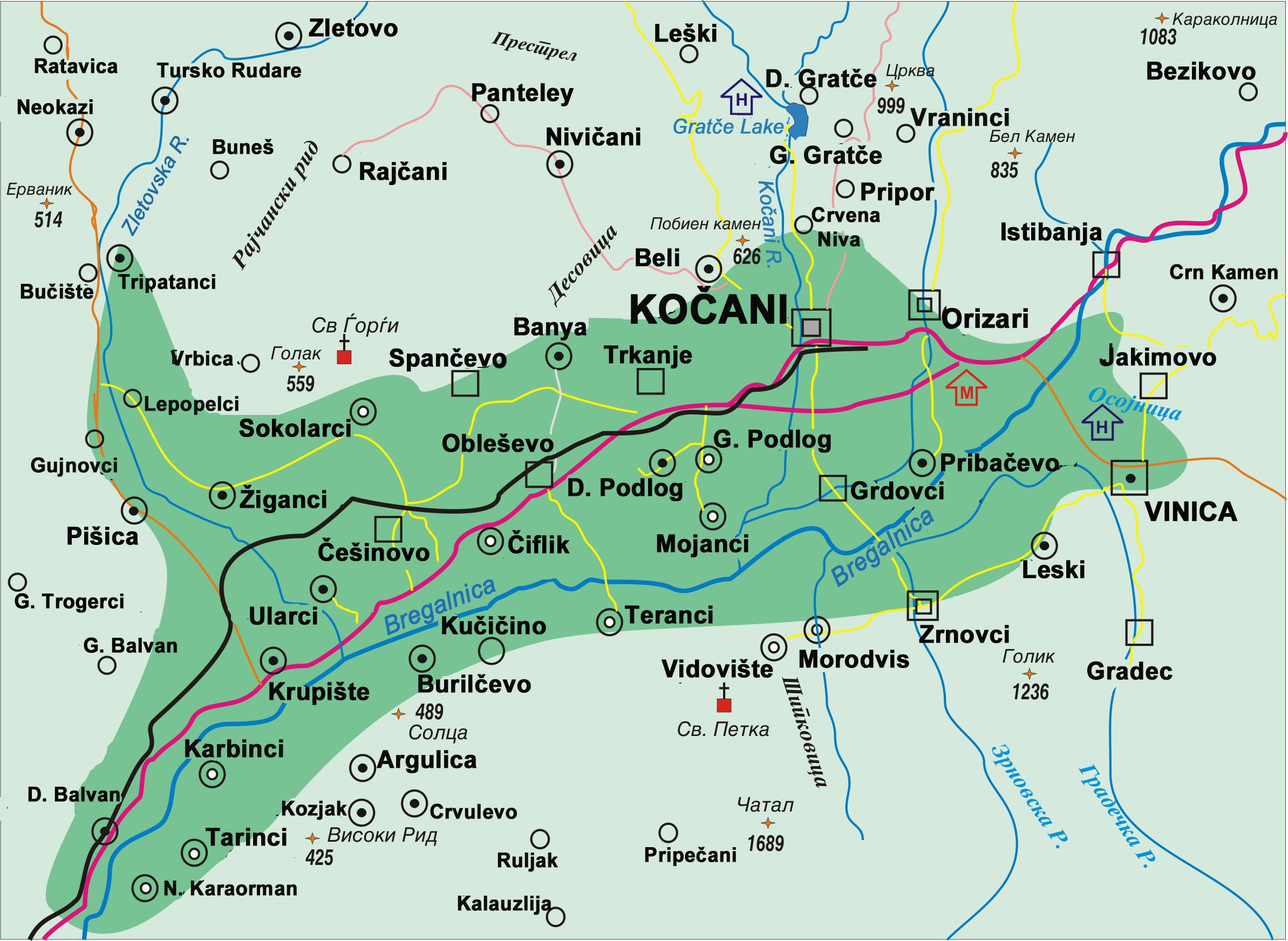
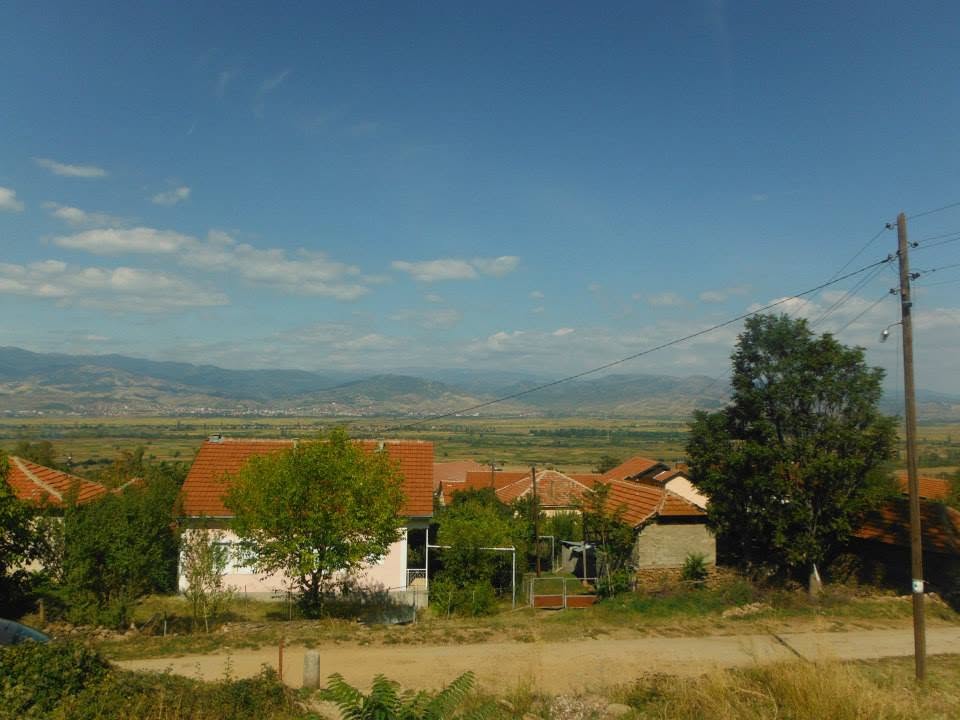
My maternal grandfather grew up in Pirin Macedonia in what was then the southwest corner of the Kingdom of Bulgaria. And even though he identified his ethnicity as Macedonian and not Bulgarian all his life (this matters), he was – inexplicably – a devotee of the late Bulgarian Tsar (King) Boris III. I say “inexplicably” because of two reasons: my grandfather also adored Stalin and Margaret Thatcher, so you can draw your own conclusions about the consistency of his politics; the other was that the Pirin region was literally a law onto itself for most of the 1920s and 1930s, with rival, and often violent, factions of the Internal Macedonian Revolutionary Organisation (IMRO) having their grip over the region. This reflected the local population’s lack of loyalty to the central Bulgarian government under the reign of Tsar Boris. However, this was contested in 1934, when to quash the lawlessness in the Pirin region, Tsar Boris sent in the troops to put an end to IMRO and bring some stability not just to the Pirin region but to Bulgaria as a whole. It was a year after in 1935 when Tsar Boris took over direct control of the government, establishing a personal authoritarian royal dictatorship that lasted until his death in August 1943. My grandfather never really talked much about that period, but given that prior to 1934 you could hire an IMRO assassin for next to nothing, perhaps Tsar Boris wiping out IMRO’s mafia-style control was a welcome relief, hence the adulation. But knowing my grandfather, the more likely reason for it was this: after a youth spent rebelling against the system and at much personal cost, life as a refugee in Australia was easier if you fell in with the royalist crowd – and in Adelaide, Australia, where we lived, that crowd was the core of the local Bulgarian community, centred on the suburb of Fulham Gardens and the nearby town of Virginia. Liking the Tsar was also a sure sign that you’re not a communist, which in 1950s Australia with the “red scare” hysteria about, it wasn’t a question of loyalty but also of survival to toe the line. Back in Bulgaria, the communist authorities had a name for these royalists in exile: враждебна емиграция – “the hostile emigration.”
Every year on 30 January, the ageing Bulgarian royalists of Adelaide would hold a lunch (no dinner as that would be too late for them) to mark Tsar Boris III’s birthday. Interestingly, my grandfather never went – hey, he adored the tsar but not that far!
These royalists, many with dubious records given that Bulgaria was on the Nazi side for almost all of WWII, shared one unshakeable conviction: the only thing that could fix Bulgaria was getting rid of the communists and bringing Boris’s son, the exiled Simeon, back to reclaim the crown.
No fairytale ending here for them as that didn’t exactly happen. Well, not immediately, anyway. But Tsar Simeon did eventually return to Bulgaria… and to power. Just not as tsar. He came back as… prime minister!
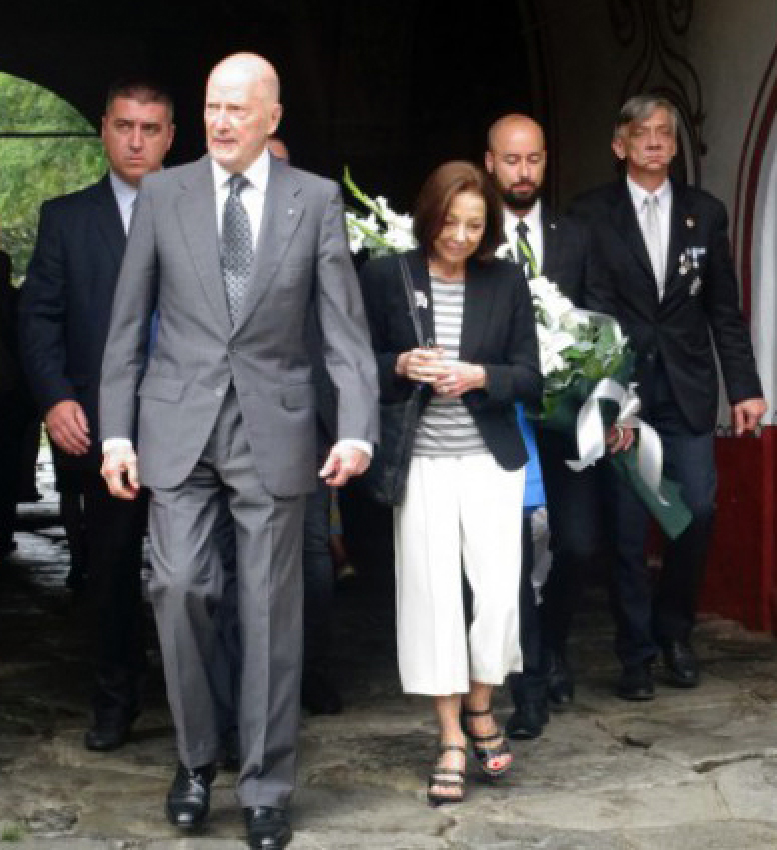
Picture it: Bulgaria, 2001
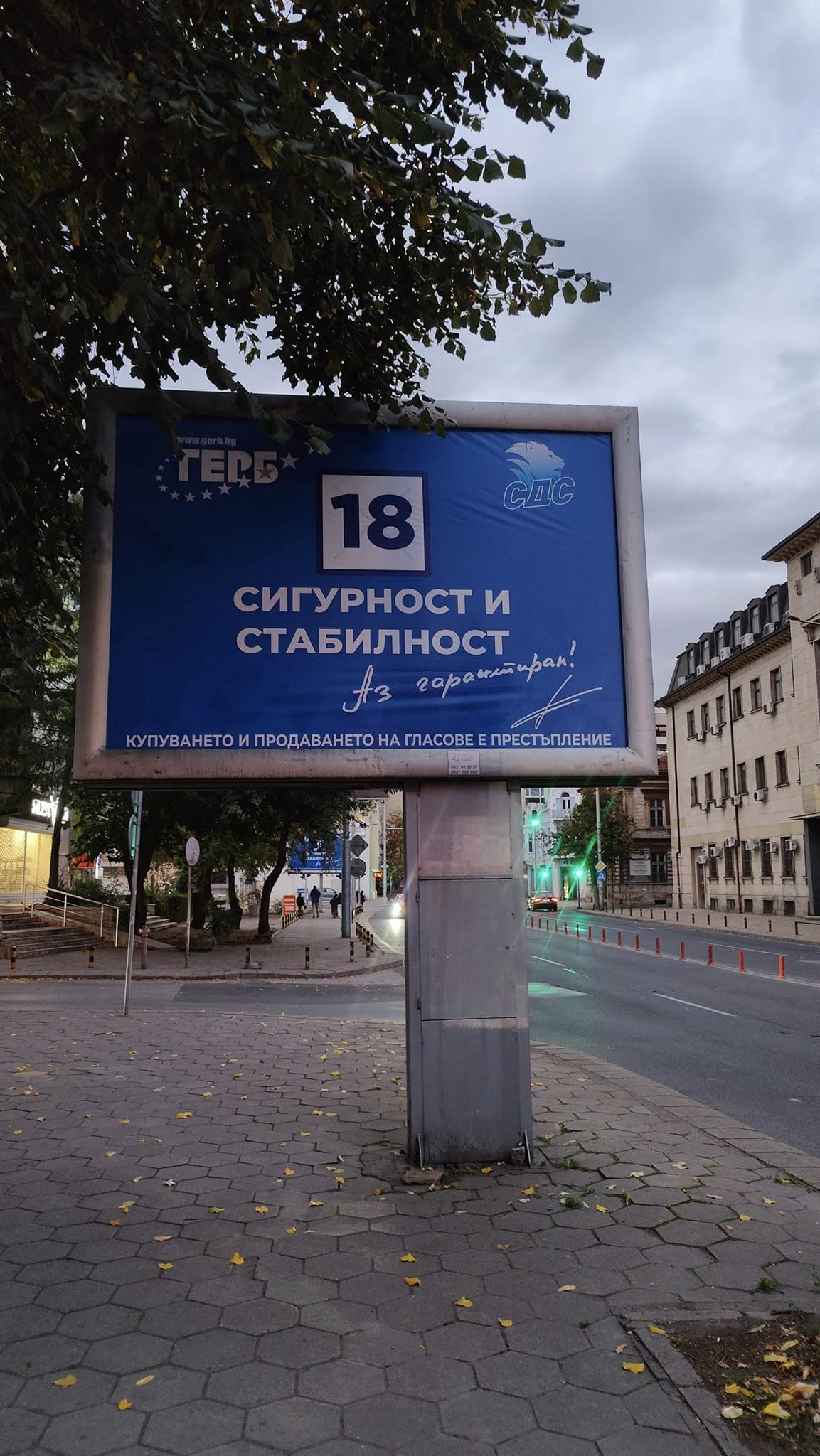
After more than a decade of lurching from “real socialism” – the Eastern Bloc’s preferred euphemism for a soft Stalinism that never had any intention of reaching actual communism – into gangster capitalism, mass corruption and grinding poverty, Bulgarian voters had had enough of the usual cast of mafioso-adjacent politicians. What they wanted instead was someone who simply wouldn’t steal. Bonus points for being Western-educated, which says a great deal about the inferiority complex many Bulgarians carry about their own institutions, and for having zero ties to the old Communist Party – a tall order, by any measure.
So here’s the thing: how about Tsar Simeon?
Simeon ascended to the throne in 1943, aged 6, after the mysterious death of his father Boris, who had defied Hitler by not declaring war on the USSR (the Russians had liberated Bulgaria from Ottoman rule after all, so waging war against the USSR was not popular amongst Bulgarians) and for not fully deporting all of Bulgaria’s Jewish population. A side note, and quite a controversial statement in Bulgaria but one also shared with Shalom, Bulgaria’s main Jewish organisation: Bulgaria did not necessarily “save” its Jewish population. Royalist, Nazi-allied Bulgaria had fully applied the Nuremberg racial laws, forced Bulgaria’s Jews to wear yellow stars and to report to concentration camps (“for their own safety”), and had willingly, enthusiastically and thoroughly deported the Jewish people in the Bulgarian-occupied regions of Macedonia and Thrace to their immediate deaths in Treblinka. Bulgaria then simply had not sent the Jews from the pre-1941 borders of the Kingdom of Bulgaria… yet. So it’s believed Hitler had ordered for the 49-year-old Tsar Boris to be poisoned.
The Red Army entered the territory of Bulgaria on 8 September 1944. The following day, a “revolution” occurred and the “Fatherland Front”, a Communist-lead resistance movement took over control under the direct orders of the USSR. The child tsar’s reign was numbered. The regent Kiril, Simeon’s uncle, was arrested and sentenced to death in 1945. The following year, after a Communist-engineered plebiscite abolished the monarchy outright, Simeon and the rest of the family fled the country, eventually finding asylum in fascist Spain after Franco took them in.
A small historical footnote: when Simeon was born in 1937, his father was so delighted to finally have a male heir that he decreed every student in Bulgaria should have their grades bumped up by one point. Bulgaria used a five-point scale at the time, where 5 was an A and so on down to 1 as a fail. After that decree, the scale simply shifted up a notch – 6 became the new A, 5 the new B – and it has stayed that way ever since.
Back to 2001, let’s run through that checklist for Tsar Simeon’s case: untainted by a communist past? Tick. Western-educated? Unquestionably. Rich enough that he wouldn’t bother dipping into what was left of the state coffers? Also a tick. He was, on paper, perfect.
Trading as “Sakskoburgotski”, the somewhat clumsily Bulgarianised version of his blue-blooded German surname of Saxe-Coburg-Gotha – the same pre-1917 family name as his cousins, the British royals – Simeon launched his own party just eleven weeks before the parliamentary election, under the suitably modest name National Movement Simeon II (NDSV). He promised foreign investment, lower taxes and an end to corruption, all within his first 800 days in office (later denied). The Bulgarian electorate lapped it up! NDSV stormed to an unprecedented 42% of the vote, winning half the seats in the Bulgarian parliament.
I happened to be in Bulgaria for the summer of 2001, much of it in the Pirin region. The buzz was that the tsar who’s rich enough not needing to steal, with a Rolodex full of noble relatives and ultra-wealthy friends, would flood the country with so much foreign investment that everyone will soon be living like Crystal and Alexis from Dynasty – shoulder pads included!
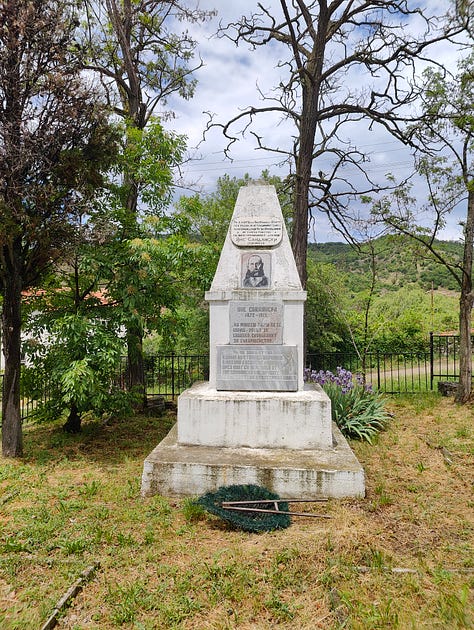
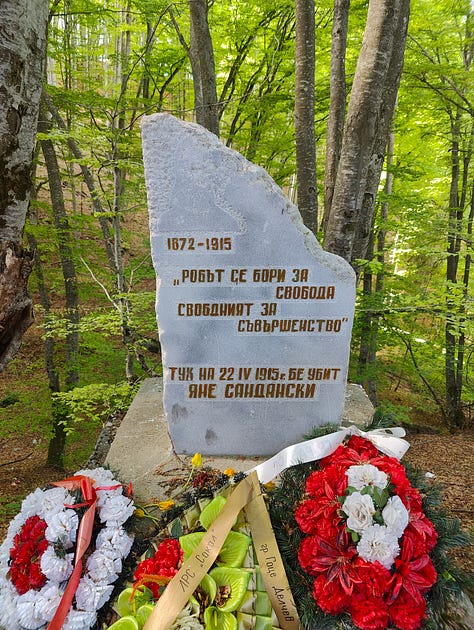
Not everyone was convinced, though. I said how the Pirin region in Bulgaria historically had its own deep streak of anti-royalist sentiment… well, as I found out, it was still alive and shooting in 2001. It was one evening when friends of mine, all in their 20s, were gathered around, cigarettes and beers in hand, having a good old chat. The upcoming elections came up, and so the tsar unsurprisingly was the main point of discussion. One of the women, 22 years old at the time, had a stern word to say about the tsar: “I’m not voting for the man whose grandfather killed Sandanski, and that’s final!” Cheers all round came from the table. That was settled then. That “grandfather” was Tsar Ferdinand, known in the west as “Foxy Ferdie”. Sandanski was Yané Sandanski, the Robin Hood-like local IMRO hero whose armed band controlled much of the Pirin region in the late Ottoman era. Sandanski was firmly committed to socialism and Macedonian independence – two factors that made him an enemy of Bulgarian Tsar Ferdinand. So in 1915, Foxy Ferdie ordered Sandanski be liquidated… and was. Well, that’s how the local lore has it. 85 years later and sentiment was still strong about the matter. Some things, my friend said, you don’t forgive.
How it actually went
Here’s the thing about wanting a rich man at the helm so he won’t steal from the public purse: the Bulgarian electorate was right about that. What they hadn’t accounted for was everyone around him – the chancers and grifters who had hitched their wagons onto the Tsar’s juggernaut. The deputies and officials filling out his government were mostly wide-eyed opportunists who ticked none of the three boxes the Tsar himself satisfied. So when it came to actually stamping out corruption, the Tsar should have started by looking at his own benches.
The promised foreign investment never really showed up, despite the Tsar’s vaunted contacts. However, what marked the Tsar’s rule as prime minister was a brief window of cautious optimism in the run-up to Bulgaria’s accession to the EU. Surely now the rule of law, functioning public services, genuine debate about issues concerning marginalised communities, decent infrastructure, an end to corruption… basically “Germany arriving in Bulgaria”… were finally on the way. Unfortunately, not much actually changed. That disappointment showed up at the ballot box in 2005, when NDSV’s share of the vote collapsed to 19%, and its seat count fell from a commanding majority to just 53. The party limped on as junior partner in a coalition with the Bulgarian Socialist Party, which made for a rather pointed irony, given that the Socialists were the direct successors to the very Communist Party that had forced a nine-year-old Simeon out of the country in 1946.
That’s Bulgaria for you.
By then NDSV carried the same reputation for graft as every other party in parliament. It rebranded itself the National Movement for Stability and Progress, keeping the acronym, but voters weren’t fooled. At the 2009 election, it scraped together a mere 3% of the vote – below the 4% threshold needed to hold any seats at all. Simeon resigned as party leader the day after the results came in, and NDSV has since faded into political irrelevance.
So what’s left of the royal mystique?
Ask the average Bulgarian today what they think of their royal family, and the honest answer is: not much. If the family comes up at all, it’s usually about how they’re not in any way ethnic Bulgarian, plus their shaky command of the Bulgarian language. That compares with the Greek and Romanian royal famlies, also fly-ins, but not the Serbian or Albanian royals, who at least have some local blood line. All this is true: the Bulgarian royal family is from the House of Saxe-Coburg and Gotha-Koháry and primarily of German origin, belonging to the same influential European dynasty as the British and Belgian royal families.
So now that Tsar Simeon is no longer the topic of discussion as before, there’s another family member getting tongues wagging.
Enter Princess Kalina
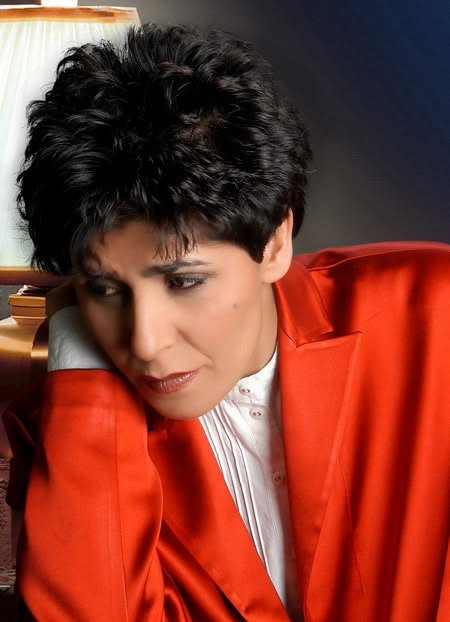
Kalina, born in Madrid in 1972, is Simeon’s fifth child and only daughter, raised in exile alongside her four brothers and educated, like the rest of the family, partly in France and partly in England, where she went on to study art history (don’t they all?). She married the Spanish adventurer, former commando, and UNESCO Goodwill Ambassador Antonio “Kitín” Muñoz in 2002, in the first royal wedding held on Bulgarian soil since her grandparents married back in 1930. Five years later she gave birth to a son, Simeon Hassan, in Sofia – the first member of the Bulgarian royal family to be born in Bulgaria in seventy years.
For most of her adult life, Kalina cultivated a reputation as the family’s more unconventional, modern member: distinctive fashion sense, a genuine interest in art restoration and heritage, and somewhat removed from the stiffness one expects of European royalty. Then, in May 2024, a set of photographs of Princess Kalina at the reburial of her great-grandfather Tsar Ferdinand’s remains in Bulgaria went viral, with social media fixated on her noticeably muscular arms and unique nose. The princess, by then in her early fifties, found herself trending for her physique rather than her lineage. So trust Hello magazine to do a full piece about Kalina’s remarkable transformation, as well as explain why her nose is so.
It hasn’t been the only headline-grabbing moment. There have been previous episodes where she’s been photographed going around barefoot (scandalous!) and her bold fashion choices. Amongst Bulgarians, however, she’s most famous for being convicted of driving under the influence following a car accident in the ski resort of Borovets in August 2023, for which she picked up a suspended eight-month prison sentence… and earning her a reputation for being a lush.
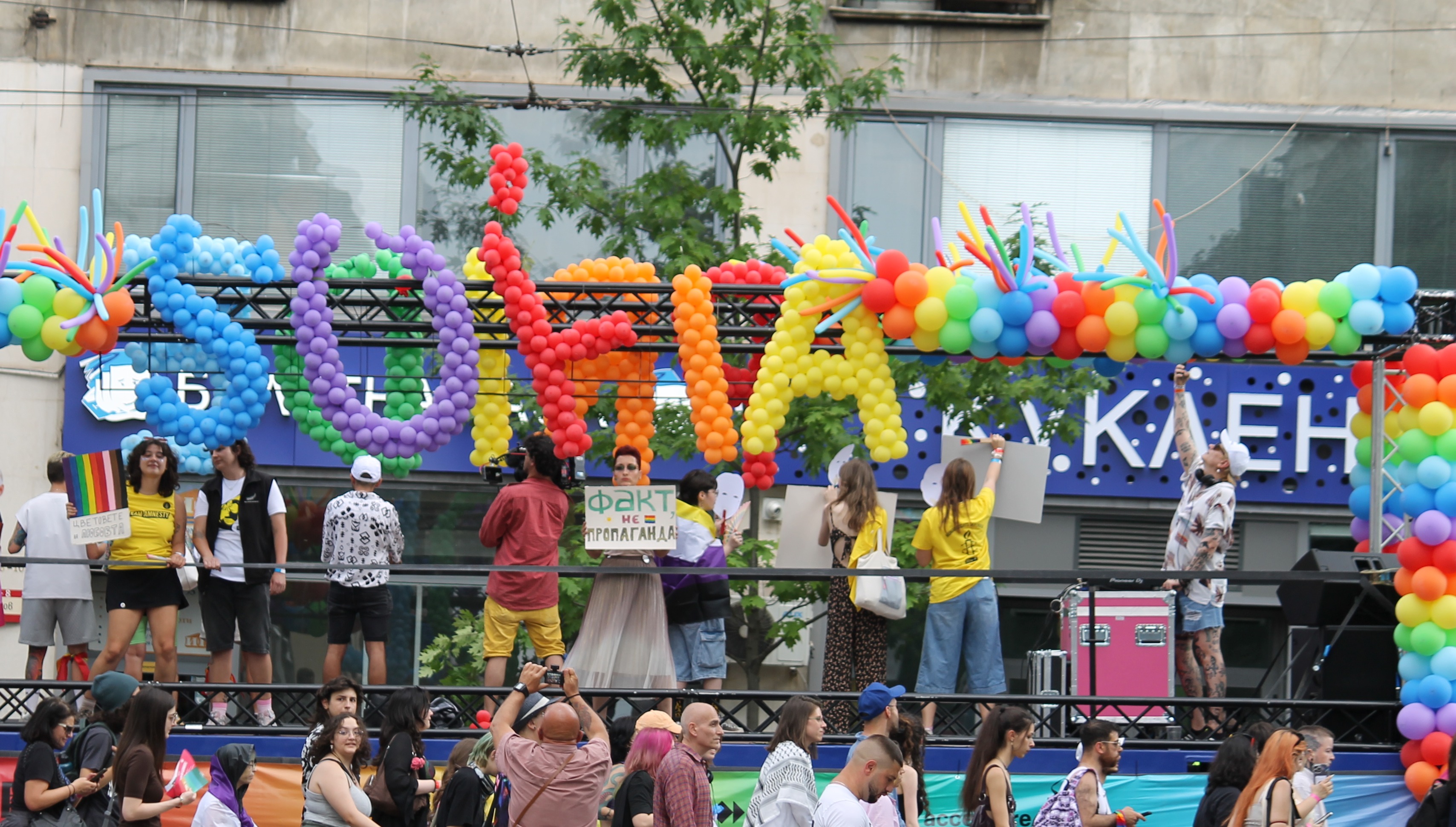
Which brings us to her most recent moment in the spotlight: the “March for the Family” held in Sofia on 13 June 2026. The march, a counter-protest to that day’s Sofia LGBT Pride, is organised by a coalition of conservative and Orthodox Church-aligned groups, and this year had the full support of the current Bulgarian government. Kalina turned up dressed in a peasant-ish dress in the Bulgarian colours of white, green and red, and positioned herself at the very front of the procession, ahead of the Guard’s ceremonial brass band, alongside her husband Kitín. Organisers claimed she hadn’t been invited (even though everyone is welcome to join as it’s not an invite-only event) and supposedly had asked her more than once in the opening stretch of the route to move behind the band – to little effect, since she stayed at the front for some time regardless.
What followed was a familiar pattern: footage and photos of Kalina swaying along to the march music in heels quickly went round Bulgarian social media, with large numbers of commenters declaring she appeared visibly drunk while fronting a procession ostensibly about family values and sobriety of public life – pointed, given her existing drink-driving conviction. The organisers, keen to put a distance between themselves and the moment, issued a statement insisting her presence at the front was entirely her own initiative and not something they could be held responsible for. None of that stopped the memes or viral clips, which by all accounts comprehensively buried the march’s actual message under a pile of jokes about the princess instead.
So, in the end, it seems the only thing keeping the Bulgarian royal family in the public conversation these days isn’t the crown, the politics or the glamour – it’s Princess Kalina’s ongoing talent for turning up to events and unintentionally becoming the drama.
I know for certain my grandfather, or for that matter all those Bulgarian royalists who’d raise a glass to Tsar Boris every 30 January, never imagined it would end up like this – not with a restoration, nor even with a scandal of substance, but with their beloved dynasty’s last gasp of relevance riding on a princess’s arms and a (suspected) drunken wobble at the front of a parade for traditional values. Then again, maybe my grandfather would have found that ending entirely fitting.


_(52052470251)_(cropped).jpg)





.jpg)















.jpg)







.jpg)










_logo.svg.webp)








.jpg)
















_(8249451687).jpg)