2025 marked 50 years since a bold new project was launched in Australia – multilingual broadcasting. Experimental radio broadcasts informing Australia's ever growing non-English-speaking communities about the launch of universal healthcare started in Sydney and Melbourne in June 1975. These would later transform into fully fledged radio stations 2EA and 3EA broadcasting in up to 68 languages. Television broadcasts catering to this audience started in 1980 with Channel 0-28. Eventually these two media outlets would be known as the Special Broadcasting Service (SBS), Australia's dedicated multicultural broadcaster, available nationwide.
Kids, did you know that back in the dark days of the 1970s, most countries, including Australia, only had a handful of TV stations at most to choose from. In Australia's case, when it came to the big four cities at the time, Sydney, Melbourne, Brisbane and Adelaide, there were 4 TV stations – Channel 2 (i.e. ABC, the public broadcaster), and the commercial stations Channels 7, 9 and 10. Spoilt for choice! Perth didn't join the four-channel club until 1986! The rest of Australia would have just the ABC and a local commercial station.
What was radio and TV like then in Australia pre-SBS?
Very Anglo! Nearly everyone on these stations was white and English-speaking background. Hardly ever would you see anyone from Australia's many ethnic migrant minorities, let alone indigenous peoples. And to top it off, most presenters spoke in a cultivated Australian accent best described as the Australian version of the UK's Received Pronunciation (RP) or the US Mid-Atlantic accent. It was to the point that the ABC post-WWII even imported BBC speakers so as to teach the colonials how to speak "proper". Rarely did anyone in Australia naturally speak like that in everyday speech. So having a TV station where a majority of presenters where not Anglos and even spoke in various accents not standard to mainstream Australia was revolutionary.
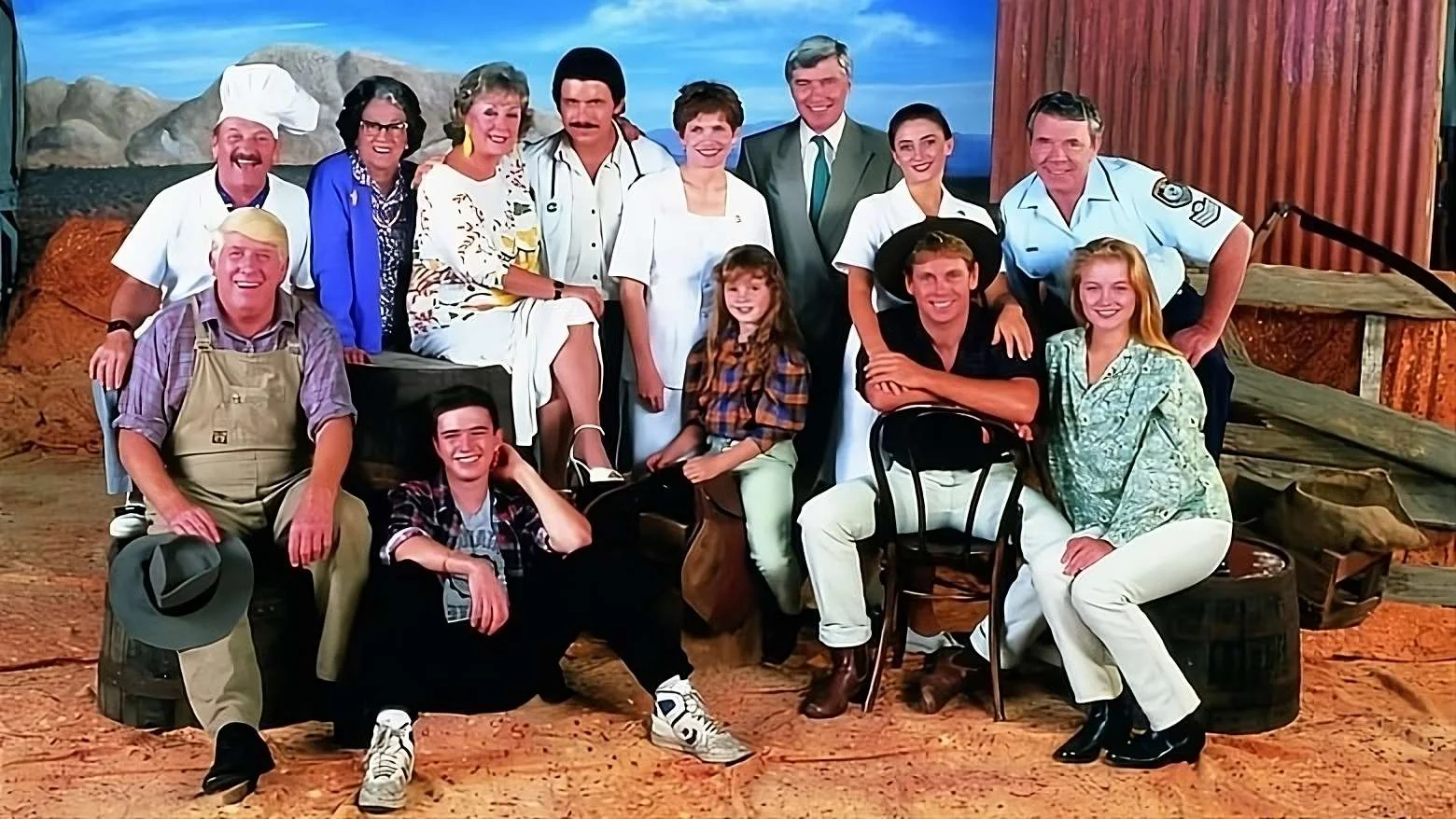
SBS was first concentrated in Australia's two largest cities, Sydney and Melbourne, but slowly throughout the 1980s its reach expanded to cover other parts of the country. When it was announced in 1985 that SBS-TV was coming to my hometown Adelaide, my family was super excited. Just one thing though... it was only available on UHF, which required a special TV antenna. When SBS-TV started in Adelaide on 30 June 1985, we hoped that our durable Panasonic TV and existing antenna would be able to get the new station. After a bit of fiddling on the TV, and my father climbing onto the roof to raise the existing TV antenna a bit, it came on... we had SBS! And from the get go, it was our go-to station. Finally we were able to watch TV shows and films in our languages and many others, with people who looked and talked like us. Little did I know then that when SBS claimed that it was 'bringing the world back home', it truly was. Thanks to SBS and its eclectic mix of television shows and films clearly aimed at informing and entertaining Australia's ethnic minorities, that I would be exposed to an amazing array of audio-visual delights, most of which were to form my worldview and stoke my interest in venturing beyond my Australian suburban cocoon.
So here's a list of the things I got to see thanks to SBS...
Naturally, anything that was from Yugoslavia or Bulgaria was guaranteed viewing in our household, especially if it was in Macedonian. Seeing and hearing veteran SBS presenter, producer and journalist Margarita Vasilieva speak in perfect standard Macedonian on TV (and later on radio) was a proud moment. Margarita's brilliant voice has provided the indent announcements for the language services on SBS Radio for decades. She is also one of the longest serving employees at SBS, having presented and produced SBS Macedonian continuously since 1980... yes, 45 years! Love you Margarita!
The critically acclaimed, politically critical Macedonian film Srekjna nova '49 was shown on SBS.
I remember watching programming from Yugoslavia, whether it be the children's puppet show Lutkomendija, the Macedonian children's series Beloto ciganche (the Little White Gypsy), cult 1980s soap Bolji život (A Better Life) and my mother's favourite Požorište u kući (Home Theatre).
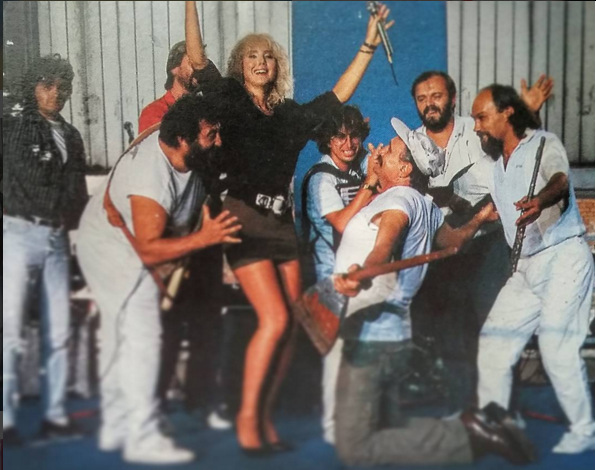
SBS in the 1980s would provide a wide range of entertainment for its ethnic audience, a focus dropped after the adoption of the broadcaster's revamped charter in 1991 that required programming that would appeal to a wider Australian audience. When it came to entertainment for Yugoslavs in Australia, SBS certainly knew to put on Yugoslavia's superstar Lepa Brena. I still have the VHS tape on which we taped the SBS broadcast, complete with English subtitles, of Lepa Brena's 1984 New Year's Eve show, as well as of the TV Belgrade documentary 'Na svoj način' (In Her Own Way) about Lepa Brena and her tour of West Germany at the time. And I remember the time when SBS showed Lepa Brena's cult classic 1987 musical film Hajde da se volimo. My family was at an evening event at our local Macedonian Hall when word started going around that SBS that evening at 11 pm will be showing Lepa Brena's film. Trust me, I've never seen the Macedonian Hall empty that quickly any other time. We all had to go home and watch our star... and we were not disappointed!
Bulgarian films would be shown occasionally. I certainly remember watching the film adaptation of famous Bulgarian writer Elin Pelin's Yan Bibiyan, best described as Bulgaria's answer to Dennis the Menace. I sang the film's title track with my second cousin in Bulgaria last month! Also, the SBS test pattern would often feature music from the then up-and-coming genre of 'World Music' and the recordings of which were available for sale from the SBS Shop. One time I was shocked to hear Bulgarian folk songs sung by a women's choir being played, of all things. That's when I found out that the Mystery of Bulgarian Voices was actually a sensation. I never knew that people outside of Bulgaria had even heard this stuff up to then. When I told my parents and grandparents that this was on the SBS test pattern, their reaction was "why would anyone want to hear those cats screech like that?"
Australia had large and visible communities of Greek-speakers from around the world. My grandparents were fluent Greek speakers, so they'd like watching the many Greek films SBS would show. What stood out for me were the banal Greek comedies. I'm still trying to find the 1982 comedy 'Socialism or Not' where two Greek journalists hilariously interview Greeks from all walks of life about the new PASOK government. Think Greek Carry On, and yes, there always had to be a drag queen who always had the best lines. The most intense (OK, at times pretentious) Greek film I saw on SBS was O Thiasos (The Travelling Players) by the acclaimed Theodoros Angelopoulos. It goes on for almost 4 hours and consists of only 80 scenes, so there are plenty of times where you get 10 minutes of the actors walking down a road. I was enthralled by this film, primarily because it was set in the period 1936 to 1952 and filmed in the area around Florina/Lerin, both time and place where my grandmother lived.
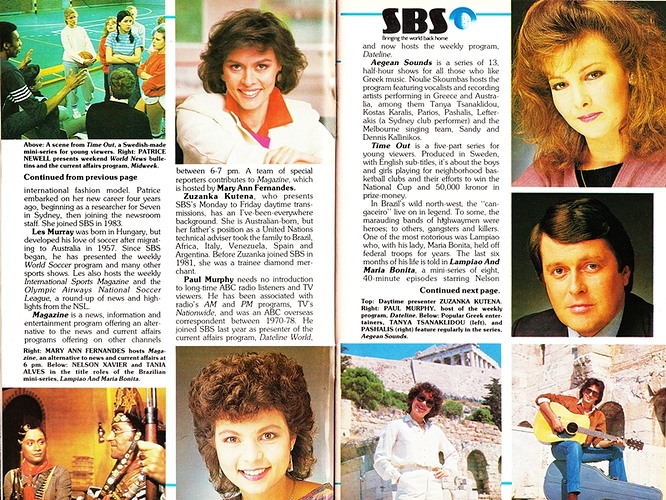
SBS also had its own Greek music show Aegean Sounds, always with routines by a campy dance troupe. Every Sunday morning also saw the Greek government news round-up show Apo tin Ellada (From Greece) shown, always full of propaganda directed against "Skopia". The time when they did a report on how horrible it was that the Russians forced Greeks to change their names was hypocrisy to the max, but then again, hypocrisy is a Greek word.
SBS had to tread carefully when it came to the ever growing Macedonian question in Australia at the time. There were episodes of public forum show Vox Populi that pitted the Macedonian and Greek communities each other. Then in 1994, SBS showed a Belgian documentary about Macedonia, which at the end showed a clandestine Macedonian celebration happening in the hills outside of a village near Florina/Lerin, Greece... and my family saw that amongst those gathered included my great-aunt!
If there was anything that my father absolutely adored on SBS, it was the Turkish films. He always said that he could always relate to them culturally – it's something that continues to this day with his obsession for Turkish soap operas. For me, the most remarkable Turkish film I saw on SBS was Yol (Road) by legendary Turkish/Kurdish director Yılmaz Güney. The story behind the film is truly remarkable, especially as Güney directed the film through messages smuggled from his prison cell.
Not surprisingly given Australia's huge Italian population, Italian variety shows would feature heavily. Our family's favourite was Sotto le stelle, which used to be show on Friday nights.
I remember watching the bizarreness of 1976 Dutch film Peter en de vliegende autobus. Yes, it's a film about a flying bus!
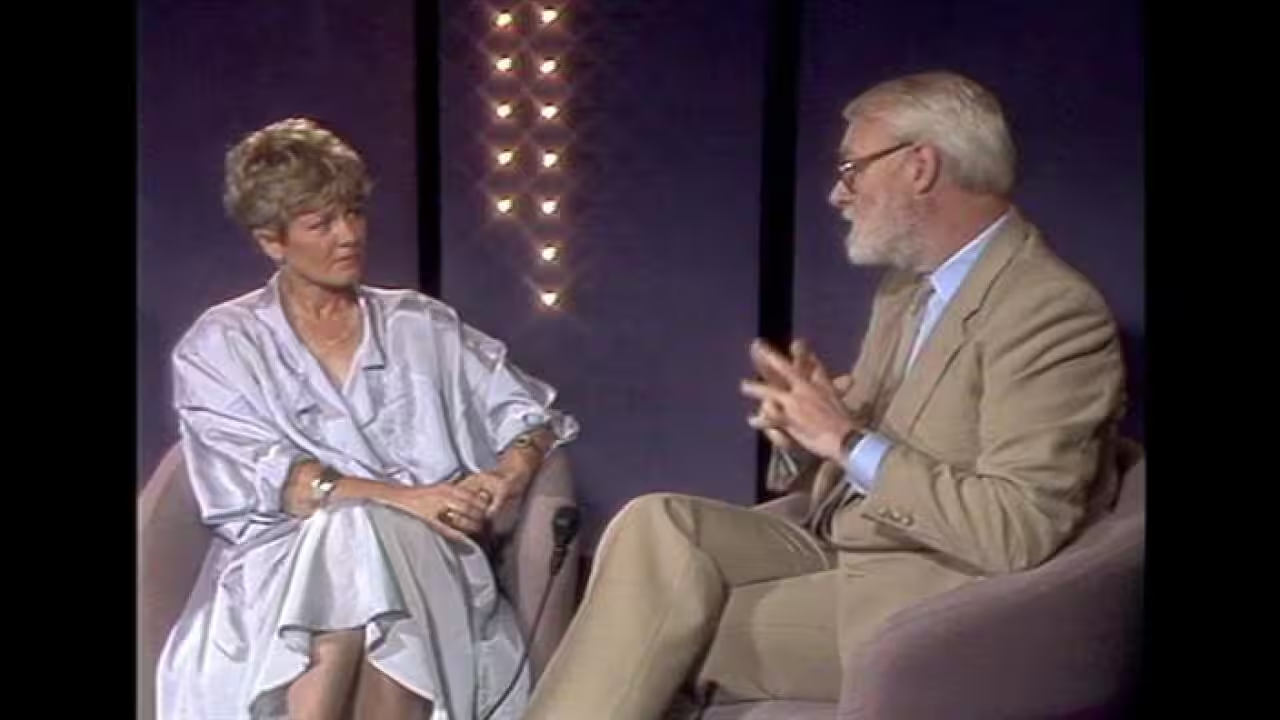
David Stratton, one of Australia's most legendary film critics, would present his movie of the week. One of David Stratton's films that made an impression on me was Messidor, the “Swiss Thelma and Louise” released a decade before the US film. Stratton and fellow film critic Margaret Pomeranz gained cult status in Australia when for decades they would fight it out with their differing views on The Movie Show.
What was once must-see holiday viewing on SBS? Why of course, it was Hungarian rock opera István a Kiraly
My grandparents and I enjoyed watching the Czechoslovakian TV drama series Hospital at the End of the City, which was a worldwide hit. There were also some pretty amazing Czechoslovak films.
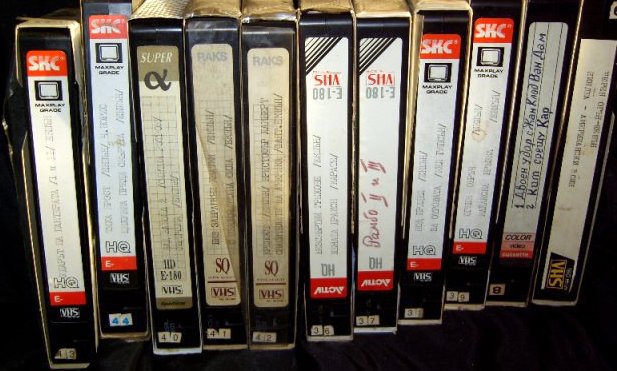
SBS was the place to watch great documentaries. I started taping them onto VHS and rewatching them constantly – that was our streaming back in the day. One that stood out was UK Channel 4's The Other Europe by Jacques Rupnik (I ordered the book from SBS Marketing!)
Thank you SBS for exposing me to the rich world of Glasnost-era Soviet cinema! I was privileged to see such ground-breaking films soon after their release in the USSR: Idi i smotri (one of the most realistic war films ever made), Gorod Zero (Soviet absurdism at its stunning best), Malenkaya Vera (controversial on its release for its unforgiving, warts-and-all portrayal of contemporary Soviet life), Fontan (a comedy about the absurdity of Soviet life in the late 1980s), Nebesa obetovannoe (a tragicomedy portraying the despair and hope of the last year of the USSR) and Zabytaya melodiya dlya fleyty ("How can we ban this?")
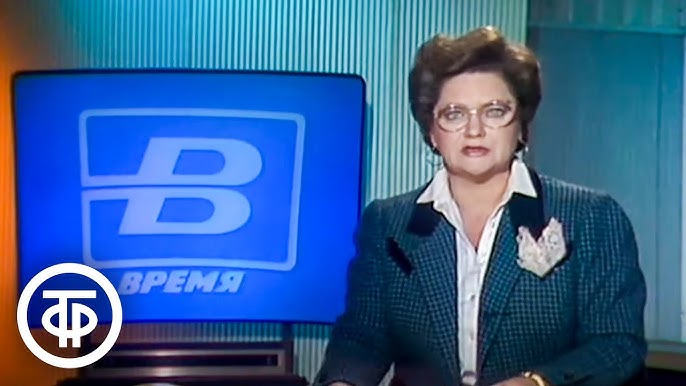
It was quite a revelation that in the spirit of Glasnost, in 1990 SBS started beaming in live the main Soviet news program Vremya. As someone who was absolutely fascinated in all things Soviet, I was lapping it up. I'd even set the VCR to record it when I was at school (yes, weirdo!). Vremya was what prompted me to start properly learning Russian. Most thrilling was watching Vremya during the last ditch coup attempt by Soviet hardliners in August 1991. But the thing that enthralled me most of all about Vremya was... the weather reports – the temperatures, the images, the music! I loved it all! I had hours of Vremya weather reports on VHS, which I have digitised. I actually shock people from ex-USSR when I mention the finer details of these weather reports as only people who lived in the USSR at the time really know about these (like humming Manchester-Liverpool). Due to the time zone, SBS would show Vremya's Far East edition, so the weather reports would be of places such as Kamchatka, Vladivostok and the coldest inhabited region in the world, Yakutia (with a top temperature of -53°C!).
The Soviet spy series TASS is Authorised to Announce was also shown on SBS. Can you imagine it? A staunchly western ally (Australia) was showing a Soviet TV show that depicted the KGB as the good guys. I remember how the scenes would go on for ever. It certainly made the USSR look glamorous.
A few years ago I had a great discussion with the mother of a friend of mine whose claim to fame was that she was the main Hebrew subtitler for the Friday-evening Arabic musicals that were standard showing on the only TV station in Israel at the time. And how come I could talk about these musicals? Of course, because Arabic musicals from Egypt and Lebanon were also a staple on SBS. I absolutely loved the music, melodrama, comedy and glamour. Basically, if Sabah was starring, I was watching it!
SBS was the gateway for me for Indian Bollywood films. Just like with the Arabic musicals, if we saw that a Bollywood film was coming up on that evening's TV line-up, the whole family would watch it.
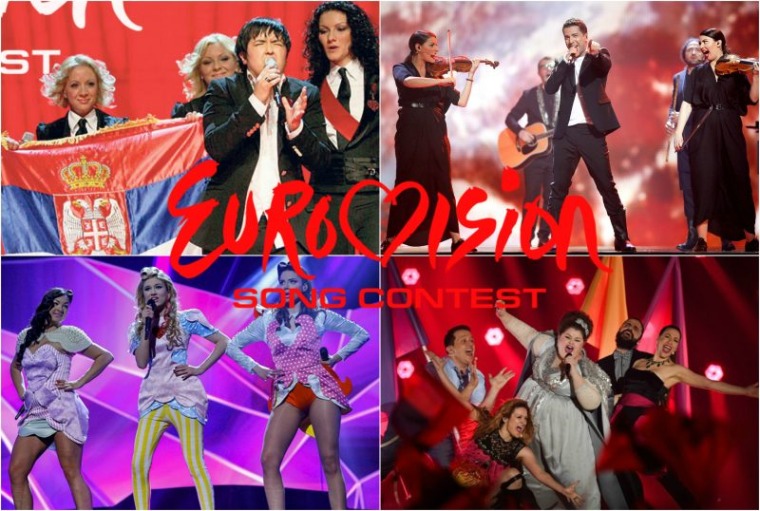
Eurovision gained its popularity in Australia thanks to SBS, which has been broadcasting the show since 1983. It's SBS's highest rating show every year. More about Eurovision, Australia and the major role SBS played here.
One of Japan's most successful TV exports, the TV series Oshin was shown on SBS. The episode of when disaster strikes when the grand opening of Oshin's store is destroyed by the Great Kanto Earthquake of 1923 is a classic!
Somewhat surprisingly, Latin American soap operas were not as regular on SBS as you'd expect. I learnt Spanish at high school and university, so I was interested in any Spanish-language content, but the Mexican soap operas would never really grab my interest, though I did start watching the iconic Cuna de lobos, with Catalina Creel, the evil matriarch with the eyepatch.
SBS would sometimes show some unintentionally crazy programming. One that stood out was a Ceaușescu-era Romanian variety show, complete with dishevelled female dancers with shocking green eye shadow, bad peroxide blonde hair and ill-fitting costumes. While watching this show, my father said that in true Eastern-Bloc style, it was only a matter of time that a Russian song would feature... and he was right – a rather weird interpretation of Kalinka. But to give an idea of what Romanian variety shows of the time looked like, check this clip of Angela Similea or, if you're brave enough, this.
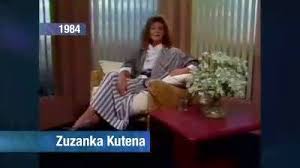
A feature that set SBS apart from other TV channels in Australia, and an element drawn from European TV at the time, was the prominent role of continuity announcers/presenters – "providing live, out-of-vision links between TV programs, introducing upcoming shows, giving schedule info and acting as the channel's friendly, guiding voice, ensuring a smooth flow (continuity) and building viewer engagement, much like a trusted companion." The one who has had the most enduring legacy is the glamorous Zuzanka Kutena, the main face of SBS in the mid-1980s until she left the station to pursue a career in academia. Granted, mention her name to Aussies, even those who would watch SBS all the time in the 1980s, and they'd have no idea who she is... but they'll certainly know her catchphrase. When announcing the upcoming line-up on SBS, Zuzanka would regularly chuck in a casual "can't wait for that one" for one of the shows. This catchphrase later became the centrepiece for Australian comedic actor Marg Downey's Fast Forward character – the SBS Woman – who bore a striking similarity to Zuzanka Kutena. More out of an homage, the SBS Woman would announce rather exaggerated descriptions of the seemingly weird television shows on the station. Over the years of the character's existence, the SBS Woman's hair grew bigger and bigger and the nature of the shows crazier and crazier. You can check out the clips here. To this day Aussies say "can't vait for that von" in that droll accent.
In 1989 SBS launched Eat Carpet, a show featuring often bizarre short films from around the world, and presented by Annette Shun Wah – it was quite rare for Asian people to appear on TV in Australia, so SBS yet again paved the way here. The story behind the title of the show was that you'd want to eat carpet if you missed it. I remember particularly seeing one short film from the US in the 1970s where nine people passed around plastic balls in formations and patterns – riveting stuff!
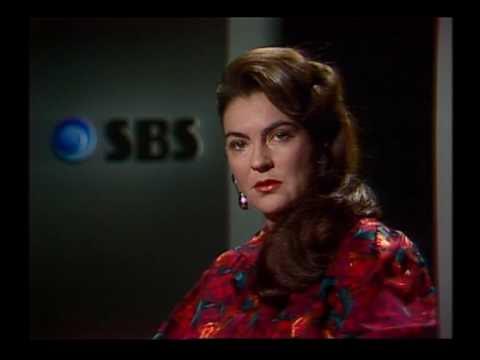
George Donikian, Christine Koutsoukos, Mary Kostakidis, Indira Naidoo and the legendary Lee Lin Chin, who used to present Australia's results at Eurovision – all famous newsreaders, and all from non-English and/or non-White backgrounds, all started on SBS. And SBS with its "World News" was true to its word, providing more comprehensive reporting of worldwide events than any of the news broadcasts on Australia's commercial stations.
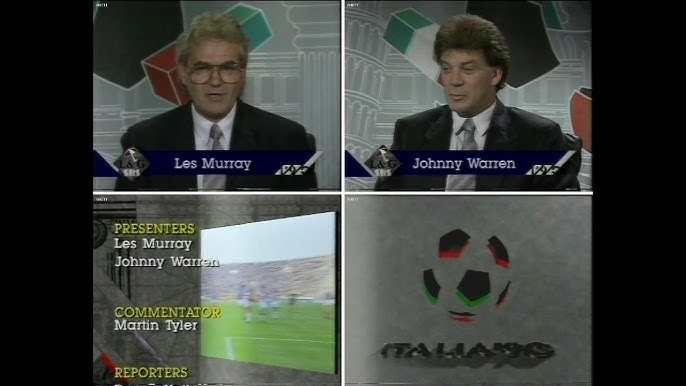
SBS also gave generous coverage to soccer. Mainstream (Anglo) Australia at the time side-lined soccer (as it's known in Australia – "football" otherwise is either Australian football or rugby, depending on region) and cruelly disparaged as "wogball". The face of soccer on SBS and then for Australians in general was Hungarian-born Les Murray, who coined the term "the world's game". Murray's contribution to popularising soccer in Australia was so great that he was given a state funeral after he died of cancer in 2017. A particular soccer highlight for me was the coverage on SBS of the 1990 World Cup in Italy.
OK, mention SBS-TV to many Aussies and the first thing they'll mention is how it was known for its rather racy content – it's all art, you see. SBS was notorious for showing alternative European films where everyone seemed to be getting their kit off. And not just for straights... there was plenty of LGBT content even during the 1980s and early 1990s – a time when LGBT people faced widespread stigma particularly due to the AIDS crisis. For instance, Friends Forever, a gay film from Denmark, featured full-on uncensored gay sex on screen... so you can imagine what a surprise that would be to any unsuspecting Aussie flicking through the five TV stations on offer to come across that. The same goes with the controversial Filipino film Sibak: Midnight Dancers, which was banned in the Philippines and other countries such as Canada for its explicit content, but was shown on SBS soon after its release in 1994.
And no mention of SBS can go past the role it played in making subtitles accepted in Australia. Prior to SBS-TV, in the rare cases where anything was broadcast and shown in Australia in a language other than English, then it would be dubbed. Examples include the 1967 English dub of the classic Soviet film epic War and Peace, and the much-lampooned dubs of the massively popular Bruce Lee films. With most of SBS-TV's pre-1991 content not in English, to reach audiences beyond those who knew the broadcast language, subtitles were the way to go. As Cathy Carey of SBS said to Australian newspaper The Age in 2010: In an era when SBS prided itself on being the world’s only multicultural, multilingual broadcaster, the quality of SBS subtitles set a benchmark worldwide. In the days when SBS saw its role as providing an alternative to the programming seen on other channels, a majority of SBS’s programs were in languages other than English, with subtitles. Providing services to news and current affairs, local productions and even sport, the subtitling unit lay at the heart of SBS TV. But the heyday of the subtitling unit was short-lived, as programming of foreign language material, once the broadcaster’s raison d’etre, was downgraded. The advent of advertising, initially only between programs, was quickly followed by a policy of excluding non-English language programs from prime time. Leaving aside the morning WorldWatch broadcasts, which are not subtitled, it’s now not unusual for the SBS One schedule to feature only one or two non-English-language programs a day."
Even on the SBS in Language website it says “SBS is synonymous with subtitling. Our subtitling unit is one of the largest in the world, and our titles are globally acclaimed to be some of the best.” SBS also pioneered having subtitles in yellow for clearer viewing, as well as policy to subtitle all foreign-language programming, even if subtitles were already available (only on rare occasions when it wasn't technically feasible otherwise did non-SBS subtitles appear) as the text that appeared on screen needed to be in written Australian English – and trust me, Aussies can notice when subtitles are in a non-Australian variant of English.
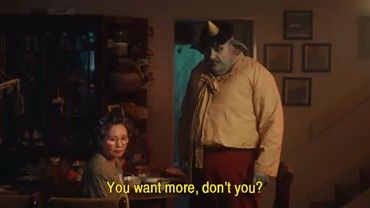
And then I get flashbacks of random films and TV shows I saw on SBS. Such as the time there was this Israeli comedy skit film, where someone while doing a random car inspection said he's heading off to Tiberias, and the brutish woman who'd harshly slap random men on the back and shout at them "Shlomo!" while at an intersection in central Tel Aviv. Yes, classic SBS!
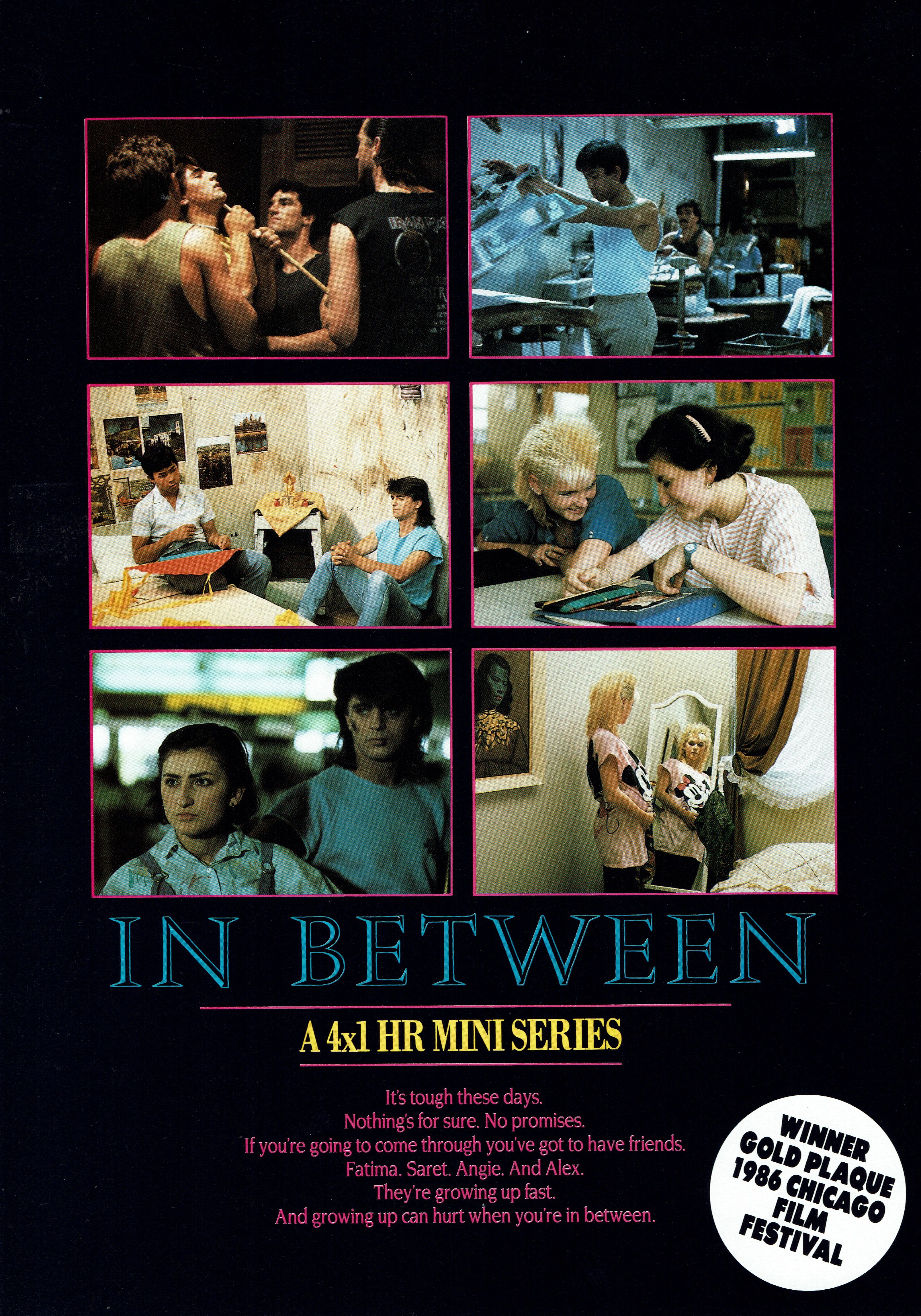
I've left my most significant SBS show to last – In Between
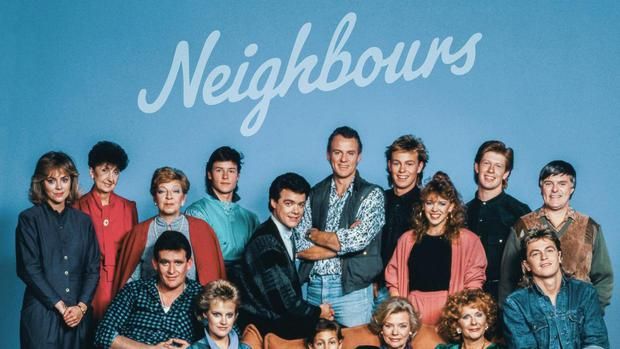
1987 Australia couldn't get enough of its own two major daily soap operas – Neighbours and Home and Away. A major part of their success was that many Australians found the characters on these two soaps to be very relatable. I admit that I did start watching Home and Away but I was never a fan of Neighbours, and one of the reasons why is that these soaps presented a completely Anglo-Celtic-centric Australia far different from what I and millions of other Aussies from a non-English-speaking background (NESB-ians as we'd jokingly referred to ourselves) were living.
In March 1987, SBS offered a more realistic alternative – In Between. Set in the inner suburbs of Melbourne, the same city as Neighbours, the cast starred Australians of Anglo-Celtic, Macedonian, Turkish and Cambodian origin, most of whom were not professional actors. The mini-series dealt with real issues affecting young Australians of non-English-speaking and working-class background, and came in bilingual dialogue not in the minority languages expected at the time (Italian, Greek, Chinese, Vietnamese and Arabic were the most spoken minority languages in 1980s Australia). The fact that one of the characters was Macedonian – Alex Petrovski – sold me and my family, of course. If you want to know what it was like growing up Macedonian in Australia in the mid-1980s, it's here on film. This is what SBS did – provide a platform for all Australians. We finally saw ourselves on screen!
For more about SBS in the 1980s, check out this great article released for the channel's 30th anniversary
Happy anniversary SBS! Thank you for enriching me, Australians and Australia. May you go back to enlightening Australian audiences with the world and the true multicultural nature of Australian society!


























.%20A%20day%20of%20campaigning%20%E2%99%80%20%E2%80%A6%20or%20a%20day%20to%20buy%20flowers%20%F0%9F%92%90.jpg)