Most deposed European royal families have the decency to fade quietly into minor nobility; the occasional wedding photo in a glossy magazine the only proof they ever wore a crown. The Zogus, Albania’s royal family, obviously did not get that memo… and to be fair, they never had much of a crown to begin with. The dynasty as we know it was founded in 1928 by Ahmet Zogu, a former Ottoman provincial chief who in 1925 became leader of the fledgling independent Albania and decided, reasonably enough by his own logic, that the job needed a better title. So the Albanian Parliament obliged, a dais was found, an oath was sworn on the Bible and the Koran in keeping with Albania’s unique (for the Balkans) accommodation of all religions, and Europe’s only Muslim king was created without anyone bothering to actually crown him – there was no fancy, huge-budget, tradition-steeped ceremony with a crown at all; just a vote and a speech, which didn’t stop contemporaries equating him with the self-anointed Napoleon anyway, on the basis that there’s nothing more Bonapartist than simply deciding you’re royal (-adjacent) and getting on with it.
Fascist Italy’s 1939 invasion of Albania brought an abrupt end to the country’s 11 years of royal rule. For the next eighty-odd years, the family went on to generate a genuinely operatic amount of material: we have bazookas, baby elephants, an Australian socialite in the mix, an armed insurrection… and a present-day prince who has, somehow, settled into the most normal life out of the lot by comparison.
It is, in other words, a family that never had the throne but never stopped behaving as though they might get it back any minute. Let’s get into the nitty-gritty of it all. Cue the intro music…
Leka I, “King of the Albanians” (1939–2011)
When the obituaries came out for Leka I in 2011, they somewhat undersold him, if anything. However, in his wife’s own obituary in 2004, the Telegraph described Leka as “a 6ft 9in tall, six-gun-toting giant who has never shaken off the aura of his country’s bandit culture”, which, allowing for journalistic flourish, was not an unfair summary of how he conducted himself for the better part of fifty years.
Leka’s mother was Geraldine Apponyi, the daughter of a Hungarian count and an American heiress, whom King Zog married in 1938. Leka was born the following year, but the Italian invasion of Albania two days (!) after his birth forced Zog and his family into permanent exile. The Albanian communists under Enver Hoxha formally abolished the monarchy in 1946.
The royal family then settled in the UK, with their first residence being The Ritz in London (nice digs!). In 1946, Zog and most of his family left England and went to live in Egypt at the invitation of King Farouk (who was of part-Albanian origin). After Nasser overthrew Farouk in 1952, a few years later the Zogus left for France. After King Zog’s death in Paris in 1961, the “Albanian national assembly in exile” proclaimed his son, Leka I, as “King of the Albanians”.
Leka was, by his own account, a man permanently engaged in liberating Albania from communism, though the lines between fact and cosplay here did tend to blur. In the late 1960s, it is alleged Leka I set up a training camp for an “Albanian Liberation Army” in Libya, a plan that collapsed along with King Idris’s regime in the 1969 coup led by Muammar Gadaffi. According to the South African journalist Jacques Pauw, Leka later discussed with notorious arms smuggler Dirk Stoffberg (who, by Pauw’s description, was “a murderer, conman, money launderer and self-proclaimed killer”) training a guerrilla force of up to 1800 men to invade Albania and toppling Enver Hoxha (now can we understand why Hoxha built those 750,000 bunkers). Nothing came of it, except for those bunkers in response, though the correspondence survived to be quoted back at Leka.
By the early 1960s, as friends of General Franco, Leka and his mother were living in fascist Spain, which was also the base for the deposed Bulgarian royal family. Madrid was where the legend started. Leka supposedly ran what amounted to a private war room at his villa, training – or living the fantasy of training – liberation forces. Leka eventually exhausted the patience of post-Franco Spain, and in 1979 fled the country owing, by one account, millions of pesetas in debts and having a personal arsenal that had led to several arrests on arms-smuggling charges, the most well-known occurring in Thailand in 1977. The flight out (to Ian Smith’s Rhodesia, no less) very nearly became a diplomatic incident in its own right: when his plane stopped to refuel in Gabon, local troops or armed mercenaries (depending on who you talk to – some claiming Hoxha had hired them to seize Leka, though the real reason was more likely score-settling of another, murkier, kind) surrounded the aircraft. Leka saw them off in the most, erm, diplomatic way possible: by appearing in the doorway of the plane brandishing a bazooka. It’s just another day in the office, really.
The Rhodesia sojourn didn’t last long. Leka later said of his hurried exit that he would have been the best gift Robert Mugabe could have given the Hoxha government in Tirana (Enver Hoxha certainly lived rent-free in Leka’s head). And so it was on to apartheid South Africa, which proved a more durable arrangement, not least because the white-minority government there granted Leka and his family diplomatic status. Life for Leka, wife and son (born 1982) continued in a compound near Johannesburg.
With the Communists toppled in 1991 but then rebranding as Socialists and winning the subsequent multiparty elections in Albania the following year, Leka saw his opportunity to visit his former kingdom in 1993. He was expecting his long-suffering subjects to greet him as a saviour upon his triumphant return. That fairytale didn’t happen. Entering in on a passport issued by his own Royal Court-in-exile, which the Albanian government rightfully refused to recognise, Leka had his profession listed down humbly as “King”. The visit turned out to be a non-event; Leka was asked to leave immediately and duly informed that he would be readmitted only if he were to obtain an ordinary (read: genuine) citizen’s passport.
Leka was obviously delulu of how much (i.e. little) support for the monarchy there was inside Albania. However, throughout the 1990s when Albanians in former Yugoslavia, especially in Kosovo, were facing repression, Leka’s advocacy for a unified ethnic Albanian nation gained him widespread support among the Albanian diaspora (he was, after all, “King of the Albanians”). But given his unsavoury past and somewhat erratic behaviour, this positioning caused deep concern among Albania’s neighbours and in international circles.
That didn’t stop Leka though. He pursued his goal relentlessly, nay, recklessly. In 1997, Leka returned once more to Albania (at the time, it was reported he entered clandestinely and illegally, like on an armed mission) amid the violent uprising that engulfed Albania followed the collapse of pyramid investment schemes. First he tried to secure a support base in the traditional lands of his ancestors in the north of the country. However, the return of Leka, who portrayed himself as a source of stability, served only to further inflame Albania’s volatile politics.
A referendum on whether to restore the monarchy was held simultaneously with parliamentary elections in June 1997, resulting in an overwhelming vote for maintaining the republic. The monarchists blamed the socialists i.e. former communists for manipulating the results, which led to more mudslinging. Leka then decided to hold rallies calling on Albanians to “protect their vote”. On 3 July, dressed in military fatigues and with a grenade and a pistol strapped to his leg (on brand for him) and flanked by armed guards, he greeted around 2000 supporters in Tirana’s central Skanderbeg Square to chants of “Albanians will defend their vote. Down with the communists. We want the king”. In what can be described as “pure Albania”, a brief armed standoff and a deadly gunfight occurred soon after, resulting in one death and Leka being shot in the leg (ouch!). Leka later failed to respond to a summons from the prosecutor’s office to appear in court on the shenanigans in the square, and instead on 12 July hightailed it out of Albania on a private jet back to Jo’berg. In his absence, he was tried and sentenced to three years’ imprisonment for attempting to organise an armed insurrection.
The controversy, and arms, kept following him regardless. In 1999, after the new post-apartheid South African government had soured on its house guest, police raided Leka’s luxury Johannesburg compound and found your usual household items: grenade launchers, anti-personnel mines and roughly fourteen thousand rounds of ammunition – a remarkable amount of ordnance for a man with no actual army and who now claimed not to be a “king” as stated on his novelty royal Albanian passport but as a “commodity broker” (yes, but what “commodities”?). The Albanian Royal Court’s own account adds a stranger post-script: while in custody Leka fell suddenly and severely ill, and the family suspected poisoning, though no cause was ever established; the charges were dropped within three months and the collection quietly returned.
For all that, he was touchy about the label “arms dealer” specifically. He always denied the accusation, insisting it was “communist propaganda”. Leka went as far to sue, and win, two defamation cases against French magazines that had called him such. Whatever the precise legal distinction between a man with fourteen thousand rounds of ammunition and an arms dealer, the courts apparently found one.
With sentiment changed in Albania after the millenium, more than 70 Albanian parliament members petitioned for the royal family to be allowed to return to Albania. Albanian president Alfred Moisiu rather surprisingly granted Leka a pardon in 2002, paving the way for him and his family to return legitimately to their homeland for good. Leka also had some confiscated property restored to him. This time round though, having finally learnt the hard way, Leka largely refrained from involving himself in politics, and from 2005 officially withdrew from public life.
What? You want some more absurdity about Leka? OK, here’s something extra. Leka struck up a friendship with Ronald Reagan (of course!) during Reagan’s time as Governor of California, and in 1967 marked the relationship by gifting him… a live baby elephant – a gesture that says a good deal about a man who never let the absence of a throne cramp his sense of scale. Apparently, the baby elephant’s name was Gertie, but Nancy Reagan deemed the name “unrefined” and renamed the pachyderm “GOP” – geddit, because the elephant is the symbol of the “Grand Old Party” aka Republicans *eyeroll*.
Really, Nancy?! Did your astrologist come up with that one?
Susan, the Australian Albanian queen crown princess (1941–2004)
January 2024 saw the Australian media go into overdrive when news broke that Queen Margrethe II of Denmark announced her abdication in favour of her son Frederik.
Why would the Aussie media be that interested in Danish royalty, you may be asking?
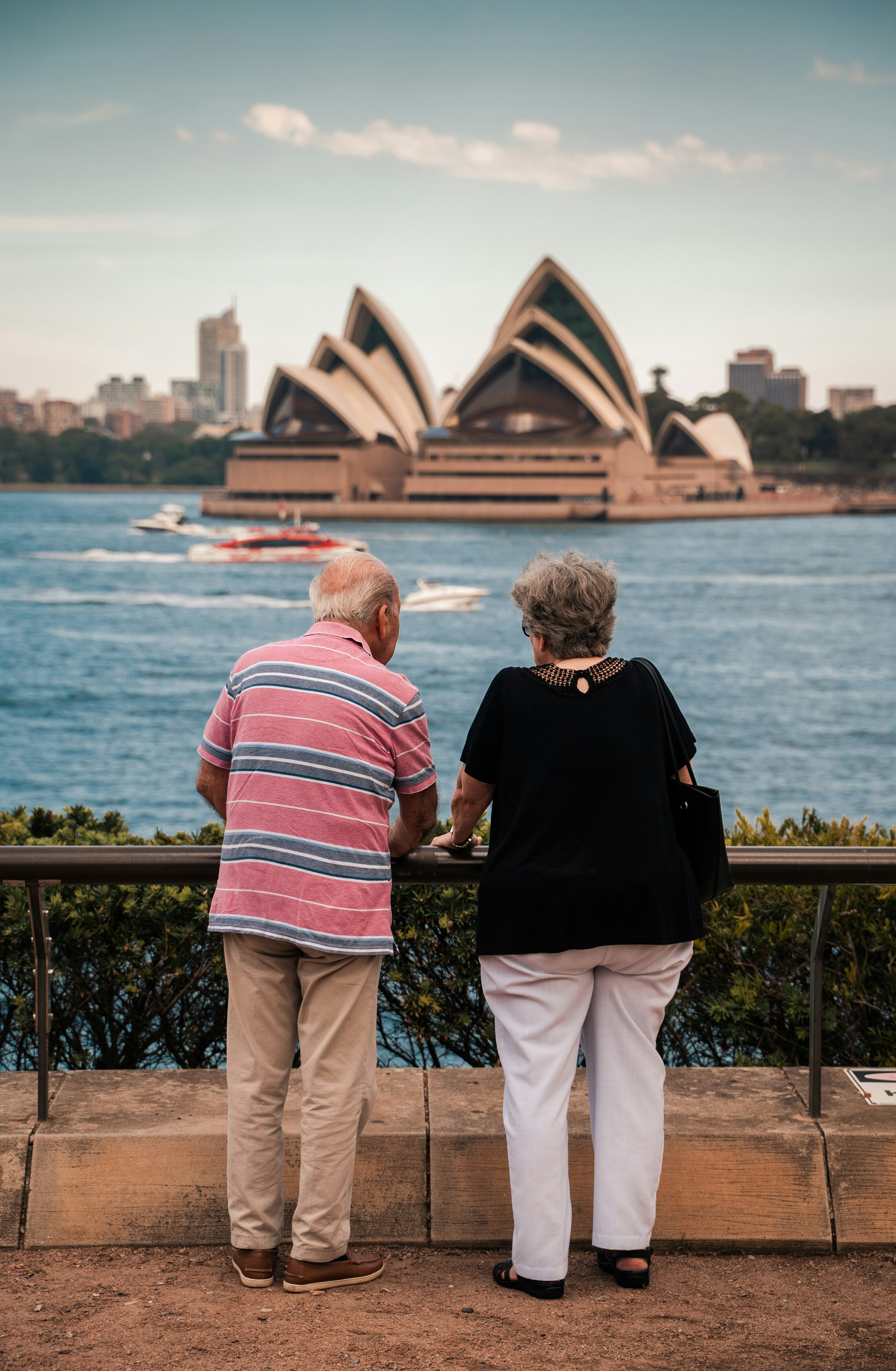
Well, as most Australians know, Tasmanian girl Mary Donaldson met some Danish bloke at a popular drinking spot in Sydney during the 2000 Olympics. Mary had no idea this guy she was talking to was not just Danish royalty but also heir to the throne. Love blossomed, which resulted in marriage in 2004, Mary renouncing her Australian (and British) citizenship, becoming a full-on Dane and giving birth to four children. “Our Mary” (as the Australian media always refers to her) was on her way to becoming a bona fide queen – “the first Australian to do so”.
Or was she?
Poor Susan. Always overlooked, because if we’re going to be exact here, it wasn’t “our Mary” but “our Susan” who was the first Australian to become a “queen” – Queen of the Albanians, no less.
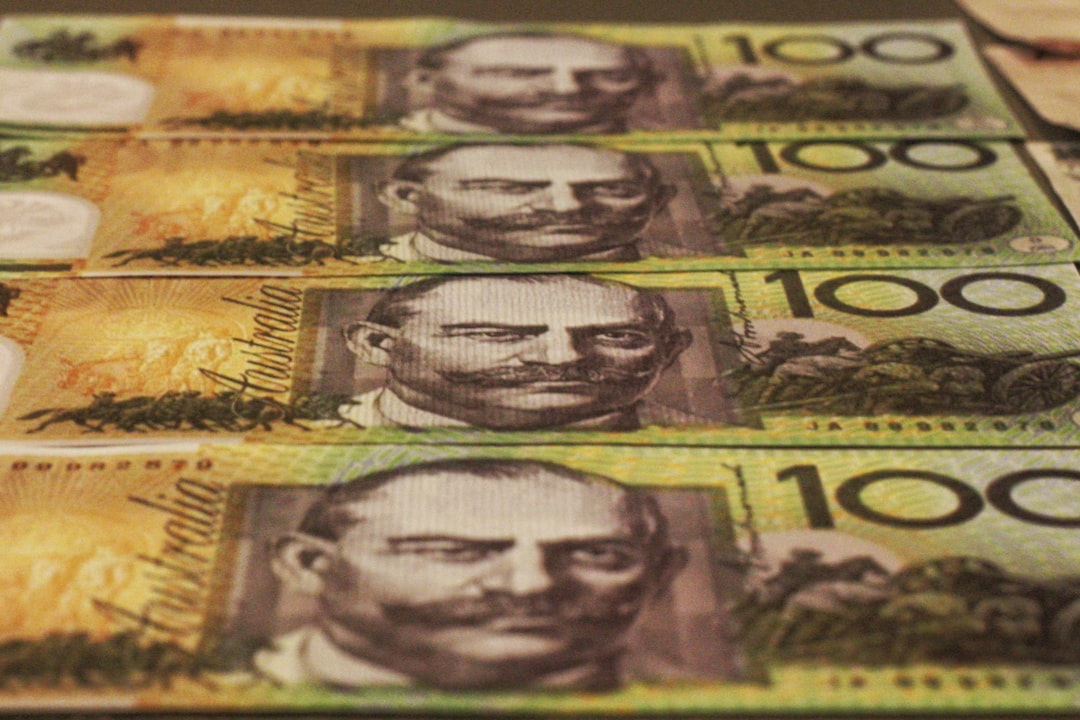
Leka’s own romantic life took an unexpectedly antipodean twist when in 1975 he married Susan Cullen-Ward, an art teacher, artist and budding Egyptologist by profession, but better known as a highly connected socialite from Sydney, Australia. Coming from a squattocracy family (Australia’s landed gentry), she had grown up on her family’s sheep station near Cumnock in rural New South Wales, and attended the prestigious Presbyterian Ladies’ College in the town of Orange and then university in Sydney. To show her pedigree, Susan’s cousin was apparently none other than Andrew Barton Paterson, better known to Australians as Banjo Paterson, one of Australia’s most heralded poets – he wrote the lyrics to Waltzing Matilda, Australia’s most famous song, and appears on the Australian $10 note. What we do know for certain is Susan’s first marriage with English husband Rick Williams lasted three years. The details from here on start to get a bit iffy, but that’s the internet for you. Where she met the King of Albanians depends on which account you believe – at a Sydney dinner party in the late 1960s or later during a scholarship at Sorbonne University in Paris where Leka invited her to study in Spain. Whichever it was, they were engaged in 1974, married the following year in a civil ceremony at the town hall in Biarritz, followed by a religious ceremony in Madrid.
Rumours always swirled that Susan had converted to Islam, Leka’s religion, but that’s simply not true. All throughout her life and later at ceremonies, such as at her funeral, there was always public acknowledgement of her Anglican Christian faith.
In any case, there were some Albanians, and other European royals, who did not approve of Susan – the former for her lack of Albanian roots; the latter for not being of the proper blood-line for them, despite her distant connections with the British royals.
Susan took on the unofficial title of Crown Princess of the Albanians, but royalist circles styled her as “Queen Susan”, though no government anywhere signed off on it. Australia’s own position was a tidy diplomatic fudge: when Andrew Peacock was foreign minister (and close friend and one-time lover of Shirley MacLaine), the Australian government issued her a passport reading “Susan Cullen-Ward, known as Queen Susan” – official enough to travel on but non-committal on the royal business.
And guess what was Leka’s affectionate name for Susan?
Apparently it was “Roo”. As in short for “Kangaroo”. Aww!
There seems to be an unwritten decree that every royal, official or not, must have a self-named foundation of some sort, and Susan was no exception – the Queen Susan Cultural Foundation in the United States, which funnelled medical aid and educational support to Albanians.
Susan went to Albania with her husband Leka and son Leka in 2002 after her husband’s long exile finally ended; however, she didn’t get much time to enjoy her time living in Albania. A life-long heavy smoker, Susan was diagnosed with lung cancer soon after their relocation to Tirana, where she died in July 2004, aged 63.
Leka II, the heir who’s been busy advising
Their son, and head of the House of Zogu since his father’s death in 2011, Leka II, or going by his full name: Leka Anwar Zog Reza Baudouin Msiziwe Zogu, has had, by pretender standards, a fairly active public career. He went through Sandhurst himself (named best foreign student when he was there) and had stints studying in Italy, Albania and Kosovo. From there, Leka (for short) has had a series of Albanian government advisory posts – to the foreign minister, then the interior minister and then the president. This is about as close as the family has come to actual office since his grandfather Zog’s dethroning in 1939.
His personal life has had its own royal-soap-opera quality. He married the actress and singer Elia Zaharia in 2016, in a civil ceremony at Tirana’s old royal palace, officiated, with a certain historical irony, by the city’s then mayor Erion Veliaj of the Socialist Party. Five Albanian religious leaders representing the faiths of Sunni Islam, Bektashi, and the Christian traditions of Orthodox, Catholic and Protestant (in honour of his mother Susan) blessed the couple, in a ceremony symbolising yet again Albania’s time-honoured tolerance of different denominations. The guest list for the wedding was a who’s who of Europe’s deposed royal families, plus Leka’s rellies from his mum Susan’s side popped over from Oz for the bash (big question from the Australians: did they do the Nutbush?)
Now this is something – Elia gave birth to a daughter, Geraldine, on 22 October 2020 at Queen Geraldine Maternity Hospital in Tirana, on the 18th anniversary of Leka’s grandmother Queen Geraldine’s death. Now for something earth-shattering: the royal couple named their daughter Geraldine in her honour.
Unfortunately, the marriage didn’t turn out how they wanted it to be, and so Leka and Elia divorced in 2024.
However, Leka II is still one who believes in love, and so in early 2026 he announced on Instagram (where else?) that he is to tie the knot again – this time with Tirana-based photographer Blerta Celibashi. A private ceremony took place first on a beach near Sarandë, Albania’s tourist mecca, and then at Apponyi Castle in Slovakia – a venue that belongs to his late grandmother Queen Geraldine’s family line. Both were relatively understated events, so perhaps finally the Albanian royals had received that ‘go-demure’ memo the other faded blue-bloods of Europe have had for a while. It must have been lost in the mail given the seemingly no-fixed-address nature of Leka II’s predecessors.
It’s a peculiar kind of inheritance, taken as a whole: a bazooka-wielding father, an Australian socialite mother who became “queen” and a son who inherited the name, the “title” and none of the firepower – just a comparatively conventional life of advisor postings and little scandal, living away from full public view.
What’s striking, looking at the three of them in sequence, is how until their more dignified return to Albania in 2002, the family never truly adjusted its self-image to match its actual circumstances. Zog crowned himself out of a country he’d fancifully made into a kingdom; his son spent fifty years defending a throne that hadn’t effectively existed since he was two days old, arms cache and all; and in the middle of all that, an Australian woman found herself with a passport that listed her as a so-called queen. Only Leka II seems to have made peace with the gap between the title and the territory – he kept the name, did the advisory jobs, had the weddings and, on appearances, got on with it without the drama… which may be the most royal thing anyone in this family has done yet.
Thank you Garth Cartwright of Yakety Yak, a great friend of mine, for the suggestion to write about the Albanian royals, in response to my piece about their equally eccentric Bulgarian counterparts (more about them here).





_(8249451687).jpg)


.jpg)









.jpg)




.jpg)







_logo.svg.webp)


_(52052470251)_(cropped).jpg)



.jpg)